All Seven Magnificent 7 Companies Reject OKX and ICE Tokenized Stock Plans
Key Takeaways
- •Meta's objection to the OKX-ICE tokenized stock venture means all seven Magnificent 7 companies have now opposed the initiative.
- •The proposed platform aims to enable continuous trading of tokenized US equities with settlement conducted in stablecoins.
- •Under the venture's structure, companies have a 30-day window to block their shares from being offered as tokenized assets.
- •The number of objecting companies reportedly grew from 26 on October 27 to 50 by November 1, with combined value exceeding $25 trillion.
- •Opposition has expanded beyond major technology firms to include companies from other sectors, such as JPMorgan, Nike and Micron.
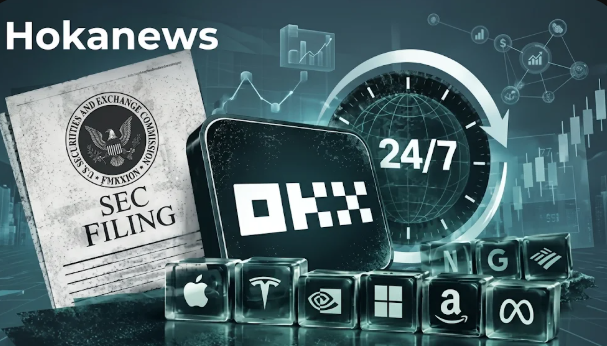
Meta has joined the growing list of major US companies refusing to allow tokenized versions of their shares to be offered through a joint venture between cryptocurrency exchange OKX and Intercontinental Exchange (ICE), the parent company of the New York Stock Exchange. With Meta's objection, all seven members of the Magnificent 7 group have now opposed the initiative.
According to Coin Bureau, Meta filed its objection on Thursday, following similar moves by Apple, Tesla, Amazon, Nvidia, Microsoft and Alphabet. The decisions mark a setback for the proposed tokenized stock platform, which seeks to make US equities tradable around the clock and to settle transactions in stablecoins.
Magnificent 7 Presents Unified Front
The Magnificent 7 companies rank among the most prominent names in US stock markets, spanning consumer devices, software and cloud services, e-commerce, semiconductors, social media and electric vehicles. Meta's filing completes a unanimous position by the group against having tokenized versions of its shares included in the OKX and ICE venture.
Under the structure of the initiative, companies are given 30 days to block their shares from being offered as tokenized assets. That opt-out mechanic gives issuers direct control over whether their equities appear on the platform, meaning the venture's coverage of US markets ultimately depends on which companies decline to object. Figures shared by Coin Bureau show that the objection process has prompted a steadily growing number of businesses to reject participation.
The proposed platform is designed to support continuous trading of tokenized US stocks, with stablecoins serving as the settlement method. Such a structure would bring traditional equity exposure into a digital-asset trading environment, though the wave of objections indicates that many companies do not want their shares represented in the planned offering.
Objections Grow to 50 Companies
The number of companies opposing the initiative rose quickly over several days in late October and early November.
On October 27, 26 companies with a combined value of approximately $13.9 trillion had objected to the plans. Seven additional companies joined the list the following day, October 28, lifting the total to 33, with banking giant JPMorgan among those included in that group.
By November 1, the count had climbed to 50 companies, representing a combined value of more than $25 trillion. Nvidia, Nike and Micron were among the companies identified in the objections reported at that stage.
The figures illustrate how opposition expanded beyond the largest technology companies to businesses across other major sectors, from banking to consumer brands. The Magnificent 7's unanimous stance is one part of a broader response from companies whose shares could potentially be represented on the proposed platform.
Tokenized Stocks Meet Corporate Resistance
Tokenized stocks are digital assets designed to represent, or provide exposure to, traditional company shares. The OKX and ICE venture intends to make these assets available for continuous trading rather than restricting activity to conventional stock-market hours, with stablecoins used for settlement.
The companies' objections, however, demonstrate that making tokenized versions available does not automatically translate into corporate participation. The initiative allows businesses a 30-day window to block their shares, and the number of objections reported by November 1 had already reached 50. The reported counts are figures documented through November 1 under an objection process that runs on 30-day windows, and how the venture proceeds with shares whose issuers have not objected remains an open question for the initiative.
Meta's decision on Thursday completed the set of seven objections from the Magnificent 7, joining Apple, Tesla, Amazon, Nvidia, Microsoft and Alphabet. Separately, the broader tally had surpassed 30 companies on October 28 before reaching 50 by November 1, with their combined value exceeding $25 trillion.
Source: Hokanews

