McDonald's Enters Energy-Drink Market With Red Bull Dragonberry Energizer as Shares Lag in 2026
Key Takeaways
- •McDonald's began selling the Red Bull Dragonberry Energizer, its first energy drink, at U.S. restaurants on August 17, offered in regular and zero-sugar versions.
- •In the second quarter, McDonald's adjusted earnings of $3.38 per share exceeded the $3.32 consensus, while revenue of roughly $7.1 billion fell short of the $7.14 billion analysts expected.
- •MCD shares have declined more than 11% in 2026 amid concerns about slower comparable-store sales, with U.S. comps rising only 0.8% in the second quarter.
- •Loyalty-member sales across 70 markets grew more than 20% over the trailing 12 months to $40 billion, and 90-day active loyalty users increased 13% to nearly 220 million.
- •Wall Street's overall consensus rating on the stock is Buy, with an average 12-month price target of $318.95 implying roughly 15% upside.
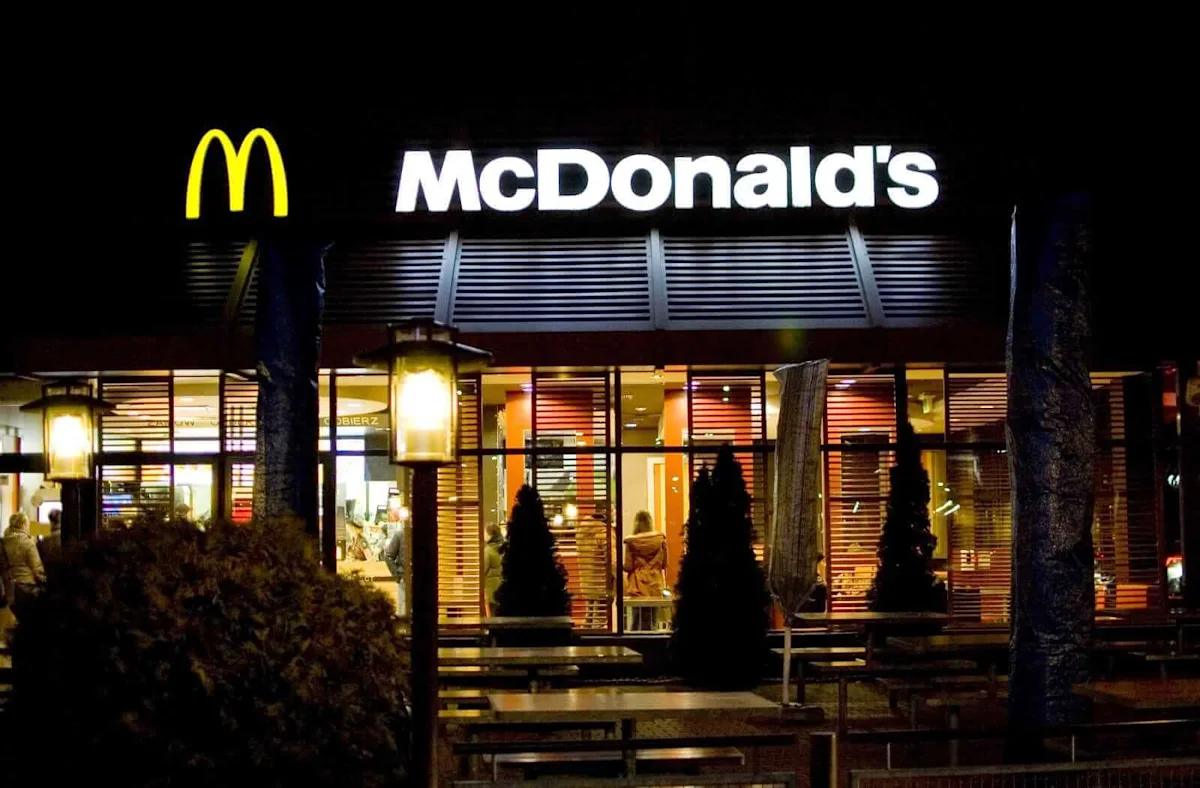
McDonald's (MCD) has entered the energy-drink market for the first time, rolling out the Red Bull Dragonberry Energizer across its U.S. restaurants on Aug. 17. The launch marks the company's debut in a category that has become increasingly popular with younger consumers, and it arrives as the stock tries to recover from a difficult year. MCD shares were recently up 0.68%.
The move puts McDonald's into one of the faster-growing corners of the U.S. beverage business, where Red Bull and Monster rank among the leading brands as consumers continue to drift away from traditional soda. It is also a notable departure for a chain whose fountains have long poured Coca-Cola products, making the addition of Austria-based Red Bull a test of how far McDonald's will stretch its drink lineup.
The rollout comes shortly after McDonald's delivered a mixed second-quarter report. Adjusted earnings of $3.38 per share beat the $3.32 consensus estimate, while revenue of roughly $7.1 billion fell slightly short of the $7.14 billion analysts were expecting.
Shares Under Pressure in 2026
McDonald's stock has been under pressure even as the broader market has remained strong, with MCD shares down more than 11% so far in 2026. The decline reflects concerns about slower comparable-store sales, consumer pressure, and execution problems in the U.S.
In the second quarter, U.S. comparable sales increased only 0.8%, while global comparable sales rose 1.3%. Consolidated revenue grew 4%, and systemwide sales climbed 5% to $37 billion.
Against that backdrop, the energy-drink launch gives McDonald's another potential way to generate traffic. The company is targeting consumers who may visit restaurants specifically for beverages, which could in turn produce additional purchases alongside food.
Valuation Remains Elevated Despite the Decline
The share-price slide has not turned McDonald's into a bargain. The company carries a market capitalization of roughly $189 billion and a trailing price-to-earnings (P/E) ratio of about 22.
Those figures illustrate why MCD stock needs earnings growth to justify a sustained rebound. McDonald's is not being valued like a struggling restaurant chain: investors are still paying a premium for its powerful brand, franchise-heavy business model, global scale, and strong cash generation.
That setup cuts both ways, according to the analysis. If beverage sales, loyalty engagement, and value promotions help accelerate comparable-store sales, the stock could regain some of the ground it has lost from its 52-week high. If U.S. traffic remains weak, however, a roughly 21-times forward earnings multiple leaves less room for disappointment.
More Than One New Menu Item
The Dragonberry Energizer combines Red Bull with blue raspberry flavor and dragon fruit and is available in both regular and zero-sugar versions.
Beverages are typically among the higher-margin items on a quick-service menu, which is one reason fast-food chains keep investing in drink innovation to lift visit frequency.
The more consequential question for MCD stock, the analysis notes, is not necessarily how much revenue this single drink generates, but whether McDonald's can turn beverages into a larger, higher-frequency part of its business. Early signals on that question will show up in the company's upcoming quarterly reports, where investors will be watching U.S. comparable sales and traffic alongside the fate of the new drink itself.
The company has already been expanding its beverage strategy with crafted sodas, Refreshers, and McCafé offerings, and it recently launched new seasonal drinks, including its Caramel Apple Pie lineup. McDonald's had also tested a standalone beverage-focused concept, CosMc's, before winding it down in 2025, underscoring how persistently it has pursued the drinks opportunity.
McDonald's is also leaning heavily on its loyalty program. In the second quarter, sales to loyalty members across 70 markets rose more than 20% over the trailing 12 months to $40 billion, while 90-day active loyalty users increased 13% to nearly 220 million.
Wall Street Remains Constructive
Analysts remain generally positive on the stock, although several have recently reduced their price targets. The overall consensus rating is "Buy," with 19 analysts rating the shares "Buy," 14 at "Hold," and one at "Sell." The average 12-month price target of $318.95 implies roughly 15% upside from recent levels.
Among individual firms, UBS has a $340 price target with a "Buy" rating, and BTIG has a $350 target. Tigress Financial is more bullish with a $390 target. At the other end, Mizuho carries a $290 "Hold" rating and RBC Capital a $305 "Hold" rating.
The energy-drink launch is unlikely to transform McDonald's overnight, the analysis concludes, but it hands the company another tool for increasing beverage sales, attracting younger customers, and improving restaurant traffic. If management combines that strategy with stronger U.S. execution and continued loyalty growth, the current weakness could eventually look like an opportunity.
On the date of publication, Nauman Khan did not have (either directly or indirectly) positions in any of the securities mentioned in this article. All information and data in this article is solely for informational purposes. This article was originally published on Barchart.com and syndicated by Yahoo Finance.

