Senator Dave McCormick Warns CLARITY Act Delay Could Push U.S. Crypto Jobs and Investment Overseas
Key Takeaways
- •Senator Dave McCormick warns that regulatory uncertainty surrounding the CLARITY Act could drive cryptocurrency jobs and investments out of the United States.
- •The CLARITY Act aims to establish a clear regulatory framework for digital assets by defining the respective oversight responsibilities of the SEC and CFTC.
- •Several global jurisdictions, including the European Union, Singapore, and the UAE, have already implemented comprehensive digital asset regulations to attract blockchain businesses.
- •The cryptocurrency industry has criticized the previous SEC's enforcement-heavy approach, advocating instead for clear legislative rules to ensure business predictability.
- •Passing the CLARITY Act is viewed by supporters as essential for maintaining U.S. competitiveness in emerging technologies and broader financial markets.
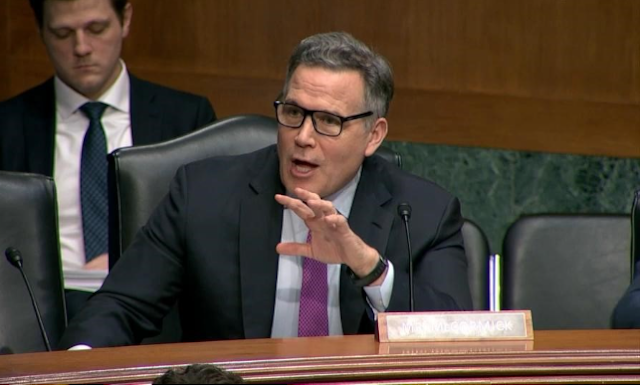
Senator Dave McCormick Warns CLARITY Act Delay Could Push U.S. Crypto Jobs and Investment Overseas
U.S. Senator Dave McCormick (R-PA) has warned that continued delays in passing the CLARITY Act could undermine the United States' position in the global cryptocurrency industry, potentially driving digital asset jobs, investment, and technological innovation to other countries.
The Pennsylvania senator, who took office in January 2025 and previously served as CEO of Bridgewater Associates, the world's largest hedge fund, brings a financial-markets perspective to the digital asset policy debate. He said that regulatory uncertainty is creating significant challenges for businesses operating in the blockchain sector. Without a clear regulatory framework, McCormick argued, companies may choose to establish operations in jurisdictions offering more predictable rules and stronger support for digital asset development.
His comments come as lawmakers continue debating the future of cryptocurrency regulation in the United States. The CLARITY Act, which aims to establish clearer guidelines for digital assets and define regulatory responsibilities between the Securities and Exchange Commission (SEC) and the Commodity Futures Trading Commission (CFTC), has become one of the most closely watched pieces of legislation in the crypto industry.
McCormick argued that the United States cannot afford to move slowly while other countries compete aggressively to attract blockchain companies and financial technology innovators.
"If America delays creating clear rules, we risk allowing other nations to lead the next generation of financial technology," McCormick said, emphasizing concerns that entrepreneurs and investors could relocate capital and operations abroad.
The senator's remarks were highlighted by cryptocurrency industry observers, including reports shared through X by Cointelegraph, which noted McCormick's concerns about the potential impact of regulatory uncertainty on the U.S. digital asset market.
The Growing Debate Over Crypto Regulation
For years, cryptocurrency companies have called for clearer regulations from U.S. lawmakers and financial regulators. Industry executives argue that uncertainty has made it difficult for businesses to understand which rules apply to their operations. The SEC's approach under former Chair Gary Gensler, which relied heavily on enforcement actions against major platforms including Coinbase, Binance, and Kraken, drew criticism from industry participants who contended that regulation-by-litigation lacked the predictability businesses need.
The CLARITY Act is designed to address some of these concerns by providing a clearer structure for digital asset oversight. A key objective of the legislation is to establish whether certain cryptocurrencies should be treated as securities or commodities—a debate that has created tension among regulators, lawmakers, and industry participants. The bill would direct the CFTC to oversee digital assets on sufficiently decentralized blockchains while reserving SEC jurisdiction over assets that function as investment contracts.
The absence of clear definitions has led to legal battles and increased compliance challenges for many companies in the crypto sector. Supporters of the bill believe a well-defined regulatory system would incentivize more companies to operate within the United States rather than relocating to countries with more established digital asset frameworks.
McCormick said the issue extends beyond cryptocurrency markets to encompass America's broader position in technology and financial innovation. Blockchain technology, the senator noted, could play a critical role in payments, financial infrastructure, digital ownership, and global commerce. Losing leadership in this sector, he cautioned, could carry long-term economic consequences.
Global Competition for Crypto Innovation
Countries worldwide have been working to attract cryptocurrency businesses by introducing specialized regulations and digital asset frameworks. The European Union implemented its comprehensive Markets in Crypto-Assets (MiCA) regulation in 2024, providing unified rules across all 27 member states. Singapore's Monetary Authority has operated a licensing regime for digital payment token services for several years, while the United Arab Emirates established the Virtual Assets Regulatory Authority (VARA) in Dubai to oversee the sector. Hong Kong has also moved to position itself as a digital asset hub with its own licensing framework. These policies have created competition among governments seeking to become hubs for digital asset innovation.
McCormick warned that if the United States fails to provide regulatory clarity, companies may increasingly look elsewhere for opportunities. The senator emphasized that the competition is not limited to cryptocurrency trading platforms or digital tokens. He described blockchain technology as part of a broader technological race involving financial systems, artificial intelligence, and emerging digital infrastructure.
"America has historically been a leader in innovation because entrepreneurs know they can build here," McCormick said. "We need to make sure that remains true for the next generation of technology."
Crypto Industry Response
Many cryptocurrency companies have welcomed efforts to establish clearer regulations, arguing that uncertainty has constrained growth and investment. Industry leaders have repeatedly stated that businesses are willing to comply with regulations but need clarity on what those regulations entail. Unclear policies, they argue, create unnecessary risks for companies, investors, and consumers alike.
Some crypto firms have already expanded operations outside the United States due to regulatory concerns. Several global blockchain companies have selected locations where governments have enacted specific digital asset rules. The U.S. crypto policy landscape has been evolving alongside other legislative efforts—the GENIUS Act, establishing a federal framework for stablecoins, was enacted in 2025—reflecting growing recognition among lawmakers that digital asset regulation requires congressional action rather than reliance on agency enforcement.
Supporters of the CLARITY Act believe that passing the legislation could encourage more companies to remain in the United States and attract additional investment into the domestic technology sector. The debate unfolds at a time when institutional interest in cryptocurrency continues to grow, with large financial institutions, investment firms, and technology companies increasingly exploring blockchain applications and digital assets.
Political Discussions Continue
The CLARITY Act has become part of a broader political discussion about the role of cryptocurrency in the American economy. Supporters argue the legislation is necessary to protect innovation and ensure U.S. competitiveness. Critics have raised concerns about whether new rules could create regulatory gaps or fail to provide sufficient consumer protection.
Lawmakers are balancing multiple priorities, including encouraging technological growth while maintaining financial stability and protecting investors. McCormick's comments reflect growing pressure from policymakers who believe the United States needs to accelerate its approach to digital asset regulation. Cryptocurrency has also become a topic in electoral politics, with digital asset advocacy groups mobilizing to support candidates favoring clearer regulation.
The senator has positioned crypto innovation as part of a larger economic strategy, arguing that leadership in emerging technologies creates jobs and strengthens national competitiveness.
Potential Economic Impact
The debate over the CLARITY Act extends well beyond cryptocurrency companies. Supporters say the legislation could influence job creation, investment flows, and technological development across multiple industries. Blockchain technology has driven demand for developers, cybersecurity specialists, financial experts, and entrepreneurs—a stronger domestic ecosystem could fuel growth across these fields.
McCormick believes regulatory clarity would encourage companies to hire more workers in the United States rather than establishing operations abroad. Conversely, his warning highlights concerns that persistent regulatory uncertainty could produce the opposite effect: if businesses cannot predict future policies, they may hesitate to invest in new projects, slowing innovation and reducing opportunities for American workers.
The Road Ahead for Digital Assets in America
The outcome of the CLARITY Act debate could significantly shape the future of the cryptocurrency industry in the United States. A successful regulatory framework could provide companies with greater confidence and encourage additional investment. Continued delays, however, could deepen uncertainty and push more businesses toward international markets that have already enacted comprehensive rules.
McCormick's warning reflects a broader concern among policymakers and industry leaders that the United States must act swiftly to maintain its leadership in financial technology. As global competition intensifies, governments are vying not only for companies but also for talent, investment, and technological influence.
For the crypto industry, the next phase of regulation could determine whether the United States becomes a leading hub for blockchain innovation or falls behind countries that move faster in establishing digital asset policies. The discussion surrounding the CLARITY Act is expected to continue as lawmakers evaluate the potential economic benefits and challenges of creating a comprehensive cryptocurrency regulatory framework.
Senator McCormick's message remains clear: delaying action carries economic costs, and the future of crypto innovation may depend on how quickly the United States establishes rules that support growth while safeguarding the financial system.

