Conservative 'Defense Hawk' Max Boot Slams Trump's $1.5 Trillion Military Request as Funding 'Boondoggles'
Key Takeaways
- •Boot said Trump’s $1.5 trillion defense request is far above what he considers reasonable, despite his general support for higher military spending.
- •He argued that the proposal would be the largest defense budget ever in inflation-adjusted terms and comes during a period of elevated federal deficits and debt.
- •The House approved a $1.15 trillion measure plus $73 billion for the Iran war, while the Senate has resisted that plan.
- •If no agreement is reached by October 1, the military budget is likely to stay at $838 billion under a continuing resolution.
- •Boot said Pete Hegseth needs to brief Senate Democrats and address congressional concerns if he wants bipartisan support for the defense bill.
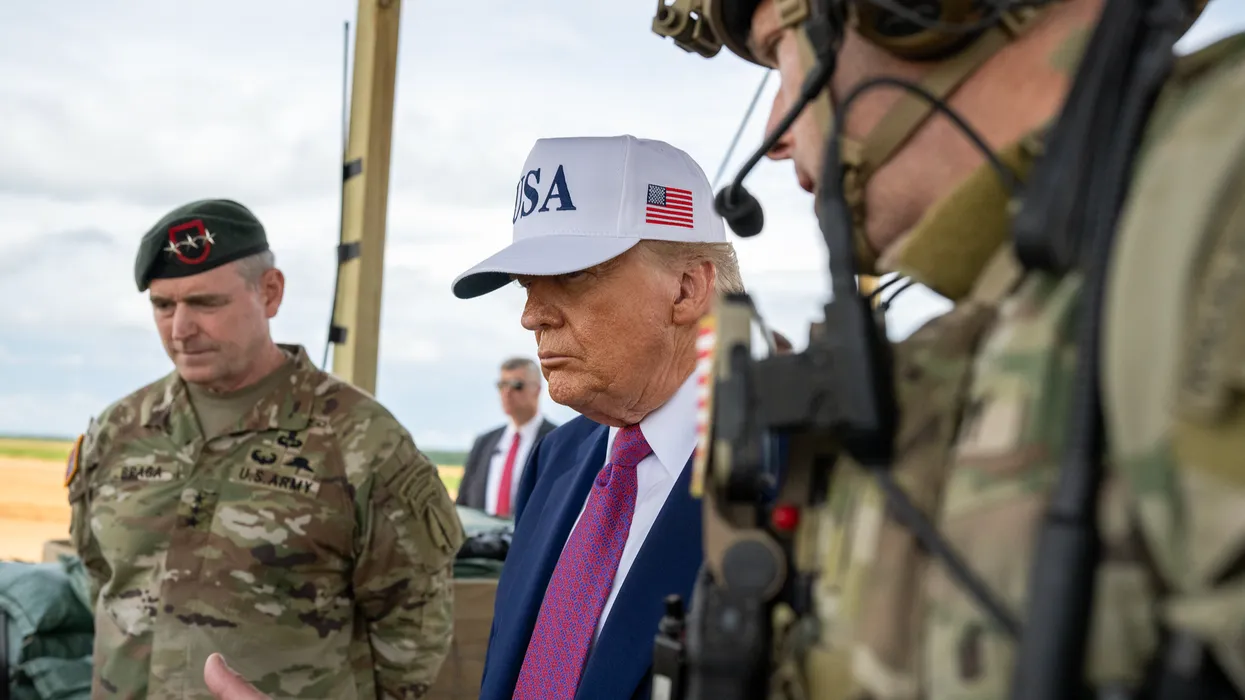
Conservative foreign policy commentator Max Boot, a self-described "defense hawk," says he felt "sticker shock" at President Donald Trump's $1.5 trillion military funding request, writing in the Washington Post that the Pentagon is seeking to spend an outlandish sum on "funding boondoggles and sweetheart deals."
Boot is a Russian-American author, Washington Post columnist and senior fellow at the Council on Foreign Relations who has previously written about walking away from the American conservative movement after Trump's takeover of the Republican Party, a break he chronicled in his 2018 book "The Corrosion of Conservatism: Why I Left the Right." He previously served as a foreign policy adviser to Republican presidential campaigns, including John McCain's in 2008 and Mitt Romney's in 2012, which is part of what makes his complaint about a Republican administration's defense request notable. In his new column for the Post, he acknowledged that he has "long been in favor of more military spending," and even backed the $1 trillion budget the Pentagon reached this year. Despite that record, he now balks at the $1.5 trillion requested for next year.
"In inflation-adjusted terms, that 50 percent increase would result in the largest defense budget ever — exceeding even the World War II peak," Boot wrote. "And this comes at a time when the federal budget deficit is at $1.8 trillion and federal debt is nearly $40 trillion. On its current trajectory, public debt as a percentage of gross domestic product in 2030 will exceed the record set in 1946."
Boot noted that Congress has not been "rushing to rubber-stamp the staggering defense budget." The House passed a measure that would provide $1.15 trillion, plus an extra $73 billion for the Iran war, but the Senate has opposed it. As a result, the military budget as of October 1 — the start of the new federal fiscal year — will likely remain at the $838 billion level set by a continuing resolution, the stopgap mechanism that holds spending at prior-year levels when full-year spending bills stall and typically blocks new program starts.
This state of affairs, Boot argued, is entirely the fault of the Trump administration.
"Defense Secretary Pete Hegseth has no one but himself to blame," Boot wrote. "He has been contemptuous of Congress, so it's hardly surprising that its members are not rushing to hand him a massive pot of cash. If Hegseth wants to win bipartisan support for the defense budget — something that was taken for granted in years past — he needs to start briefing Senate Democrats, not just Republicans. And he needs to do a much better job of addressing lawmakers' concerns about controversies such as the unexplained firings of general officers, the lawless attacks on alleged drug boats, the deteriorating conditions aboard an aircraft carrier deployed to the Middle East and the failed war with Iran."
Boot also pointed to the strain the Iran conflict has placed on U.S. weapons stockpiles.
"No one denies the need to replenish missile stockpiles running low because of the Iran conflict, but the very fact that the United States has used up such a large part of its missile arsenal so quickly is a damning indictment of years of defense misappropriations that long predate President Donald Trump," he wrote. "You would think that $1 trillion would buy enough missiles to fight China or Russia, but it turns out that we don't even have enough to fight Iran. The Iran war also revealed that the military was woefully ill-prepared to fight an enemy equipped with low-cost drones; Iran's drones and missiles have done serious damage to U.S. military installations in the Middle East. It's true that the new defense budget has a lot more money for drones and drone defenses, but it also includes massive boondoggles that can't be justified on the merits."
What remains unresolved is how the standoff ends: whether House and Senate negotiators can bridge the gap between the $1.5 trillion request, the House's $1.15 trillion-plus measure and the $838 billion stopgap level, and whether Hegseth undertakes the bipartisan outreach Boot argues is necessary for any defense bill to move.
Source: Alternet

