Singapore and Germany Complete Wholesale CBDC FX Settlement Trial Using Zero-Knowledge Proofs
Key Takeaways
- •MAS and Deutsche Bundesbank completed the first milestone of Project Simbolon, connecting their digital asset settlement test environments under a cross-border settlement agreement signed in November 2025.
- •DBS and Deutsche Bank, with technology support from Partior, tested euro–Singapore dollar trades settled using wholesale central bank digital currency.
- •The trial combined payment-versus-payment settlement with zero-knowledge proofs, allowing each system to verify settlement conditions without revealing ledger data or creating a technical link between the two central bank ledgers.
- •The collaboration builds on MAS's Project Ubin, launched in 2016, and Bundesbank's Project Trigger, launched in 2020, and complements MAS's Project Guardian, whose Policymaker Group Bundesbank joined in 2024.
- •The central banks plan further work on settlement performance, legal treatment, operating procedures, governance, and regulatory considerations, with technical documentation of the architecture to be prepared.
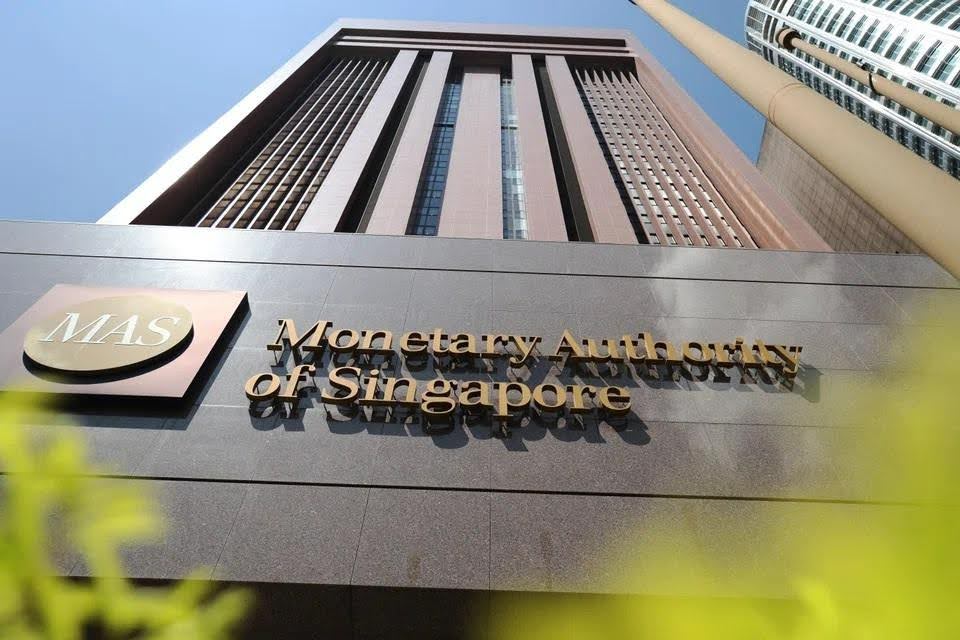
Singapore and Germany have completed a new digital asset settlement test designed to link two separate central bank infrastructures. The trial focused on wholesale foreign exchange settlement across different currencies, systems, and operating hours.
Project Simbolon Connects Two Central Bank Settlement Systems
The Monetary Authority of Singapore (MAS) and Deutsche Bundesbank tested connectivity between their digital asset settlement test environments under Project Simbolon, marking a significant first milestone achieved under a cross-border settlement agreement the two institutions signed in November 2025, according to an official announcement from MAS.
The commercial banks involved in the experiment were DBS and Deutsche Bank, which received technology support from Partior. The test covered euro–Singapore dollar rates and trades settled using wholesale central bank digital currency (CBDC), a digital form of central bank money intended for financial institutions rather than the general public. The project kept the two central banking systems independent while synchronizing settlement across both.
Zero-Knowledge Proofs Help Verify Settlement Conditions
Project Simbolon used payment-versus-payment (PvP) settlement, a mechanism widely used in foreign exchange markets in which the transfer of one currency can be made only in conjunction with the transfer of the other, reducing the risk that one leg of a trade settles without the other. That risk is not theoretical: the 1974 failure of Germany's Bankhaus Herstatt, whose counterparties paid out one currency leg without receiving the other, gave rise to the term "Herstatt risk" and, decades later, to Continuous Linked Settlement, a dedicated PvP settlement service launched in 2002.
The setup also incorporated zero-knowledge proofs, cryptographic techniques that allow one party to prove a statement is true without disclosing the underlying data. The technology enabled each settlement environment to verify that it met the required conditions without revealing any original information in the ledgers or creating any technical link between the two central bank ledgers.
This architecture is especially relevant to tokenized finance, since blockchain-based or digital ledger systems may need to communicate with one another without being rebuilt on top of a shared infrastructure.
Wholesale CBDCs Target FX and Tokenized Asset Settlement
The two markets operate in different time zones, which means banks may have to organize liquidity ahead of settlement. A more tightly integrated settlement model for the digital world would enable institutions to commit and source funds closer to the actual time of settlement.
Both central banks bring prior experimentation to the collaboration: MAS built early wholesale CBDC experience through Project Ubin, its multi-year experimentation program launched in 2016 to test blockchain-based tokenized payments and settlement, while Deutsche Bundesbank's Project Trigger, launched in 2020, examined how distributed ledger platforms could be linked with Eurosystem settlement services to enable payments in central bank money.
MAS said the work greatly complements Project Guardian, its initiative on institutional tokenization and more efficient tokenized financial markets. Deutsche Bundesbank has been a member of the Guardian Policymaker Group since 2024.
MAS and Bundesbank Plan Broader Digital Asset Testing
The two central banks will continue cooperating with industry on broader applications of interoperable digital asset settlement. Further work is anticipated that will consider settlement performance, legal treatment, operating procedures, governance, and regulatory considerations.
Documentation will also be prepared covering in greater detail the technical aspects of the architecture, testing, and potential implementation of Project Simbolon.
The trial provides a further example of how central banks are exploring blockchain-related infrastructure, tokenized currency, and cryptographic verification for institutional settlement, rather than retail payments.

