Former Defense Secretary Mark Esper Calls CLARITY Act a National Security Priority
Key Takeaways
- •Former Defense Secretary Mark Esper has urged the Senate to pass the CLARITY Act, characterizing it as a national security imperative rather than merely a financial or technology policy issue.
- •The current week likely represents the Senate's final opportunity to advance the bill before the August recess, with further consideration potentially delayed until lawmakers return on September 14.
- •The CLARITY Act would establish clearer boundaries between the SEC and CFTC, classifying digital assets on sufficiently decentralized networks as commodities under CFTC oversight.
- •Other jurisdictions including the European Union, Singapore, the United Arab Emirates, and the United Kingdom have already implemented or are advancing comprehensive cryptocurrency regulatory frameworks.
- •Large financial institutions have repeatedly stated that clear regulatory frameworks are a prerequisite for significantly expanding their digital asset offerings and investment commitments.
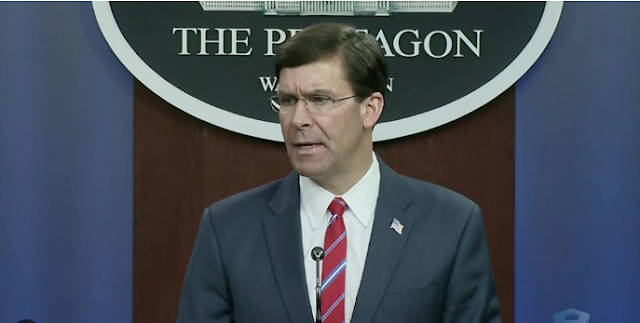
Former Defense Secretary Mark Esper Calls CLARITY Act a National Security Priority
Former U.S. Secretary of Defense Dr. Mark T. Esper, who served as Pentagon chief from July 2019 to November 2020 under President Donald Trump, has urged lawmakers to approve the CLARITY Act, calling the proposed cryptocurrency legislation a national security imperative rather than merely a financial or technology policy issue. Esper cautioned that the current week may represent the Senate's final realistic opportunity to advance the bill before Congress enters its August recess, which could delay further action until lawmakers return in September.
His comments have intensified the debate around one of the most closely watched digital asset bills in the United States, underscoring how cryptocurrency regulation has become increasingly entangled with economic competitiveness, technological leadership, cybersecurity, financial innovation, and geopolitical strategy.
Esper's remarks drew widespread attention after being highlighted by the X account of Cointelegraph (source), sparking renewed discussion across the cryptocurrency industry about the strategic implications of building a comprehensive digital asset regulatory framework in the United States.
With the Senate facing a rapidly approaching legislative deadline, policymakers, financial institutions, blockchain developers, technology companies, and investors are closely watching whether Congress can move the legislation forward before floor activity pauses for the August recess.
Esper Frames Cryptocurrency Regulation as a National Security Issue
Rather than focusing solely on cryptocurrency markets, Esper argued that digital asset legislation should be viewed through the broader lens of national security. His position reflects a growing consensus among policymakers that blockchain technology, digital payments, financial infrastructure, and emerging technologies are becoming critical components of global strategic competition.
From this perspective, establishing clear regulatory rules is not just about protecting investors — it is also about ensuring the United States remains competitive as other nations rapidly build out their digital financial infrastructure. Supporters warn that prolonged regulatory uncertainty could drive innovation, investment, and technological development toward jurisdictions with clearer legal frameworks.
Why the CLARITY Act Matters
The CLARITY Act has emerged as one of the most significant cryptocurrency bills currently under consideration in the United States. The legislation seeks to clarify regulatory responsibilities for digital assets by establishing a clearer boundary between the Securities and Exchange Commission (SEC) and the Commodity Futures Trading Commission (CFTC). Under the proposed framework, digital assets on sufficiently decentralized networks would be classified as commodities under CFTC oversight rather than securities subject to SEC registration requirements, providing greater legal certainty for companies operating across the blockchain ecosystem.
For years, cryptocurrency businesses have argued that overlapping regulatory authority and inconsistent interpretations of existing financial laws have hindered innovation and investment. The SEC's approach of pursuing enforcement actions against major platforms — including Coinbase, Binance, and Ripple — has been criticized by industry participants as "regulation by enforcement," contributing to legal disputes, compliance uncertainty, and divergent interpretations among federal regulators. Supporters believe the CLARITY Act could modernize America's regulatory approach while fostering responsible innovation.
Senate Faces a Narrow Legislative Window
Esper's warning comes as the Senate approaches its final legislative sessions before lawmakers depart Washington for the August recess. If senators fail to approve the legislation before adjournment, further consideration will likely be postponed until the chamber returns on September 14.
While legislative delays are common in Congress, postponements carry practical consequences for industries awaiting regulatory certainty. For cryptocurrency companies planning investments, product launches, hiring decisions, or institutional partnerships, extended ambiguity can complicate long-term strategic planning. As digital asset adoption continues to expand globally, timing has become increasingly consequential.
National Competitiveness Extends Beyond Finance
Esper's remarks suggest that cryptocurrency regulation should be evaluated alongside broader technological competition. Countries around the world are investing heavily in blockchain infrastructure, digital payment systems, artificial intelligence, cybersecurity, and next-generation financial technologies. Many governments increasingly recognize digital assets as a key component of future economic competitiveness.
Supporters of the CLARITY Act argue that comprehensive legislation could strengthen America's leadership in blockchain innovation while encouraging businesses to expand domestically. Failure to establish regulatory clarity, they contend, risks allowing competing jurisdictions to attract talent, investment, and technological development.
Institutional Investors Continue Waiting
Large financial institutions have repeatedly emphasized the need for regulatory certainty before expanding digital asset offerings. Banks, investment firms, pension funds, insurance companies, and publicly traded corporations generally require clearly defined legal frameworks before committing significant capital to emerging financial technologies.
Passage of the CLARITY Act could provide additional confidence for institutions evaluating cryptocurrency-related investment opportunities. Greater clarity may also simplify compliance planning and reduce legal uncertainty surrounding digital asset operations. Many analysts believe institutional adoption would continue to accelerate under a more predictable regulatory environment.
Cybersecurity Considerations
Esper's background as Secretary of Defense naturally brings additional attention to cybersecurity considerations. Digital financial infrastructure increasingly intersects with national cybersecurity priorities. Governments worldwide continue strengthening protections for financial networks against cyber threats while evaluating emerging technologies capable of supporting secure digital commerce.
Blockchain technology has become part of broader discussions involving digital resilience, financial infrastructure, and technological modernization. Although the CLARITY Act primarily addresses regulatory issues, supporters argue that modern regulatory frameworks contribute indirectly to stronger digital ecosystems.
Cryptocurrency's Expanding Strategic Role
Over the past decade, cryptocurrency has evolved from a niche technological experiment into a globally recognized financial sector. Today, digital assets influence payments, investment management, decentralized finance, cross-border transfers, tokenized assets, and institutional portfolio diversification. Governments have also begun evaluating central bank digital currencies, blockchain infrastructure, and tokenization initiatives.
As the digital asset economy expands, regulatory policy increasingly affects broader economic competitiveness. Esper's comments reflect this expanding strategic perspective.
Markets Closely Monitor Congressional Progress
Financial markets have historically responded to major regulatory developments affecting cryptocurrency. Positive legislative momentum often improves investor confidence by reducing uncertainty surrounding future oversight. Conversely, prolonged delays may temporarily discourage investment decisions while companies await clearer regulatory guidance.
While cryptocurrency prices depend on numerous factors, congressional developments frequently influence market sentiment. Investors will continue monitoring official Senate scheduling announcements throughout the week.
Industry Groups Continue Supporting the Bill
Numerous blockchain organizations, cryptocurrency businesses, technology associations, and financial industry participants have encouraged Congress to establish comprehensive digital asset legislation. Industry representatives argue that clear rules benefit both consumers and businesses by enhancing investor protection, encouraging innovation, simplifying compliance, and strengthening market integrity. Supporters also believe modern legislation could improve America's ability to compete internationally as digital finance continues expanding.
Remaining Legislative Challenges
Despite growing support, the CLARITY Act continues to face legislative hurdles. Lawmakers remain engaged in discussions spanning securities regulation, commodities oversight, decentralized finance, consumer protection, stablecoins, market structure, and federal regulatory authority. Negotiating consensus across these complex policy areas requires significant bipartisan cooperation. With limited legislative time remaining before recess, senators face mounting pressure to resolve outstanding issues.
Global Competition Continues Accelerating
Internationally, governments continue advancing digital asset regulation. The European Union's Markets in Crypto-Assets (MiCA) regulation, which began taking effect in 2024, established one of the world's first comprehensive frameworks governing cryptocurrency exchanges, token issuance, stablecoins, and digital financial services. Other jurisdictions, including Singapore, the United Arab Emirates, and the United Kingdom, have also moved to implement tailored crypto regimes. As regulatory competition intensifies, many industry observers argue that legislative certainty has become a decisive factor in where blockchain companies choose to invest and expand. Esper's comments reflect concerns that delays could undermine America's long-term leadership in the rapidly evolving digital economy.
Looking Ahead
Former Defense Secretary Dr. Mark T. Esper's warning that the CLARITY Act represents a national security imperative highlights the increasingly strategic role cryptocurrency regulation plays within broader U.S. economic and technological policy. With the Senate approaching its final legislative sessions before the August recess, lawmakers face growing pressure to decide whether one of the country's most significant digital asset bills will advance before congressional activity pauses for several weeks.
Beyond cryptocurrency markets, the legislation carries implications for innovation, institutional investment, cybersecurity, international competitiveness, and America's long-term leadership in financial technology. Whether the Senate passes the CLARITY Act this week or postpones further action until September, the debate surrounding digital asset regulation has clearly expanded far beyond traditional financial policy. As blockchain technology continues reshaping global finance, the decisions made by Congress in the coming days may influence not only cryptocurrency markets but also the future direction of the United States' digital economy for years to come.
Source: Hokanews

