Maritime War-Risk Map Widens Across Middle East, Black Sea, and Mediterranean
Key Takeaways
- •Commercial vessels are increasingly becoming direct targets rather than collateral damage in geopolitical conflicts spanning the Gulf, Red Sea, Black Sea, and potentially the Mediterranean.
- •A drone strike at Egypt's Damietta terminal hit a floating storage and regasification unit and an LNG carrier, potentially drawing the Mediterranean into the Middle East's maritime conflict.
- •Houthi attacks on commercial vessels since late 2023 have forced major container lines to reroute around the Cape of Good Hope, adding approximately 10 to 14 days to Asia-Europe sailings.
- •Russia is reportedly contemplating arming cargo vessels in the Black Sea, a tactic previously observed in the Baltic, as attacks on commercial shipping in the region intensify.
- •HD Hyundai Heavy Industries Philippines launched the first vessel from its revived Subic shipyard, adding Southeast Asian shipbuilding capacity at a time when global orderbooks are near multi-decade highs.
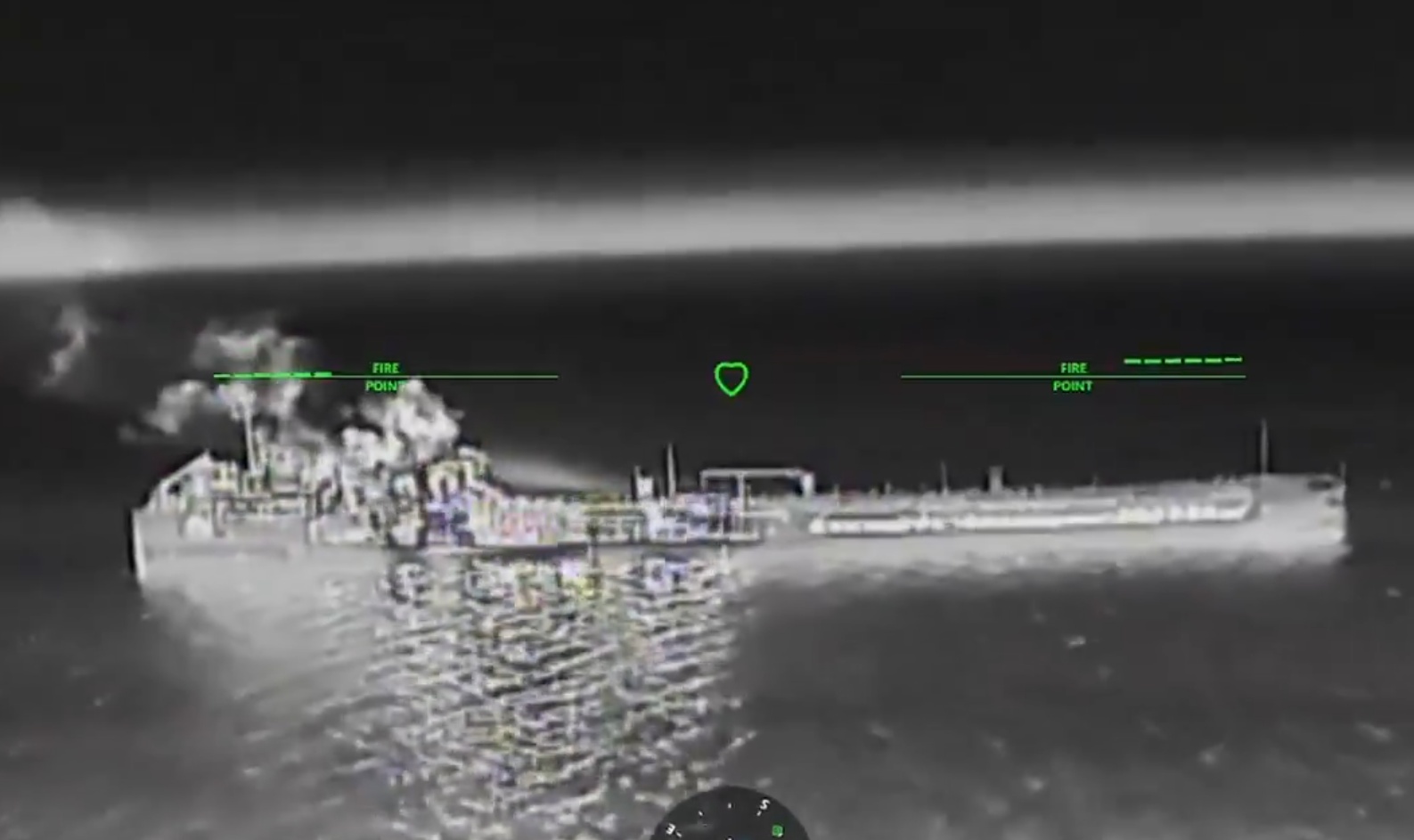
Maritime security risks expanded rapidly this week across the Gulf, Red Sea, Black Sea, and potentially the Mediterranean, as commercial vessels increasingly became direct targets rather than collateral damage in ongoing geopolitical conflicts. The widening threat map comes at a time when roughly 80 percent of global trade by volume moves by sea, meaning even localized disruptions can cascade into shipping costs, insurance premiums, and supply-chain delays far beyond the immediate conflict zones.
In the Middle East, renewed US-Iran exchanges have raised concerns over Tehran's efforts to reshape commercial transit through the Strait of Hormuz, including the prospect of fees or political conditions being imposed on commercial passage. The strait carries approximately one-fifth of the world's daily oil consumption, making any restriction on free transit a concern not only for energy markets but for the global economy. In the Red Sea, Houthi threats against Saudi-linked shipping continued alongside attacks on tankers and discussions around the proposed creation of a Saudi-led maritime coalition. Houthi attacks on commercial vessels in the Red Sea and adjacent waters since late 2023 have already forced many major container lines to reroute around the Cape of Good Hope, adding roughly 10 to 14 days to Asia–Europe sailings. On Wednesday, a floating storage and regasification unit and an LNG carrier were struck in an apparent drone attack at Egypt's Damietta terminal, potentially drawing the Mediterranean into the Middle East's widening maritime conflict. The Damietta terminal is a key entry point for LNG imports into Egypt and the broader East Mediterranean gas market.
In the Black Sea, Ukraine and Russia stepped up attacks on commercial shipping, with Moscow now reportedly contemplating arming cargo vessels—a tactic previously observed in the Baltic. The Black Sea remains a critical corridor for grain and agricultural exports, and repeated strikes on vessels and port infrastructure have underscored the vulnerability of food supply chains dependent on the region.
On the shipbuilding front, HD Hyundai Heavy Industries Philippines launched the first vessel constructed at its Subic shipyard, marking the commencement of full-scale operations at the revived facility. The yard was originally established during the shipbuilding boom of the early 2000s by a different Korean shipbuilder before ceasing operations. The relaunch of Subic adds shipbuilding capacity in Southeast Asia at a time when global orderbooks are near multi-decade highs and South Korean and Chinese yards are operating near full capacity.
Splash's sister titles also featured notable coverage this week. On SplashTech, Irene Rosberg of Copenhagen Business School argued that while AI can optimise fuel use, improve collision avoidance, and detect machinery problems, shipping remains too complex and unpredictable to remove people from decision-making. Successful maritime businesses, she wrote, will use technology responsibly to enhance decisions, resilience, and safety while involving seafarers and shore staff in shaping organizational change.
On Splash Ports, this week's editor's pick examined how ports are moving artificial intelligence and digital twins from trials into daily operations, with integration rather than technology itself emerging as the primary obstacle. New research identified legacy systems, fragmented data, high implementation costs, and workforce concerns as barriers to wider adoption.
In publishing, maritime historian Professor Howard Dick and co-author Stephen Kentwell released C. Y. Tung (1912–1982) and the Rise of Modern Chinese Shipping at a launch event in Hong Kong this month. The biography, spanning from an encounter with one of Tung's early containerships in 1970 to its completion, charts the emergence of Chinese deep-sea shipping from a marginal position beneath established European, American, and Japanese lines to a competitive force across every major maritime sector. Tung, who founded Orient Overseas Container Line (OOCL), is widely regarded as one of the most influential figures in the post-war containerization era. Maritime CEO spoke with one of the authors this week about the new book.
This week's Splash Wrap podcast explored how artificial intelligence is reshaping the volatile global shipping market. Advanced AI models, such as gated recurrent units (GRUs), significantly improve freight rate forecasting for cyclical trends, though algorithms remain unable to predict the sudden geopolitical conflicts or climate disruptions that increasingly drive market movements. In response, long-term charters are giving way to short-term, index-linked contracts and new outcome markets. While AI processes data and optimisation engines calculate complex commercial sequences, human operators remain essential for setting constraints and making final decisions. Success, the podcast argued, ultimately depends on a human's psychological capacity to navigate continuous uncertainty.
Source: Splash247

