Marc Elias: 'Unserious' Comey Case Could Open the Door to Politicized Prosecutions
Key Takeaways
- •James Comey was indicted by a North Carolina grand jury under the federal threats statute 18 U.S.C. § 871 over a beach photograph of seashells arranged to spell '86-47,' which the Justice Department characterized as a credible threat to the president.
- •Comey deleted the post after Secret Service agents interviewed him, saying he had understood it as a political message and was unaware of any violent association.
- •Elias cited Supreme Court precedent, including Watts v. United States (1969) and United States v. Armstrong (1996), under which political hyperbole falls outside the threats statute and selective-prosecution claims require clear evidence while courts presume prosecutors acted properly.
- •Donald Trump publicly called Comey 'guilty as hell' on Truth Social and urged Attorney General Pam Bondi to pursue him, which Elias pointed to as evidence of political motivation that is difficult to prove under current legal standards.
- •Elias concluded that the case should be dismissed, predicted it would likely fail if it proceeds, and argued that courts should use it to end their automatic deference to Justice Department claims.
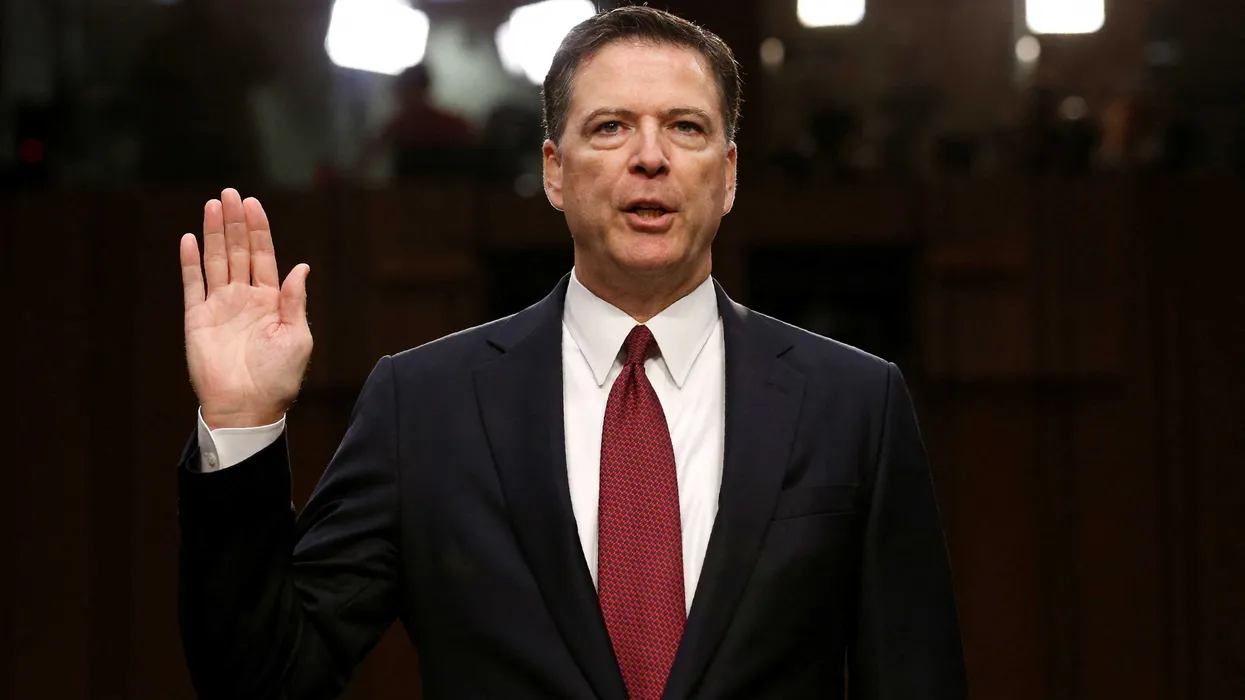
Attorney and voting rights advocate Marc Elias — the longtime Democratic election lawyer who founded Democracy Docket and served as general counsel to Hillary Clinton's 2016 campaign and the Democratic National Committee — examined the criminal case against former FBI Director James Comey in his Thursday "Democracy Docket" newsletter, arguing that the prosecution carries consequences that reach far beyond a single defendant.
Elias opened by calling the case "unserious" — "so unserious, in fact, that the Department of Justice is now claiming that Comey posted the photo to increase book sales, comparing him to the villain in his fictional book."
Comey was indicted by a North Carolina grand jury after the Justice Department asserted that he posed a "credible threat" to the president of the United States. The charge stems from a photograph Comey posted of seashells arranged on a beach to spell out "86-47." In slang, "86" means to get rid of something, and "47" refers to Donald Trump as the 47th president. Comey deleted the post after Secret Service agents interviewed him, saying he had assumed it was a political message and was unaware of any violent association. The charge rests on 18 U.S.C. § 871, a federal threats statute the Supreme Court has long read to exclude political hyperbole — in Watts v. United States (1969), the Court threw out a conviction over a rally threat aimed at Lyndon B. Johnson on exactly that ground.
The case may appear absurd, Elias wrote, but it "has broader implications. How this case is dismissed will be critical to the future of the pro-democracy movement. At stake is a system of criminal prosecution that could cripple political opponents of the president — or be reined in before it's too late."
The backstory, as Elias laid it out, is straightforward. Donald Trump has repeatedly made clear that he wants James Comey punished. Trump went so far as to post on Truth Social that he wanted Attorney General Pam Bondi to go after Comey specifically, calling him "guilty as hell."
Comey's lawyers have argued that the prosecution is selective or politically motivated. The DOJ counters that this cannot be the case, because the prosecutor overseeing the matter had only recently taken over and had no discussions about it with the president.
"As surprising as it may sound, under current case law, the DOJ's argument is not without force," Elias wrote. "To prove a constitutional violation in these circumstances typically requires a direct connection between the actual prosecutor and any improper motive. Courts are instructed to presume that the government — including the DOJ — acts regularly and in good faith."
That presumption has Supreme Court roots. In United States v. Armstrong (1996), the Court required criminal defendants alleging selective prosecution to come forward with "clear evidence," holding that absent such proof courts must presume prosecutors "properly discharged their official duties."
"Against that standard, the shortcomings of Comey's arguments are evident. He likely does not have direct evidence that the lawyers in North Carolina harbor unique ill will toward him or wish to engage in a sham prosecution," he added.
The practical effect, Elias explained, is that Comey cannot rely solely on the argument that he is being prosecuted as part of a political vendetta. That does not mean Elias believes Comey should lose those motions, he made clear — but prevailing on them would require "the abandonment of the old presumptions and standards, which are built on a theory of government-on-the-merits that no longer exists."
Some judges are already openly questioning whether the Justice Department is acting in good faith in its investigations and prosecutions. The most recent example, Elias noted, is a federal judge overseeing a case demanding all Jeffrey Epstein case documents, regardless of whether they are seen as redundant.
The Comey case is more obvious still, Elias argued, because Trump has been explicit about his demands on social media. "The lawyers know it, the judge knows it, and the media knows it. It is time everyone stopped pretending otherwise," Elias wrote. "Ambitious federal prosecutors, looking out for their own careers, are trying to please a vindictive president. It is that simple."
In Elias's assessment, giving prosecutors the benefit of the doubt can make it too difficult for a person to prove they are being unfairly targeted.
He closed by saying the case should simply be dismissed, and that if it is not, it will likely fail. The open question, he wrote, is whether the courts will treat the case as an opportunity to fix a broader problem with the system — its automatic deference to whatever the DOJ claims. He is hoping, "for the sake of democracy," that the courts choose that path.
Source: Alternet
