MANTRA Chain Remains Offline After Exploit as Restart Hinges on Patch Testing
Key Takeaways
- •MANTRA Chain, a blockchain network for tokenized real-world assets, remains offline after an exploit, according to the project's official incident status page.
- •The network's restart depends on successful testing of a patch that repairs the flaw abused in the attack.
- •While the chain is paused, transactions cannot be processed and users have no way to transact on the network.
- •The restart is conditional rather than confirmed, and timelines may shift until patch testing is complete.
- •The next key milestone is confirmation that patch testing is finished and the network can safely resume normal operations.
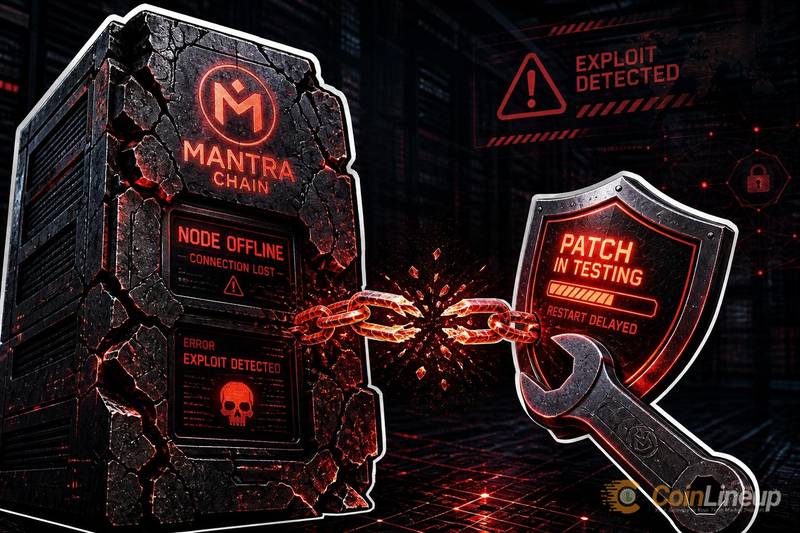
MANTRA Chain, a blockchain network built for tokenized real-world assets — assets such as real estate or investment products represented as blockchain-based tokens — remains offline following an exploit, and the timing of its restart now depends on the outcome of patch testing. In plain terms, the network is paused, and it will come back online only once the team confirms that its fix works.
What Happened to MANTRA Chain
MANTRA Chain is still offline after the exploit, according to the project's official incident status page. An exploit is an attack that abuses a flaw in software.
The network being offline means that normal blockchain activity has been halted. Transactions cannot be processed while the chain stays paused, and users currently have no way to transact while the pause remains. Halting a chain in this way is a standard containment step after a security incident: stopping block production prevents further activity through whatever flaw was abused while the team investigates and prepares a fix.
This is a live status update, not a full post-mortem. At this stage, the confirmed facts are simple: the chain is down, and the outage is tied to the exploit. Anything beyond that remains unconfirmed.
Why the Restart Depends on Patch Testing
The restart hinges on patch testing before the network can relaunch, as reported by CryptoSlate. A patch is a software update that repairs the flaw an attacker abused.
Patch testing means the team is validating that fix before turning the chain back on. Rushing a restart risks reopening the same hole an attacker used. Restarts of this kind also generally involve coordination among the operators who run the network's nodes, since the repaired software has to be in place across the network before normal activity can safely resume. Because of this, the restart is conditional, not confirmed. No relaunch should be treated as final until testing is complete. Timelines here can shift, so caution is warranted.
What the Outage Means for Users and the Next Update
For anyone holding assets or transacting on MANTRA Chain, the continued downtime creates uncertainty. Activity on the network stays frozen until the chain comes back online.
Security incidents like this are a recurring theme across crypto infrastructure, from smart contract flaws to cases where stablecoin contracts can move funds from frozen wallets. Each one reinforces why teams test fixes carefully before restoring service.
The next meaningful signal to watch is the result of the patch testing. Confirmation that testing is complete, and that a restart can safely proceed, would mark real progress toward restoring normal operations. A fuller account of what went wrong — the post-mortem this article is not — typically follows once service is restored and the team can detail the incident.
Until then, the practical takeaway is straightforward. If you use MANTRA Chain, treat the network as paused, avoid assuming a fixed restart time, and follow the official incident page for verified updates rather than secondhand claims.
Disclaimer: This article is for informational purposes only and does not constitute financial or investment advice. Cryptocurrency and digital asset markets carry significant risk. Always do your own research before making decisions.

