Manchester United Return to Champions League After Seven-Year Absence, Powered by Blockbuster Summer Signings
Key Takeaways
- •Manchester United qualified for the 2026-27 Champions League after finishing 15th in the Premier League in 2024-25, their lowest modern-era finish.
- •The club spent over £200 million equivalent on three summer 2025 signings: Matheus Cunha (£62.5m), Bryan Mbeumo (£65m plus add-ons), and Benjamin Šeško (€76.5m plus bonuses).
- •All three new signings scored 10 or more Premier League goals during the 2025-26 season.
- •The qualification ends a seven-year Champions League absence for a club that last won the tournament in 2008.
- •Champions League participation brings significant broadcasting, commercial, and matchday revenue, with further UEFA payments tied to results in the expanded 36-team league phase and knockout progression.
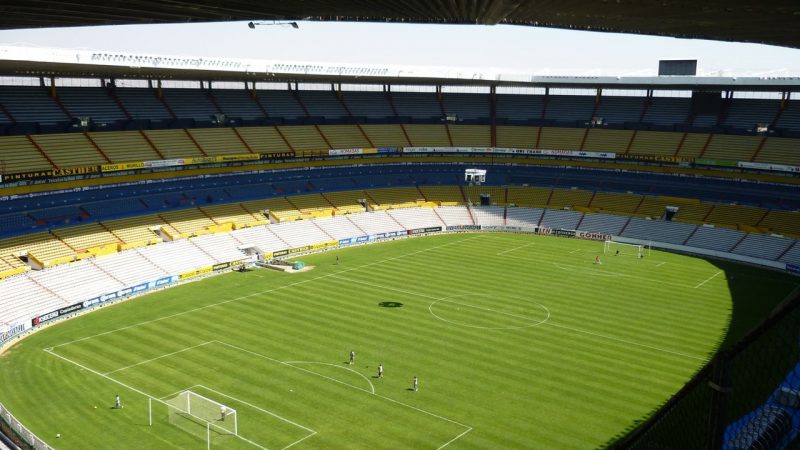
Manchester United are back in the Champions League. After finishing 15th in the Premier League during the 2024-25 season — the lowest position in the club's modern history — a summer spending spree and three prolific signings dragged the Red Devils out of mediocrity and into European football's most prestigious competition for the 2026-27 campaign.
The comeback story centers on three names: Benjamin Šeško, Matheus Cunha, and Bryan Mbeumo. Each delivered double-digit Premier League goal tallies during the 2025-26 season. The result is a club that went from existential crisis to Champions League qualification in a single year.
The triple signing that changed everything
Matheus Cunha was the first through the door, completing his transfer from Wolverhampton Wanderers on 12 June 2025 for £62.5 million. Bryan Mbeumo followed on 21 July 2025, arriving from Brentford for an initial £65 million plus £6 million in potential add-ons. Benjamin Šeško signed from RB Leipzig on 9 August 2025 for €76.5 million, with a further €8.5 million in performance-related bonuses. Taken together, the outlay on the trio comfortably exceeded £200 million equivalent before add-ons, one of the heaviest single-summer commitments in the club's history.
From rock bottom to continental football
The 2024-25 season was a genuine low point for one of the world's most storied football clubs. Finishing 15th placed Manchester United closer to the relegation zone than the top four. All three signings scored 10 or more Premier League goals during the 2025-26 campaign, transforming a team that had struggled to create chances into one that could hurt opponents from multiple positions.
The turnaround was dramatic enough to secure Champions League qualification, ending a seven-year absence from Europe's top competition — a drought notable for a club that won the tournament three times, most recently in 2008. For a generation of younger supporters, an entire stretch of their supporting life passed without seeing United in Europe's elite club competition.
When United return, they will enter a changed competition. Since the 2024-25 season, the Champions League has used a expanded 36-team league phase replacing the traditional group stage, giving clubs eight different opponents and a single consolidated table before the knockout rounds. United will also rejoin Europe's other heavyweights — Real Madrid, Bayern Munich, and their Premier League rivals — in a tournament that has become a benchmark for whether a rebuild is genuinely complete.
What the rebuild says about modern football economics
Cunha was a known quantity in English football. Mbeumo had thrived in a tactical system at Brentford that demanded efficiency. Šeško was one of the Bundesliga's most coveted young strikers. None of these were speculative punts on unproven talent. They were calculated acquisitions of players entering or approaching their prime years — a profile that typically commands premium fees but reduces the risk of a long adaptation period.
The Champions League return also carries significant financial implications for United. Participation in the tournament generates substantial revenue through broadcasting rights, commercial deals, and matchday income. That revenue can help offset the enormous transfer outlay from last summer. Under UEFA's current distribution model, clubs earn a starting fee simply for qualifying, with further payments tied to results in the league phase and progression through the knockout rounds — meaning on-pitch performance in the competition directly affects how quickly the summer investment pays for itself.
