Manchester City’s €100m Bouaddi deal highlights French football’s talent drain
Key Takeaways
- •Over the past five years, the value of Ligue 1 exports to major rival leagues has roughly tripled.
- •Premier League spending on Ligue 1 players has reached a record €447m this season with one week left in the summer window.
- •Sales to the Premier League have brought Ligue 1 clubs nearly €2bn since summer 2021, while transfers between French clubs have risen far less quickly.
- •Ligue 1’s media-rights setbacks, including the collapse of the Mediapro deal and the end of the Dazn agreement, have sharply reduced television income for clubs.
- •Ligue 1 now ranks fifth in UEFA’s association coefficients, giving it only three guaranteed Champions League places and increasing the pressure to sell players.
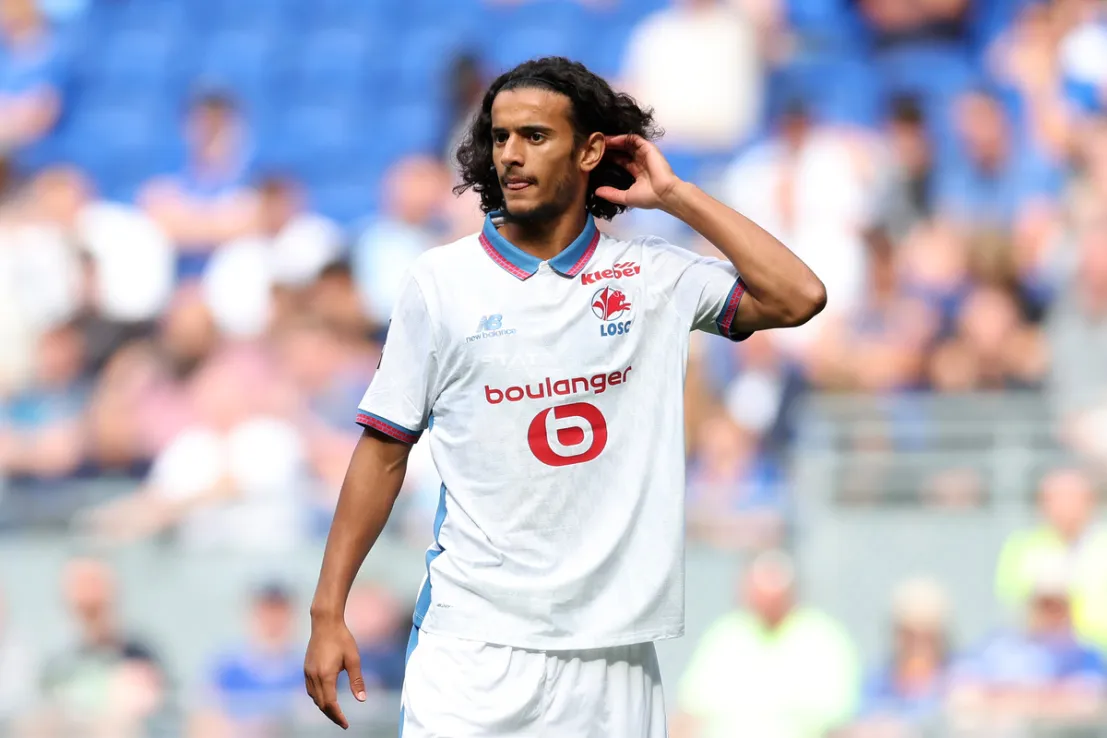
Manchester City’s €100m (£86m) signing of Lille midfielder Ayyoub Bouaddi is more than another example of a wealthy European club securing a promising talent.
It is also the latest sign of French football’s talent drain, a trend driven by the Premier League’s growing spending power and the financial pressures facing most Ligue 1 clubs.
The move raises broader questions for those running the sport in France and risks further weakening Ligue 1’s standing as one of Europe’s Big Five leagues.
The numbers point clearly in one direction: French clubs are increasingly dependent on selling their best players, such as Bouaddi, to overseas buyers in order to stay afloat.
Over the past five years, exports from Ligue 1 to its seven biggest rival competitions — in England, Spain, Italy, Germany, Portugal, Turkey and Saudi Arabia — have roughly tripled in value.
Sales to the Premier League alone have brought in close to €2bn since the summer of 2021, only slightly less than the total generated from the other six rivals combined, and up about 150 per cent over five years.
By contrast, the value of transfers between Ligue 1 clubs has risen by only 70 per cent, suggesting that much of the money from overseas sales has not been recycled back into the domestic market.
How media rights problems have hurt Ligue 1 clubs
French football has long been a development hub. Along with south London and Rio de Janeiro, the wider Paris region is one of the biggest breeding grounds for players in the world.
But the severe financial problems facing all Ligue 1 clubs except Qatar-backed Paris Saint-Germain have accelerated the outflow of talent, leaving many clubs with less room to keep emerging players as they move from academy prospects to established first-team targets for richer leagues.
The first major blow came in 2020, when Ligue 1’s media rights deal with Mediapro collapsed after the company defaulted on payments, forcing the league into a discounted emergency agreement with Canal+.
That was followed by an aborted partnership with Dazn, which ended its €500m-a-year deal after one season last year, saying the return was being eaten up by insufficient anti-piracy measures.
Ligue 1 was then left to launch its own streaming service, generating only €140m a year for clubs collectively — far below the €840m Mediapro had agreed to pay.
French top-flight clubs now receive less from television contracts together than the average Premier League club earns on its own.
It is little surprise, then, that talent is moving across the Channel faster than the Eurostar, with Bouaddi the latest example this summer.
Premier League clubs are spending record sums on players from France
The dynamic, combative 18-year-old Morocco international, known for his long curly hair, was a breakout star at the recent World Cup, helping explain the huge fee for a player with fewer than 100 appearances for Lille.
His arrival will take Premier League spending on Ligue 1 players this season to €447m, already a record with one week left before the summer deadline and a January window still to come.
Other players to have left France for England in recent seasons include Liverpool’s Jeremy Jacquet, Manchester United’s Leny Yoro, Manchester City’s Jeremy Doku and Rayan Cherki, and Brentford’s Mamadou Sangare.
While French clubs continue to produce elite talent, the drain has inevitably affected their competitiveness in Europe, aside from the financially insulated PSG. For clubs outside Paris, player sales are not just a trading strategy but a way to offset a revenue gap that is visible in transfer markets, broadcasting income and European competition alike.
Ligue 1 is now a distant fifth in Uefa’s association coefficients, meaning it receives only three guaranteed places in the 36-team Champions League.
England and Spain have five each, while Italy and Germany have four. With clubs from Portugal outperforming their French counterparts last season, that figure could be reduced further.
With less European success comes less revenue from Uefa’s central distribution, reinforcing a vicious cycle that makes French clubs ever more dependent on selling their players.

