Federal Judge Indira Talwani Invokes the Supreme Court's Own 'Major Questions Doctrine' to Block Trump's Mail-In Voting Restrictions
Key Takeaways
- •Judge Indira Talwani temporarily blocked a Trump administration effort affecting mail-in voting, after the Supreme Court had reinstated Trump's March executive order imposing new USPS mail-ballot regulations.
- •Talwani's order invokes the major questions doctrine, a Supreme Court doctrine created in 2014 that has previously been applied only to strike down Biden-era policies such as the eviction moratorium and student loan forgiveness plan.
- •The case, League of Women Voters v. Trump, is expected to return to the Supreme Court, where it is unclear whether the 6-3 Republican majority will permit sweeping election changes so close to Election Day.
- •Critics across the political spectrum warned the USPS rule would create a major administrative burden, with Cato's Stephen Richer noting all-mail states would cope best and USPS employees would bear the brunt of blame for undelivered ballots.
- •NAACP President Derrick Johnson denounced the order as an attempt to maintain power rather than promote election integrity, warning that democracy is never guaranteed.
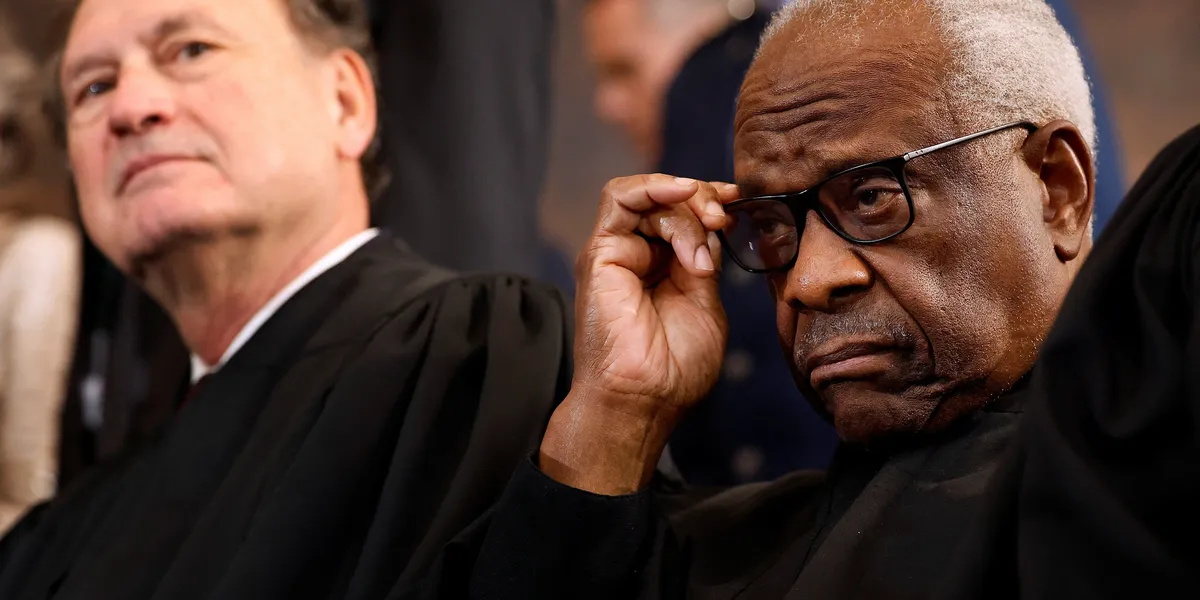
The Supreme Court's recent willingness to allow President Donald Trump to implement his mail-in voting restrictions — even as it weighs ultimately banning them — has left outside observers "angry and alarmed." The decision fits a pattern that Democrats and neutral observers alike describe as hyper-partisan behavior by the bench. But a Thursday decision by federal district Judge Indira Talwani has turned the justices' own logic against them, using the reasoning they once applied to a Democratic president as grounds for halting his Republican successor — provided they are willing to set aside partisanship and rule consistently.
On Thursday evening, Talwani issued a new order temporarily blocking a Trump administration effort that appears designed to undermine voting by mail in the upcoming midterm election, as Vox's Ian Millhiser reported on Sunday. "Talwani previously blocked an executive order that President Donald Trump issued in March, which ordered the US Postal Service (USPS) to impose a byzantine array of new regulations on voting by mail, but the Supreme Court reinstated the order on Monday."
"Talwani's new order sets up a new legal fight that is almost certain to return to the justices, and it is unclear whether this Court, with its 6-3 Republican majority, will allow Trump to make sweeping and unilateral changes to how the United States conducts its elections so close to an actual Election Day," Millhiser added. "That said, while Talwani's new order in League of Women Voters v. Trump is brief, it is well-crafted to persuade at least some members of the Court's Republican majority to break with the leader of their political party." The case arrives amid a broader run of litigation over presidential power in Trump's second term, in which lower courts have repeatedly pushed back on executive actions only to face review by a Supreme Court that has shown increasing skepticism of nationwide injunctions.
Turning the major questions doctrine around
To achieve this, Talwani cited the "major questions doctrine" — a concept invented by the Supreme Court's Republican majority during President Barack Obama's second term that has only ever been used against Biden. Under this construct, the executive branch is prohibited from making policy changes that are too sweeping or too aggressive, regardless of whether a federal statute authorizes them. Its most prominent applications to date came in cases striking down Biden-era policies, including the eviction moratorium and the student loan forgiveness plan, each grounded in the idea that actions of vast economic and political significance require clear congressional authorization.
"One common critique of this doctrine is that it appears nowhere in the Constitution or in any federal law," Millhiser wrote. "The Court first announced the doctrine in its 2014 opinion in Utility Air, which merely invoked it to criticize a hypothetical EPA regulation that never actually existed. The Court has also never handed down a majority opinion explaining where the justices' new power to veto federal regulations comes from. Moreover, while some individual justices have attempted to do so, their explanations conflict with each other, and are often ridiculous. Barrett has argued, for example, that the major questions doctrine derives from a parable about a babysitter."
"Another criticism of the doctrine is that the Court has never applied it to a Republican administration — indeed, the Court has thus far only applied it to Biden," he continued. "The doctrine, after its first appearance in 2014, laid dormant for the entire first Trump administration — only to spring back to life in order to block several of Biden's attempts to respond to the Covid-19 pandemic. Yet, while the major questions doctrine is hard to defend as a good faith effort to interpret the Constitution or any statute, the pragmatic case for allowing someone to rein in a too aggressive president has undoubtedly gotten stronger in the last two years. Trump is a walking advertisement for the idea that there should be limits on executive power. If the Court decided to apply its major questions doctrine to Trump, it's unlikely that many Democrats would object to such a decision."
The doctrine has widely been regarded as "illegitimate," both because of its inconsistent application and because even a Republican judge — Associate Justice Brett Kavanaugh — expressed open contempt for it when it was issued. Yet because Trump's mail-in voting rule would undeniably force the USPS and other institutions to scramble to implement it effectively mere weeks before Election Day, it "should be a very easy case — even for the Court's Republicans," Millhiser concluded. "All they need to do to strike down Trump's attack on voting by mail is apply the same rules to Trump that they previously applied to Biden." Whether the justices take that path — and how quickly, given the electoral calendar — will shape how millions of mail ballots are processed in November.
Reactions across the political spectrum
When the decision was first announced, conservatives and liberals alike joined in denouncing it.
"Ironically, if it does come to be in effect, the states best equipped to handle the USPS rule might be the all-mail states," said Stephen Richer, legal fellow with the conservative Cato Institute's Robert A. Levy Center for Constitutional Studies. "That is, the administrative burden is comparatively simple for states that simply mail a ballot to every registered voter. Those states just need to keep sending full voter registration list to USPS." Richer, formerly the top election official in Maricopa County, Arizona — one of the country's largest jurisdictions — has experience administering election rules under intense scrutiny.
"It will be much harder on the states that have lots of mail voters, but not all mail voters," Richer continued. "I gotta imagine that the people who are the least excited about this are USPS employees. This is a massive new administrative lift, and people will blame them for any undelivered mail ballot."
NAACP President Derrick Johnson offered a sharper rebuke: "Let this ruling be a reminder that democracy is never, ever, guaranteed. Those in power know full well that they are unpopular and will lose in a free and fair election, and so they are trying to do everything they possibly can to make it difficult for you to vote. Trump's order has nothing to do with election integrity. It has everything to do with maintaining power at all costs."
Source: Alternet | Vox — Ian Millhiser
