Voting Rights Groups Ask Federal Court to Enforce Injunction Blocking USPS Mail-In Voting Rule
Key Takeaways
- •Voting-rights organizations filed an emergency motion asking a federal court to enforce an injunction against the Postal Service’s mail-voting rule.
- •The Postal Service announced a final rule on Friday night and said it would take effect if existing court blocks are lifted.
- •Judge Indira Talwani ruled on Aug. 11 that the Postal Service must stop actions related to refusing to transmit mail-in or absentee ballots and related rulemaking.
- •The Postal Service said the rule was dated to ensure it could be implemented in time for the November midterm elections.
- •Common Cause’s Susannah Goodman said states have refused to hand over unredacted voter rolls in several cases, and she said the groups have won when states pushed back.
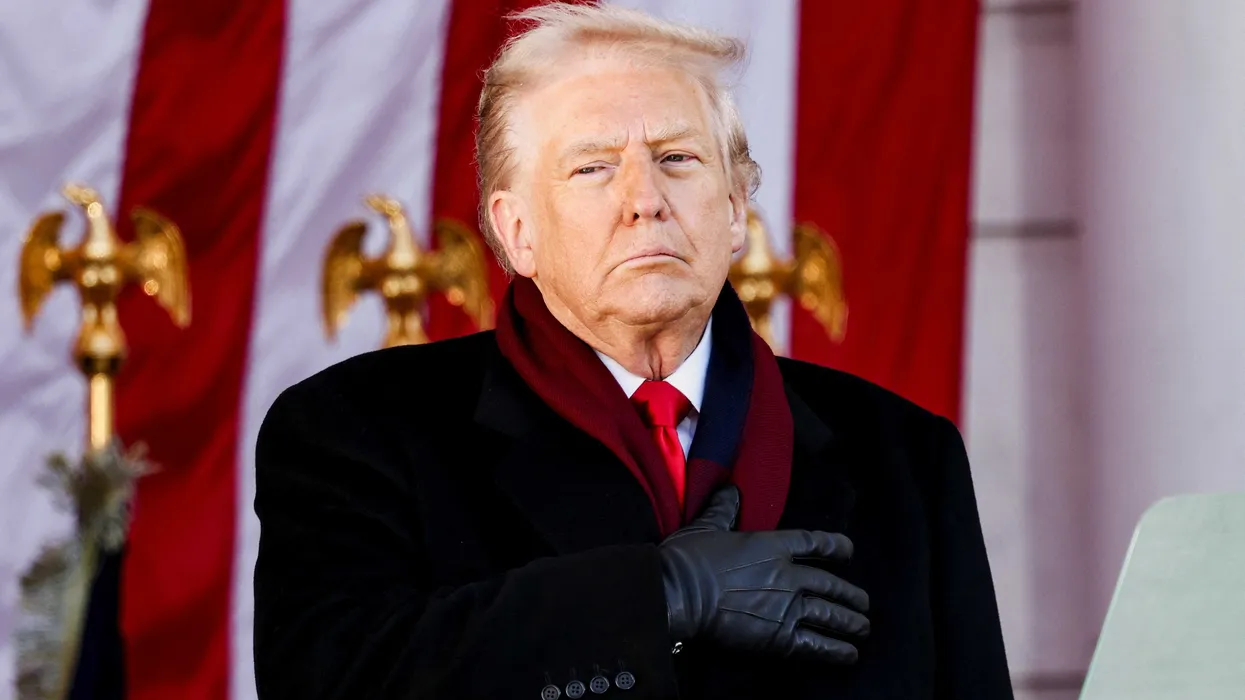
President Donald Trump has long foreshadowed an intended power grab to avoid losing control of Congress in the 2026 midterms — one he plans to implement in part by restricting mail-in voting through the U.S. Postal Service. Now, a new report shows that voters and voting-rights organizations are fighting back against Trump's war on mail-in voting.
"A coalition of pro-voting organizations is asking a federal court to stop the U.S. Postal Service (USPS) from finalizing a rule restricting mail-in voting this week," Democracy Docket's Brentin Mock reported on Sunday. "On Saturday night, the League of Women Voters of Massachusetts (LWVMA) and other civic and civil rights organizations filed an emergency motion to have a U.S. District Court enforce its injunction against the USPS's plans to execute part of President Donald Trump's executive order against mail voting."
Mock added, "The postal service announced a final rule Friday night to implement those plans, stating they will immediately go into effect should that injunction — and another currently blocking it — be lifted by the U.S. Supreme Court."
However, on Aug. 11, U.S. District Court Judge Indira Talwani ruled that the postal service needed to cease those plans, including any measures involving "refusing to transmit mail-in or absentee ballots; or otherwise initiating or completing rulemaking to promulgate the specific regulations outlined in" Trump's executive order. That ruling is what the voting-rights groups are now asking the court to enforce, underscoring how the legal fight over the Postal Service sits alongside broader disputes over election administration heading into 2026.
The journalist further pointed out that "the USPS's Friday night announcement, which will be officially published on Aug. 26, is the agency's promulgation of that rule, with a retroactively listed effective date of Aug. 21. The postal service said it needed to date it as such to ensure it could be rolled out in time for November's midterm elections."
Speaking to AlterNet in June, Susannah Goodman, Policy Director in the Voting and Fair Representation Program for the nonprofit Common Cause, said some of Trump's attempts to meddle in the midterms could be illegal.
"The other thing is that, as you well know, the administration has been trying to compel states to turn their voter rolls over to the federal government and to consolidate all of that in a mega database," Goodman told AlterNet. "A number of states have refused to turn over their unredacted voter rolls with personal identifying information — Social Security numbers, driver's licenses, et cetera. Common Cause and our partners have intervened in, I think, 17 of those cases on behalf of voters."
She added that there has not been a single case "when the state has resisted and claimed they are not going to turn these voter rolls over, the court has dismissed the case or compelled the states to turn them over. The government has not had a compelling reason, and the states have won. So when states fight back, they win. We have been involved in that litigation. That is another huge power grab by the administration. It is also an illegal power grab, and when we have pushed back, we have won."

