Concerns grow over mail delivery, voter records and federal election intervention
Key Takeaways
- •A small-business owner in Astoria, Oregon, received only two of five postcards she mailed to herself since August, drawing scrutiny because the state conducts all of its elections by mail.
- •The Postal Service has hired the Spanish firm Prosegur, which Norway's sovereign wealth fund blacklisted in 2024 over human-rights concerns, to supply nearly 1,000 armed guards at 55 or more postal facilities in heavily Democratic cities.
- •Internal records released by Democracy Forward show ICE obtained 50.6 million voter-registration records from the Justice Department and another 48.4 million records connected to DHS election-integrity official Heather Honey.
- •The administration has refused to allow OSCE international election monitors, joining Russia and Belarus as the only countries taking that position, while voting-rights groups challenge in court the placement of armed federal agents at polling places.
- •A Demos report found states removed roughly 19.26 million voter-registration records between the 2020 and 2022 general elections, representing 8.5 percent of all registered U.S. voters.
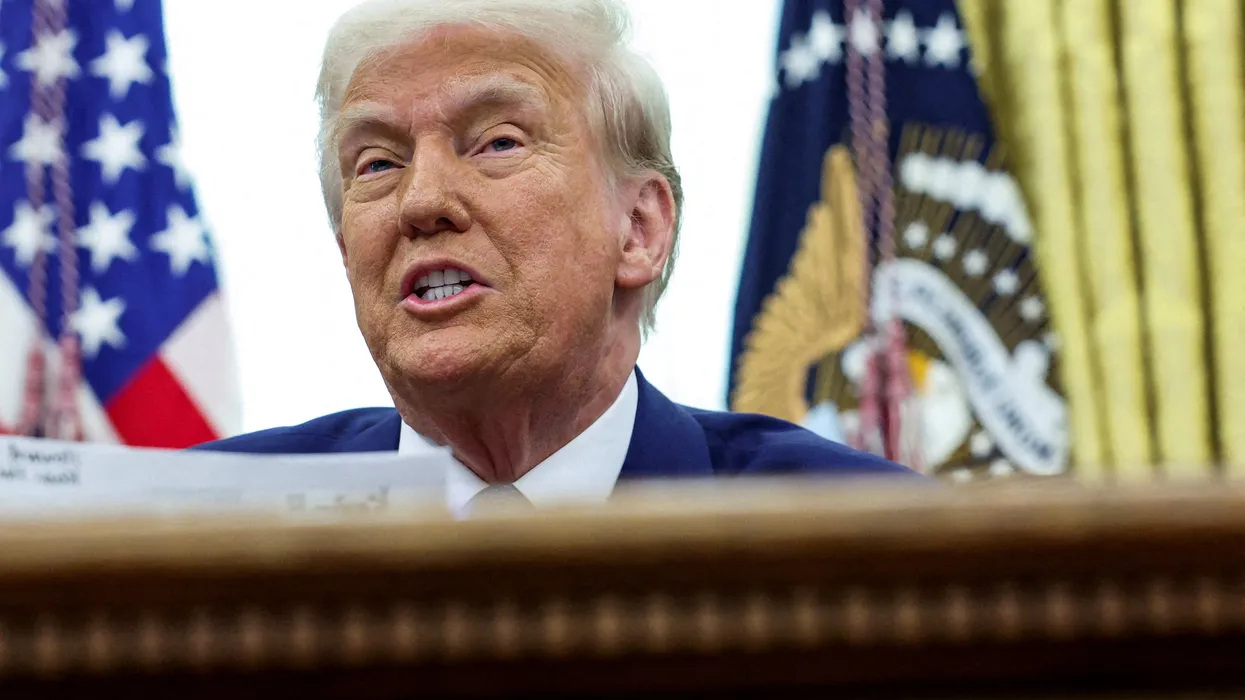
Concerns over mail delivery and federal election activity are emerging weeks before ballots are sent in Oregon and ahead of the fall election, raising questions about the administration’s handling of voting infrastructure, voter data and election oversight.
In Astoria, Oregon, a coastal town of about 9,000 people, small-business owner Audrey Long has mailed five postcards to herself since August to test local mail service. Only two have arrived, and the first took more than a month. The delays are particularly concerning because Oregon conducts elections entirely by mail, although ballots are not scheduled to be sent until the following Wednesday. Oregon has conducted all of its elections by mail since 2000, when it became the first state to adopt the practice statewide.
Astoria City Hall, located across the street from one of Long’s businesses, has also experienced unreliable mail delivery. Tenants in a nearby 40-unit apartment building have reported similar problems, according to Oregon Public Broadcasting. Oregon Sen. Jeff Merkley is examining the issue. His office told OPB, “The timing of these issues is especially concerning.”
The problems initially appeared to be limited to Astoria. However, after the issue was discussed on air earlier in the week, callers from states across the country reported similar mail delays. Those reports continued in the following days. One listener in Germany said his ballot had been mailed on September 19, the legal deadline under the Uniformed and Overseas Citizens Absentee Voting Act for sending ballots to foreign residents, but had not yet reached his home in Mannheim despite online tracking.
Earlier this year, President Donald Trump signed an executive order restricting who could receive a mail-in ballot. The Supreme Court rejected the administration’s request to implement parts of the measure last month, according to SCOTUSblog. The article argues that the administration may nevertheless be influencing the Postal Service through other measures that have received less public attention.
One such issue involves private security at postal facilities. Raw Story’s Alexandria Jacobson reported that nearly 1,000 armed private security guards had been deployed to at least 55 facilities in heavily Democratic cities, including Atlanta, Phoenix, Denver and Chicago. The Postal Service reportedly hired Prosegur, a Spanish multinational security company, rather than relying solely on its own police force. The company’s selection has also been discussed by The New Republic.
Norway’s sovereign wealth fund blacklisted Prosegur in 2024 after its ethics council described the company as presenting “an unacceptable risk that the company is contributing to serious human rights abuses,” according to Norway’s Council on Ethics. Prosegur has also faced accusations of intimidating union organizers in Latin America, as reported by Equal Times.
Frank Albergo of the Postal Police Officers Association has questioned whether Postal Service officials are supervising the contractors. He described the arrangement as “private contractors in and around ballots without any federal control.”
The article also concerns about the collection and use of voter-registration information by Immigration and Customs Enforcement. Democracy Forward released 166 pages of internal ICE records obtained through a Freedom of Information Act request. The records indicate that ICE obtained 50.6 million voter-registration records from the Justice Department. State voter-registration rolls are maintained as centralized statewide databases under the Help America Vote Act of 2002.
The documents also identify another 48.4 million “voter records” obtained from what they call the “independent sources” of Heather Honey, the Department of Homeland Security’s point person on “election integrity.” Honey was a private investigator handling counterfeit-goods cases before 2020 and, according to the article, had no previous background in elections or voting machines. She continues to claim that Trump won the 2020 election.
Honey was also identified as the source of the false claim that “Pennsylvania counted more votes than it had voters.” Trump repeated that allegation at the Ellipse on January 6, 2021, before the attack on the Capitol. The attack included chants of “Hang Mike Pence” and resulted in the deaths of five police officers and the hospitalization of 140 others.
The records reviewed by The New York Times showed that Homeland Security had opened investigations into 150 “good government” nonprofit organizations that register voters. The documents also indicated that officials had considered sending undercover agents into some of the groups to “disrupt activities.” Democracy Forward described the records and the agency’s actions in a press release. The New York Times reported separately on the voter-registration investigations at this link.
The article further points to statements about alleged noncitizens on voter rolls. In July, DHS Secretary Markwayne Mullin said officials had identified more than a quarter-million noncitizens on voter rolls in four states and threatened state officials with jail for even minor election-related errors. The figure was subsequently reduced in right-wing media coverage and by DHS. The department later claimed that 185 noncitizens were registered in Nevada, one of the four states. Nevada officials investigated and found that all 185 people were lawful citizens, according to reporting that included NBC Bay Area’s account.
The article argues that the original figure could be revived if Republicans lose the election, regardless of its accuracy. It cites Trump’s description of falsehoods as “truthful hyperbole,” a phrase used in his book.
Federal involvement at polling places and counting centers is another point of dispute. The Justice Department is dispatching “monitors,” while voting-rights organizations and local governments are challenging the administration’s plans to place armed federal agents at polling locations and vote-counting operations. The groups’ legal challenge is described by Democracy Forward.
The administration has also refused to allow international election monitors from the Organization for Security and Co-operation in Europe, or OSCE, which has observed U.S. elections for decades. The article says the United States has joined Russia and Belarus as the only three countries to take that position. The reported decision was also covered by MSN.
In a separate court proceeding, a federal judge told a Justice Department attorney that the state would have to provide advance notice before releasing its “citizenship lists.” According to Democracy Docket, the attorney responded, “If you want to enjoin us, enjoin us.”
The article also cites several of Trump’s public statements about election administration. Earlier this year, Trump told The New York Times that he “should have” deployed the National Guard in 2020 to seize voting machines in swing states such as Georgia. He has falsely claimed that states act merely as federal agents when counting votes, suggesting that the president could direct how they conduct elections.
Trump has also discussed canceling the midterm elections with House Republicans, said Republicans should “take over the voting” in at least 15 places, and told NBC that he would accept the fall results only “if the elections are honest.” When TIME asked whether he might declare a national emergency related to the election, he declined to rule it out.
The article recalls Trump’s conduct on January 6, 2021. At 2:24 p.m., after learning that the Capitol had been breached and that rioters were searching for electoral college ballots and threatening members of Congress, Trump tweeted that then-Vice President Mike Pence “lacked the courage to do what needed to be done.” The article interprets the statement as a call for Pence to defy the election results. The crowd subsequently chanted “Hang Mike Pence” while Trump watched events on television from the White House. The sequence has also been examined by Rolling Stone.
The article argues that officials who might previously have opposed such actions have been replaced by election deniers and other Trump allies. It also cites reporting that the two men who run the $415 million MAGA Inc. Super PAC spent part of the preceding weeks assisting a Putin-aligned candidate and party in a Balkan election. After the right-wing candidate won, he thanked Russian President Vladimir Putin for his assistance and expressed support for future cooperation. Raw Story reported on the activity in this article.
The piece places current concerns in the context of the 2000 presidential election. It states that then-Florida Gov. Jeb Bush removed about 90,000 mostly Black and Hispanic voters from the state’s rolls before the election. His brother, George W. Bush, won Florida by 537 votes. The Florida Supreme Court ordered a recount, but the U.S. Supreme Court stopped it in a decision supported by five Republican-appointed justices.
A consortium of news organizations later examined the ballots and concluded that Al Gore would have led if all disputed ballots had been counted. A November 12, 2001, New York Times article stated: “If all the ballots had been reviewed under any of seven single standards and combined with the results of an examination of overvotes, Mr. Gore would have won.” The article is available through The New York Times archive.
The recount was also disrupted when Republican congressional staffers, supported by lawyers Brett Kavanaugh, John Roberts and Amy Coney Barrett, participated in what became known as the “Brooks Brothers Riot.” The group pounded on the doors and windows of the Miami-Dade canvassing board until the hand recount was halted. Background on the episode is available through Wikipedia’s reference page and a FactCheck.org report.
The article then examines voter-roll purges. A Demos report found that states removed 19,260,000 records from their voter-registration rolls between the close of registration for the 2020 general election and the close of registration for the 2022 general election. The figure represented 8.5% of all voters registered in the United States at the close of registration for the 2022 election, according to Demos.
The article also cites the Center for Justice’s finding that 17 million voters were purged in the two years before the 2018 election, equal to 10% of the U.S. voting population. It argues that because the largest purges occurred among Black and young voters in Republican-controlled states with large Democratic cities, the national averages could be substantially higher in the states where the purges were concentrated.
The Brennan Center reported that much of the purge activity occurred in former Confederate states that, before the Supreme Court’s 2013 Shelby County decision weakened the Voting Rights Act’s preclearance system, were required to obtain federal review of certain election changes. The center stated: “The median purge rate over the 2016–2018 period in jurisdictions previously subject to preclearance [Red states] was 40 percent higher than the purge rate in jurisdictions that were not covered by Section 5 of the Voting Rights Act [Blue states].” Its analysis is available here.
The article concludes that voters should be prepared for potential mail delays, disputed lists of alleged noncitizens, private security personnel overseeing facilities through which ballots pass, and federal intervention at polling places or counting centers. Heading into the fall election, the concrete developments to watch include the scheduled mailing of Oregon ballots, the ongoing legal challenge to armed federal agents at polling places, and the court proceeding over advance notice for the release of “citizenship lists.” It argues, however, that these tactics cannot prevent a decisive election result. If the margin is too large to deny or reduce through administrative challenges, the article concludes, Trump’s attacks on election administration may not succeed.

