Magic Eden Pivots to iGaming as Bitcoin and Ethereum NFT Trading Volume Declines
Key Takeaways
- •Magic Eden is shifting its strategic focus from NFT marketplace operations to iGaming in response to declining trading volumes that have remained depressed since the 2021–2022 peak cycle.
- •The platform originally launched on Solana in 2021 and later expanded to support Bitcoin inscriptions and Ethereum Ordinals before becoming one of the highest-volume NFT marketplaces.
- •iGaming activity is expected to provide more consistent and higher-frequency revenue compared to NFT sales, which tend to be episodic and tied to collection launches.
- •Bringing gambling services onto a crypto-native platform adds regulatory complexity, including know-your-customer requirements and licensing obligations across jurisdictions such as the United Kingdom, Malta, and Curaçao.
- •The pivot reflects category-wide pressure on NFT marketplaces rather than a company-specific challenge, potentially signaling similar diversification moves by competing platforms.
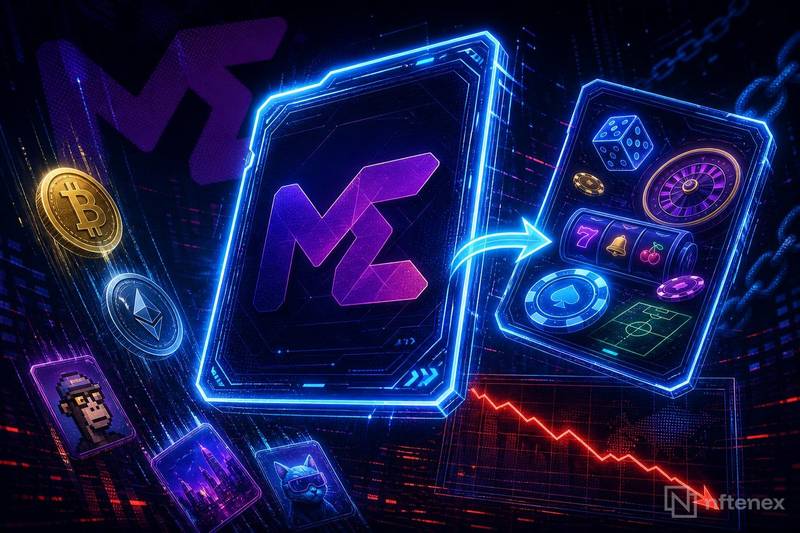
Magic Eden Repositions Beyond NFT Trading
Magic Eden, originally rooted in Solana and later expanded to support Bitcoin and Ethereum NFT trading, is undertaking a strategic shift toward iGaming. Launched in 2021 on Solana, the marketplace quickly grew into one of the highest-volume NFT platforms before extending cross-chain support to Ethereum Ordinals and Bitcoin inscriptions. The repositioning goes beyond a surface-level rebrand — it reflects a fundamental reordering of where the platform anticipates future demand will originate.
The primary catalyst behind the pivot is weakening NFT trading volume, the core metric that has historically driven marketplace fee revenue. NFT trading volumes across major blockchains fell sharply from their 2021–2022 peaks and have remained depressed relative to that cycle, squeezing marketplace fee income industry-wide. As trading activity slows on the two largest blockchain networks, marketplaces reliant on transaction fees face mounting pressure on their foundational business model. The broader market environment for the largest cryptocurrency by market capitalization can be observed in Bitcoin spot market data.
How Magic Eden compares to competitors in this contracting market is an open question for traders evaluating which NFT marketplace best fits their needs, and it partly explains why the company's leadership is looking beyond pure NFT exchange activity.
iGaming as a New Revenue Avenue
iGaming presents a fundamentally different demand profile from NFT trading. While NFT sales tend to be episodic and closely tied to collection launches, gaming and wagering activity is typically higher-frequency and more repetitive in nature. This consistency can help smooth revenue streams that would otherwise fluctuate with speculative cycles.
The global online gambling market is a large, established industry with reported revenues in the tens of billions of dollars annually, operating under licensing regimes in jurisdictions such as the United Kingdom, Malta, and Curaçao. Bringing iGaming onto a crypto-native platform, however, introduces an additional layer of regulatory complexity, as gambling platforms must comply with know-your-customer requirements, licensing obligations, and jurisdiction-specific restrictions that differ from those governing NFT marketplaces.
The strategic logic is straightforward: a platform confronting a shrinking legacy volume base has a clear incentive to add an adjacent business line that keeps users engaged and generates monetization opportunities more frequently. However, the move should be understood as a diversification experiment rather than a guaranteed success, and its execution has yet to be independently verified.
Broader Implications for the NFT Marketplace Sector
When a top-tier marketplace redirects its strategy, it can signal systemic pressure across the wider NFT ecosystem. With declining trading volume identified as the trigger, the repositioning points to weakened category-wide momentum rather than an isolated company-specific challenge — a backdrop reflected in broader crypto market conditions.
Other NFT platforms face identical economics. Some may respond by expanding beyond core trading into gaming, payments, or other engagement-driven products. This trajectory mirrors the path taken by Ethereum-based crypto firms that broadened their product surfaces as individual revenue lines matured.
The bottom line is measured: the reported pivot is best understood as a strategic adaptation to falling trading volume, and its ultimate success will hinge on whether iGaming demand materializes at a scale comparable to what NFT trading once delivered.

