Everything announced at Made by Google 2026
Key Takeaways
- •Google unveiled four Pixel 11 phones, all powered by the Tensor G6 chip built on a 2nm process.
- •All Pixel 11 models are priced $100 higher than their Pixel 10 counterparts, with Google citing a supplier-related memory crisis.
- •The Pixel Watch 5 adds upgraded hardware, new health features, Gemini support, and starts at $399.
- •Pixel Buds Pro 2 received a new Olive color and will gain Dynamic ANC and Gemini voice controls through a September software update.
- •Google launched Pixel Tag, an item tracker that costs $29 for one unit or $99 for a four-pack and ships on November 11, 2026.
Where and when was it held?
Made by Google 2026 took place on Wednesday, August 12, 2026, in New York City. The keynote began at 6:00 PM ET, or 3:00 PM PT and 11:00 PM WAT for viewers in West Africa.
Trevor Noah hosted the event, replacing Jimmy Fallon, who hosted in 2025. Guests included Alex Cooper, Stephen Curry, Steven Gerrard, and singer PinkPantheress, who closed the night with a performance.
Google released the specifications and pricing for its new devices about eight hours before the keynote began. By the time the presentation went live, most of the announcements were already public, so the event functioned more as a live launch celebration than as a source of new information.
Everything Google announced at Made by Google 2026
Phones
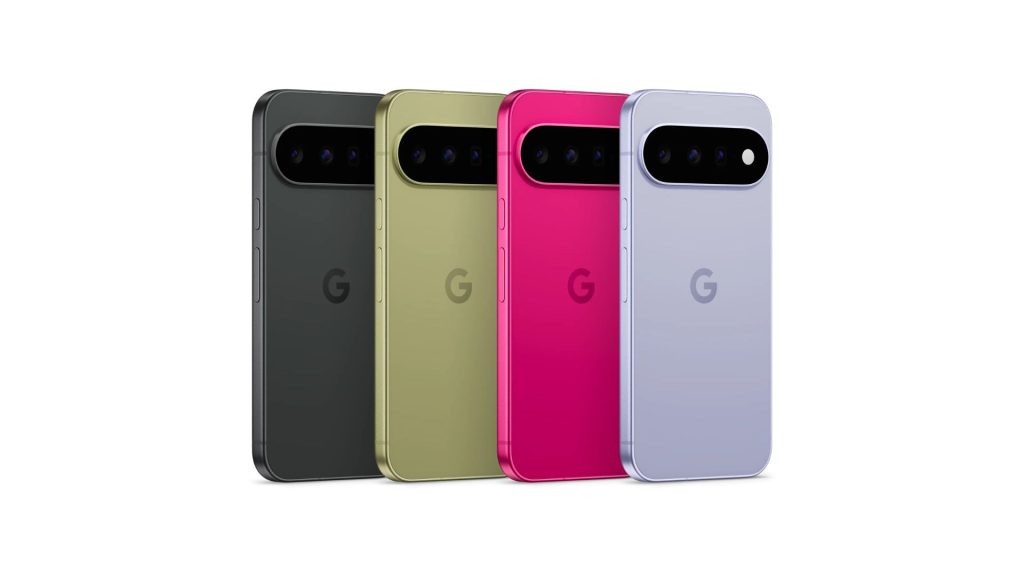
Google introduced four new phones: the Pixel 11, Pixel 11 Pro, Pixel 11 Pro XL, and Pixel 11 Pro Fold. All four are powered by the new Tensor G6 chip, built on a 2nm process.
The Pixel 11 has a 6.3-inch display with up to a 120Hz refresh rate and 3,000 nits peak brightness. It ships with the Tensor G6 chip, 12GB of RAM, and 256GB of storage as the new base tier. The phone has a 48MP main camera, a 13MP ultrawide camera, and a 10.8MP telephoto lens with 5x zoom. It also includes a 4,985mAh battery with 30W wired charging and 25W wireless charging. Colour options are Frost, Obsidian, Hibiscus, and Pistachio. Pricing starts at $899, and sales begin on August 20.
The Pixel 11 Pro has a 6.3-inch display with 3,600 nits peak brightness. The 256GB model comes with 12GB of RAM, while the 512GB and 1TB versions include 16GB of RAM. Its camera system includes a 50MP wide lens, a 48MP ultrawide lens, a 48MP telephoto lens with 5x optical zoom, and a 42MP selfie camera. The battery is 4,850mAh. Pricing starts at $1,099.
The Pixel 11 Pro XL features a 6.8-inch display with the same 3,600 nits peak brightness as the Pro. It uses the same camera setup as the Pro and carries a 5,115mAh battery with 45W wired charging. Pricing starts at $1,299.
The Pixel 11 Pro Fold has an 8-inch inner display and a 6.5-inch outer display, both rated at 3,600 nits. It includes 16GB of RAM across every storage tier and a 4,750mAh battery. Google says the new Fold is thinner and lighter than last year’s model, measuring 10.1mm and weighing 239g. Pricing starts at $1,899, up $100 from last year.
Some reports had suggested the Pro Fold could slip to October, following last year’s release pattern. Google confirmed that all four phones will ship together on August 20, which keeps the lineup on a more unified launch schedule than the staggered rollout that had been expected.
Every phone in the Pixel 11 lineup is $100 more expensive than its Pixel 10 equivalent. In a July interview with 9to5Google, Google’s VP of Devices and Services, Shakil Barkat, said the increase was driven by a supplier-related memory crisis. He pointed to data showing the price of 1GB of mobile RAM rose from $2.80 in 2025 to $12 in 2026, adding that he had never seen memory prices rise so quickly.
That explanation aligns with broader industry trends. Research firm IDC expects global smartphone shipments to fall by nearly 14% in 2026, the steepest decline in more than a decade, while average smartphone prices rise to a record $523.
Wearables
The Pixel Watch 5 keeps the same design as the Pixel Watch 4 but upgrades the internal hardware. It runs on a Snapdragon W5 Gen 2 chip, with RAM increased to 3GB and storage doubled to 64GB.
Google also added several health-tracking features, including improved strength and HIIT tracking, breathing emergency detection, blood pressure trend monitoring, and insulin resistance trends. The company says the watch now tracks running and cycling routes twice as accurately as before.
The Pixel Watch 5 runs Gemini Intelligence and supports offline Gemini commands. It comes in Matte Black, Polished Silver, Satin Pyrite, and Champagne Gold, with the last colour available only on the 41mm model.
Pricing starts at $399 for the 41mm version and $429 for the 45mm version, both above the Pixel Watch 4. A Steph Curry Edition costs $579. All models go on sale August 20.
Audio
Google introduced a new Olive colour for the Pixel Buds Pro 2 while keeping the price at $229. The update extends beyond the colour change.
A software update arriving in September will add Dynamic ANC, which adjusts noise cancellation as the earbuds move in the wearer’s ear, and Gemini voice controls, allowing users to issue commands such as turning up the bass. The update will also add sleep tracking sync with the Pixel Watch and expand Live Translate to more languages.
Google did not announce a Pixel Buds Pro 3 at the event.
Laptops
Googlebook, Google’s laptop platform intended to replace the Chromebook, was not mentioned on stage and did not receive a demo.
Google first announced Googlebook in May 2026, saying the first laptops would come from Acer, Asus, Dell, HP, and Lenovo in the fall. That timeline remains unchanged, and the operating system’s branding is still unsettled. Google told The Verge that Aluminium OS is only a codename for now, and the final name will be revealed later in the year.
The next likely opportunity for a fuller Googlebook reveal is IFA Berlin, which runs from September 4 to 8. Until then, any details about Googlebook specifications or pricing should be treated as unconfirmed.
Software and AI
Every new Pixel phone runs Android 17 and comes with seven years of software and security updates.
The Tensor G6 chip powers a faster on-device AI system through Gemini Nano 4, which Google says runs up to 3.5 times faster while using less battery. On the camera side, a new feature called Magic Capture uses the chip to scan hundreds of frames and automatically select the best shots. Google also added Camera Looks, which provides film-style filters, and Instant Night Sight, which reduces the time needed for low-light photos.
Gemini Intelligence also received new features across the phone, including a Gboard tool that cleans up rambling voice dictation and a proactive assistant that can complete small tasks on its own. Google also added American Sign Language support to Live Transcribe in Gboard.
Buyers of the Pixel 11 Pro and Pixel 11 Pro XL receive six months of Google AI Pro, which includes expanded Gemini access and additional cloud storage.
Pixel Tag
Google also launched Pixel Tag, its own item tracker designed to compete with Apple’s AirTag. Pixel Tag costs $29 for a single unit or $99 for a four-pack. It uses UWB and Bluetooth for precise location finding within about 50 meters.
The battery is replaceable and is expected to last more than a year. Pixel Tag ships on November 11, 2026.
Pricing and availability
Here is the pricing for the Pixel 11 lineup in selected markets.
Pixel 11: $899 / $1,020
Pixel 11 Pro: $1,099 / $1,220 / $1,450
Pixel 11 Pro XL: $1,299 / $1,420 / $1,650
Pixel 11 Pro Fold: $1,899 / $2,020 / $2,250
Pixel 11: £880 / £1,000
Pixel 11 Pro: £1,080 / £1,200 / £1,430
Pixel 11 Pro XL: £1,280 / £1,400 / £1,630
Pixel 11 Pro Fold: £1,800 / £1,920 / £2,150
Pixel 11: €1,000 / €1,130
Pixel 11 Pro: €1,200 / €1,330 / €1,590
Pixel 11 Pro XL: €1,400 / €1,530 / €1,790
Pixel 11 Pro Fold: €2,000 / €2,130 / €2,390
Google confirmed launch markets across North America, Europe, Australia, Japan, and Taiwan. Pre-orders opened on August 12, and phones as well as the watch will ship on August 20.
Nigeria, South Africa, Kenya, and Ghana still do not have an official Google Store or authorised Pixel retailer, and that has not changed with this launch.
In Nigeria, buyers who want a Pixel 11 will likely need to rely on grey-market importers. Common channels for imported Pixel phones include Jumia Nigeria, Slot Nigeria, Konga, and Jiji. For reference, the previous-generation Pixel 9 Pro XL sold for between ₦1,180,000 and ₦1,250,000 on Jumia Nigeria, while used or UK-imported units sold for less on Jiji.
Pixel 11 units are likely to reach Nigeria a few weeks after the US launch and may cost at or above the US retail price once import duty, VAT, clearing fees, and shipping are added. Imported units also will not include local warranty coverage.

