Senate Cloture Vote Sets Up Next Test for CLARITY Act Crypto Legislation
Key Takeaways
- •The Senate will hold a cloture vote on September 15 that requires 60 votes and determines only whether the CLARITY Act advances to floor consideration, not final passage.
- •Senator Cynthia Lummis warned that failing to pass the CLARITY Act this Congress could delay comprehensive U.S. crypto market-structure legislation until 2030.
- •The CLARITY Act aims to distinguish digital assets as securities or commodities and clarify jurisdiction between the SEC and CFTC.
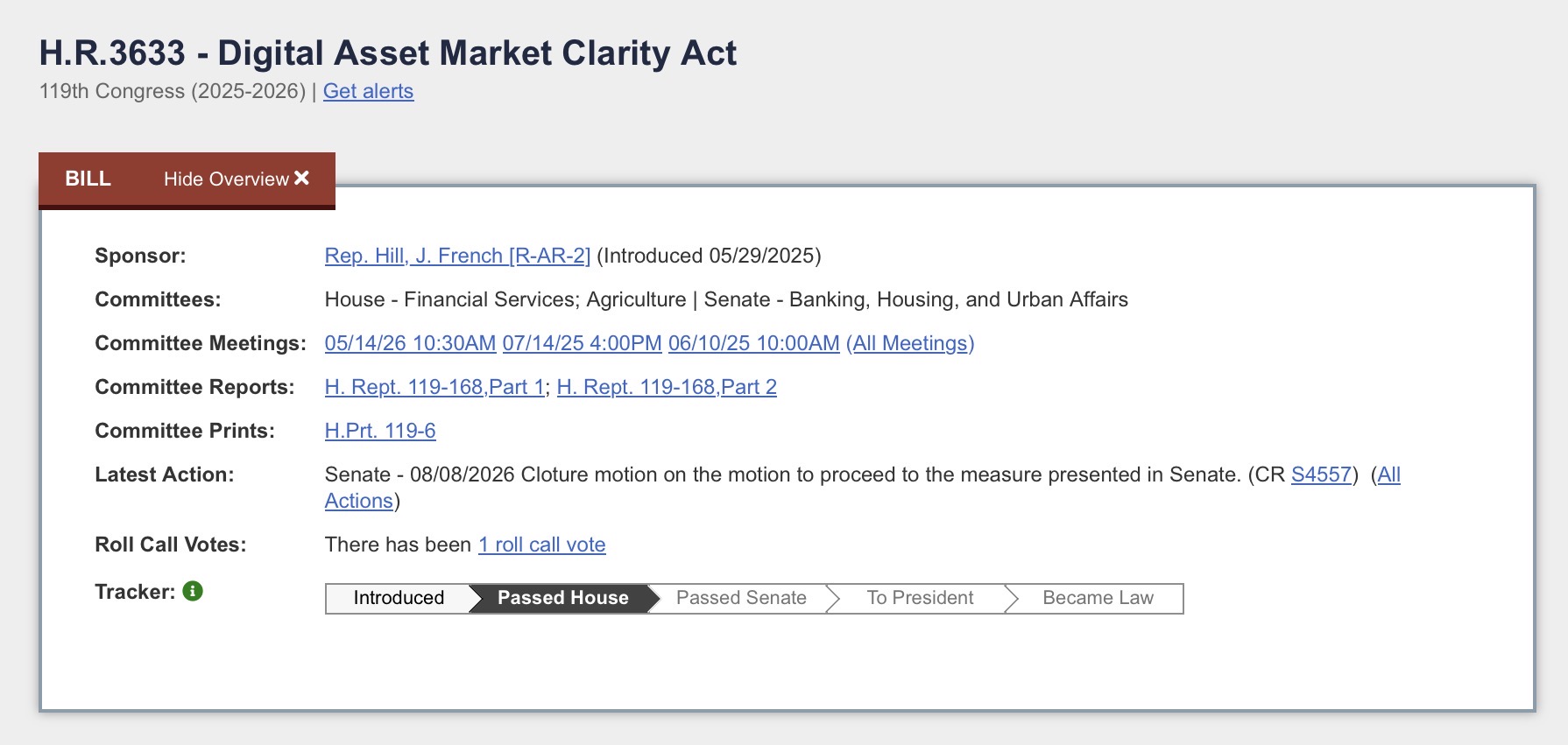
- •The House passed the bill 294-134 in July 2025, but it has remained in the Senate, where Democrats are demanding ethics provisions as a precondition for support.
- •Bitcoin traded near $79,575 with the Fear & Greed Index at 75, and some analysts expect limited short-term market impact even if the bill stalls.
Senator Cynthia Lummis has warned that if the CLARITY Act fails to pass during the current Congress, the next realistic opportunity to advance U.S. crypto market-structure legislation could be pushed all the way to 2030.
Her warning comes just ahead of a scheduled September 15 Senate cloture vote, a procedural step that would determine whether the bill can advance to formal floor consideration rather than a decision on final passage. Under Senate rules, cloture requires 60 votes to end debate, meaning some bipartisan support is necessary for the bill to move forward.
“If the Clarity Act doesn’t pass this Congress, the next real opportunity to bring market structure legislation back up is 2030. That’s years of jobs, investment, and tax revenue we can avoid squandering if we finish this now.”
— Senator Cynthia Lummis (@SenLummis), September 6, 2026
Senate Vote Puts CLARITY Act Under Pressure
The CLARITY Act is designed to draw a clear line between digital assets treated as securities versus commodities, while clarifying jurisdiction between the SEC and the CFTC. It addresses a gap that has persisted for over a decade, as digital assets have been regulated largely through enforcement actions and overlapping agency claims rather than a dedicated statutory framework. The House passed the bill in July 2025 by a 294-134 margin, according to the official Congress.gov record, a tally showing significant support from both parties, and it has since sat in the Senate for more than a year, with the Senate Banking Committee reporting a substitute version in June 2026.
The September 15 vote concerns whether to end debate and move to the next procedural step. It is not a final-passage vote. Unresolved issues remain, including ethics provisions that Democrats are demanding as a precondition for support, and observers cited in the primary reporting consider enactment before the November midterm elections unlikely.
Lummis has argued that finishing the bill now would prevent the United States from wasting years of potential jobs, investment, and tax revenue tied to the digital asset industry. She framed the stakes bluntly: missing this congressional session leaves 2030 as the next realistic window for comprehensive market-structure legislation. Her argument ties the bill’s fate directly to economic opportunity cost, positioning swift Senate action as a matter of competitive urgency rather than routine procedure.
Crypto Market Holds in a Wait-and-See Pattern
Bitcoin is trading around $79,575, down 0.3% over 24 hours but up 3.01% over the prior week. Ethereum sits near $2,497, down 0.1%. The Crypto Fear & Greed Index registered 75, in “greed” territory, with the broader market described as holding in a wait-and-see pattern ahead of the vote. Some analysts cited in the primary reporting expect limited short-term market impact even if the bill stalls.
If the CLARITY Act fails now, it would need to be reintroduced from scratch in a future Congress. U.S. congressional sessions run on two-year cycles, and Lummis’s 2030 timeline reflects the reality that midterm and presidential election calendars typically consume legislative bandwidth, leaving little room for market-structure bills to resurface quickly.
The bill’s intended framework, clarifying SEC and CFTC jurisdiction over digital assets, is viewed by traders as a catalyst for reduced regulatory uncertainty and greater institutional participation. It is worth stressing that 2030 is Lummis’s political forecast based on legislative calendar dynamics, not a statutory deadline written into the bill itself. The immediate practical consequence of a failed cloture vote would be procedural: the bill would remain on the Senate calendar without a path to floor consideration under current scheduling.
The Senate’s scheduled September 15 vote will determine only whether the CLARITY Act can advance to the next procedural stage; it does not make the bill law. Even a successful cloture vote would still leave debate, amendments, and an eventual final-passage vote standing between the bill and enactment, with ethics provisions and the compressed pre-midterm calendar cited as the biggest remaining hurdles.
Sources: Congress.gov record, X post by Senator Cynthia Lummis, ICOBench coverage
