Senators Lummis and Moreno Back Credit Card Competition Act as CLARITY Act Stalls, Opening New Front with Banking Industry
Key Takeaways
- •Senators Lummis and Moreno became cosponsors of the Credit Card Competition Act on August 7, backing legislation that the American Bankers Association and state banking groups have opposed.
- •The Credit Card Competition Act would require merchants to have routing alternatives to Visa and Mastercard for credit-card transactions, threatening tens of billions in annual interchange fee revenue for card-issuing banks.
- •The banking industry is simultaneously pushing to tighten stablecoin-yield language in the CLARITY Act, a digital asset bill championed by both Lummis and Moreno, creating a politically charged overlap between the two legislative fights.
- •The CLARITY Act failed to advance before the August recess due to unresolved disputes over stablecoin yield provisions and ethics requirements, despite significant political investment by Lummis and Moreno.
- •Senate Majority Leader John Thune plans to file cloture on the CLARITY Act before recess, a procedural step that could set up a floor vote when the Senate returns in September.
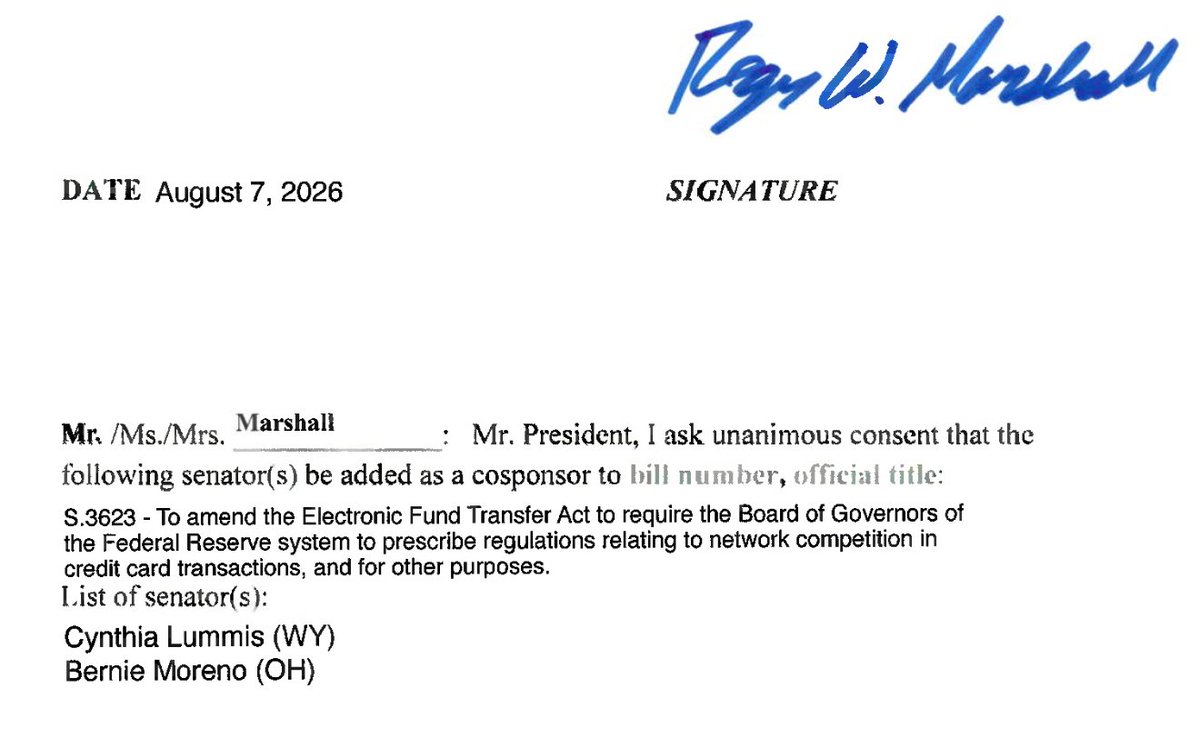
Senators Cynthia Lummis (R-WY) and Bernie Moreno (R-OH) signed on as cosponsors of the Credit Card Competition Act on August 7, aligning themselves with legislation that banking groups have been actively working to defeat. The move comes at a politically charged moment, as the same banking industry is simultaneously pressing lawmakers to tighten stablecoin-yield provisions in the CLARITY Act — a digital asset bill that Lummis and Moreno have championed.
A New Banking Fight Takes Shape
An August 7 Senate filing requests that Lummis and Moreno be added as cosponsors of S.3623, the Credit Card Competition Act of 2026. Introduced by Sen. Roger Marshall (R-KS), the legislation would require greater network competition in credit-card transactions by mandating that merchants have alternatives to the dominant payment networks — Visa and Mastercard, which together route the vast majority of U.S. credit-card transactions — when processing payments.
The American Bankers Association and state banking associations have opposed the bill, warning about potential negative effects on fraud prevention, rewards programs, and financial institutions. The August 7 cosponsorship filing therefore places Lummis and Moreno behind legislation that major banking groups have been trying to stop.
Timing Amid the CLARITY Act Dispute
The CLARITY Act, which would establish a market-structure framework clarifying whether digital assets are regulated as securities or commodities and defining the jurisdictional roles of the SEC and CFTC, lost its chance for passage before the August recess after lawmakers failed to reach the political agreement needed to advance it through the Senate. Stablecoin yield remains one of the unresolved issues complicating Republican support.
Banks have pressed lawmakers to restrict arrangements that could allow crypto platforms to offer returns resembling interest on deposits. The banking industry has called for tighter language, arguing that yield-bearing stablecoin products could draw deposits away from banks and reduce funds available for lending. Recent reporting indicates that those concerns have gained traction among some Republican senators, adding another hurdle for negotiators working to assemble enough votes for CLARITY.
Both Lummis and Moreno have invested significant political effort in advancing crypto legislation. Their move onto the Credit Card Competition Act comes as disagreements backed by the banking industry are making one of their key legislative priorities harder to advance.
Lummis Voices Frustration
Following the latest CLARITY setback, Lummis made clear she was dissatisfied with the state of negotiations. In a post on X, she said lawmakers had "come too far to quit now" and pledged to continue working with colleagues to finish the legislation.
My statement on Clarity Act⬇️⬇️ pic.twitter.com/azGOtse9ID
— Senator Cynthia Lummis (@SenLummis) August 7, 2026
She did not publicly connect her frustration to the Credit Card Competition Act cosponsorship, so the timing should not be interpreted as confirmed retaliation against banks. Nevertheless, the overlap adds political weight: Lummis is fighting to keep CLARITY moving while simultaneously backing another financial bill that major banking groups oppose. Moreno's addition to the same legislation strengthens that dynamic.
Why the Credit Card Bill Matters to Banks
The Credit Card Competition Act concerns a different segment of the financial system than CLARITY. It would change how certain credit-card transactions can be routed by requiring greater competition between payment networks. Banking groups argue the proposal could undermine card rewards programs, increase fraud risks, and impose additional costs. Interchange fees — the per-transaction charges that issuing banks collect from merchants — represent tens of billions in annual revenue for U.S. card-issuing banks, which is why the industry has lobbied aggressively against the measure across multiple Congresses.
Their objections to CLARITY center on stablecoin yield — specifically the risk that yield-bearing crypto products could compete with traditional bank deposits. While the policy questions differ, both bills now involve senators central to the crypto debate and an industry working to protect critical parts of its existing business model.
That intersection makes the Credit Card Competition Act filing particularly notable ahead of the August recess. What began as a dispute over provisions inside CLARITY is now unfolding alongside another contentious banking issue.
CLARITY Still Has a September Path
CLARITY has not lost its route forward. According to reporting by Eleanor Terrett, Senate Majority Leader John Thune still intends to file cloture on the motion to proceed before lawmakers leave for recess, a procedural step that would limit further debate and tee up a floor vote when the Senate returns in September.
🚨NEW: Leader Thune's office is telling crypto industry leaders today that the majority leader still intends to file cloture on the motion to proceed to the Clarity Act before lawmakers leave for August recess, per multiple sources. The move would tee up a vote on the Clarity…
— Eleanor Terrett (@EleanorTerrett) August 7, 2026
Getting the votes remains the central challenge. Negotiators still need to resolve the dispute over stablecoin yield and reach a bipartisan agreement on ethics provisions. Procedural preparation will matter little if supporters cannot assemble the coalition needed to advance the bill.
The Credit Card Competition Act does not change that vote arithmetic. What it changes is the broader political environment surrounding the negotiations. Lummis and Moreno are entering the August recess backing legislation opposed by banking groups while CLARITY remains caught in a dispute where bank concerns have gained traction among their colleagues. That dynamic will be worth watching when negotiations resume in September.

