Senator Lummis: CLARITY Act Would Have Shielded Crypto Users in Bankruptcy Proceedings
Key Takeaways
- •Section 701 of the CLARITY Act would amend the US Bankruptcy Code to classify digital commodities and ancillary assets as customer property, extending protections similar to those already afforded to securities and commodities customers.
- •The proposed legislation would prohibit crypto platforms from commingling customer assets with company funds, enabling users to recover their deposits directly rather than being treated as unsecured creditors.
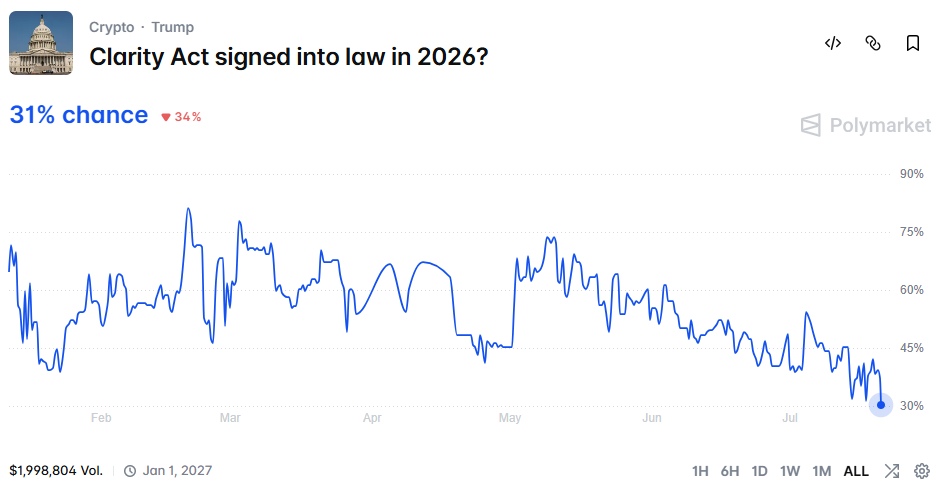
- •The CLARITY Act remains stalled in the Senate amid disagreements over ethics provisions that Democratic supporters are seeking and the White House opposes.
- •President Trump has publicly urged passage of the bill, warning that inaction could allow countries like China to gain dominance over the digital asset and artificial intelligence sectors.
- •Industry groups caution that continued legislative delays risk pushing cryptocurrency development toward jurisdictions with established regulatory frameworks, including the European Union and the United Kingdom.
US Senator Cynthia Lummis stated that the CLARITY Act would protect cryptocurrency users from losing their deposits when crypto firms go bankrupt, pointing to past failures where customers saw their assets absorbed into bankruptcy estates.
The pro-crypto Republican senator from Wyoming made the remarks in an X post, noting that crypto users watched their assets become part of the bankruptcy pool after Voyager and Celsius collapsed. Lummis said the proposed legislation would ensure users retain ownership of their assets even if a platform fails.
The crypto industry has experienced several high-profile bankruptcies in recent years, including FTX, Celsius, and Voyager. These collapses resulted in significant losses for retail investors, as customer deposits were not treated separately from company assets under existing bankruptcy law. The absence of a tailored federal framework for digital assets left courts to apply traditional bankruptcy rules designed for securities and commodities brokerages, which do not explicitly cover crypto deposits.
Section 701 Amends US Bankruptcy Code
Section 701 of the CLARITY Act, titled "Protecting Customer Property," would amend the US Bankruptcy Code to include digital commodities and ancillary assets within the definition of customer property. The provision requires that such assets be treated as customers' property, mirroring the protections already afforded to securities and commodities in broker-dealer bankruptcies.
The legislation would also prohibit crypto platforms from commingling customer assets with the platform's own assets. Under the proposed framework, user deposits would be treated separately, allowing customers to recover their assets in kind during bankruptcy proceedings rather than being classified as unsecured creditors forced to navigate lengthy legal processes. The CLARITY Act more broadly aims to establish a clear division of regulatory authority between the SEC and the CFTC over digital assets, a distinction the industry has sought for years as enforcement actions and court battles created an uncertain operating environment.
Senate Delays and Ethics Disputes
Lummis' comments come as the CLARITY Act remains stalled in the Senate, where it awaits a final vote requiring bipartisan support. According to reports, the delays stem from disagreements over ethics provisions that Democratic supporters have been seeking, which the White House opposes.
The White House has actively engaged in efforts to advance the crypto legislation. President Trump called on the Senate to pass the bill in honor of the recently deceased Senator Lindsey Graham.
In a Truth Social post, Trump wrote: "China, and many other countries, would like to take complete and total control of this major financial 'happening,' as well as A.I., where we are now leading, but where they are fighting hard. Don't let China win on either subject!!!"
The president also reportedly met with Republican Senators Lummis and Bernie Moreno, along with key White House staff members. However, no timeline has been established for when the bill might reach the Senate floor.
With 14 working days remaining before the August recess, concerns are growing that the CLARITY Act may not pass this year. Crypto journalist Eleanor Terrett noted that if the bill does not reach the Senate floor by this week, any possibility of passage before August would be closed. Industry groups have warned that continued legislative inaction could further push digital asset development toward jurisdictions with established crypto frameworks, including the European Union and the United Kingdom.
Source: The Market Periodical

