Beyond the Fairytale Castles: Discovering the Loire Valley's Slower Side
Key Takeaways
- •UNESCO inscribed a 280-kilometre stretch of the Loire Valley on its World Heritage List in 2000, recognising both architectural heritage and the cultural landscape shaped by vineyards, rivers, forests, and villages.
- •The Bourgueil appellation, centred in the village of Restigné, produces nearly 40 per cent of the region's red wines using Cabernet Franc grapes known for producing structured, aromatic, age-worthy wines.
- •Château de Candé, modernised by Charles Bedaux after his 1927 purchase, hosted the private wedding of the Duke of Windsor and Wallis Simpson on 3 June 1937, away from London's crowds.
- •Château de Champchevrier has remained in the same family for 11 generations and hosted Louis XIII four times, beginning in 1619, as well as the temporarily relocated British Embassy during the fall of France in June 1940.
- •The guinguette tradition of open-air riverside gatherings, originating as 19th-century cafés for Parisians, has experienced a marked revival across France as democratic social spaces combining food stalls, local wines, and live music.
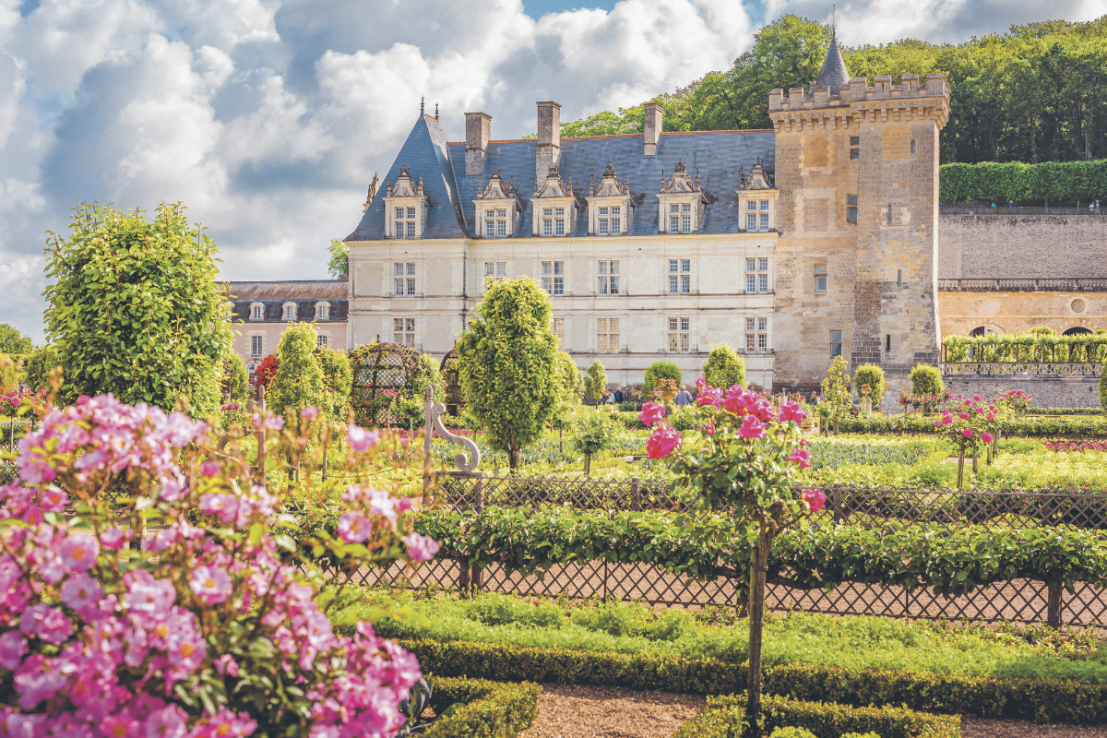
Beyond its famous châteaux, the Loire Valley offers a quieter, equally captivating experience shaped by exceptional cuisine, ambitious wines, elegant accommodation, and a rare rhythm of life.
A short flight of just over an hour from Stansted to Tours places visitors in the heart of the region. The rooftop La Belle Vue Restaurant offers spectacular lunches paired with local wine, overlooking the awe-inspiring Tours Cathedral, built between 1170 and 1547, with its 13th-century stained-glass windows and twin towers topped with Renaissance lanterns.
While most visitors arrive seeking fairytale castles and depart with photographs of turrets reflected in the river, that familiar image tells only part of the story. A longer stay reveals another version of the Loire — one defined by outstanding food, ambitious wines, elegant places to stay, and an unhurried pace that feels increasingly rare. This slower Loire has become the region's greatest luxury.
Settling Into the Local Tempo
Evening meals at Nuances, a riverside country restaurant, feature dishes made with ingredients grown on the family farm. Nearby, in the wine-growing village of Restigné — which produces nearly 40 per cent of the reds of the Bourgueil appellation — La Dixmeresse offers an elegant bed-and-breakfast experience. The Bourgueil appellation, like its neighbour Chinon, is built on Cabernet Franc, a grape that gives the middle Loire its signature reds — structured, aromatic, and built to age. The property is run by Englishman Charles and his French wife Géraldine. Charles, a former international businessman, changed direction the year before.
"My kids had left home so we decided to move to France and start a new life here," Charles explains. "It is hard work, but I don't regret a moment of it." His enthusiasm as he serves homemade breakfast is evident in what he calls his role of "chaleureux hôtelier."
Just 40km northwest of Tours, the Huttopia Family Camping site at Lac de Rillé offers tent pitching and ready-to-camp accommodation with a heated swimming pool, nature-themed activities, and a sauna. The serene 200-hectare lake provides an ideal setting for a canoe ride.
Across Tours and the surrounding villages, a new wave of chefs is creating polished yet relaxed restaurants where local produce takes centre stage. Menus feature Loire fish, goat's cheese, asparagus, tomatoes, mushrooms, and seasonal fruit — celebrating the region without feeling predictable.
Chez Odette, a vineyard restaurant, serves French bistro cuisine with everything homemade. Prices are reasonable relative to quality: starters €10–€12, main courses €20, desserts €10. Three glasses of wine cost €17, drawn from an excellent selection.
Wallis Simpson Married Here
The Château of Champchevrier, open to visitors from June to September, has been in the family of co-owner Laurence Bizard-Hamilton for 11 generations. She and her husband Gustaf guide visitors through the property, where living tradition remains central to its operation.
Gustaf explains that most historic royal castles had to keep a bed prepared for the monarch, who could arrive at any time. Louis XIII stayed four times, first in 1619 when he was just 18. After a large supper, he reportedly asked to sleep on sheaves of straw rather than the lavishly prepared silk bed.
Some 300 years later, in June 1940, Sir Ronald Hugh Campbell — then serving as British ambassador — visited when the British Embassy temporarily relocated to Château de Champchevrier to escape the German advance during the fall of France.
A further British connection lies 30 minutes down the road at the imposing Château de Candé, six miles south of Tours. Purchased in 1927 by Franco-American industrial millionaire Charles Bedaux and his wife Fern, the castle underwent substantial modernisation. Bedaux added plumbing, central heating, and a telephone system — unique in a French home at the time. He also converted the eight bedrooms into en-suite rooms with an American system capable of filling and emptying a bathtub in under a minute.
In 1937, Bedaux's friends the Duke of Windsor (formerly King Edward VIII) and Wallis Simpson needed a private, secure venue for their wedding. Bedaux offered the estate, and the couple married there on 3 June, far from London's crowds, even etching their combined names into the wooden coving. Cecil Beaton photographed the small, private ceremony. Bedaux later arranged a controversial tour of Nazi Germany for the newlyweds, during which they famously met with Adolf Hitler.
Elegant Stays and Geometric Gardens
Château de Rochecotte offers an outstanding place to stay, with a spa, swimming pool, and a restaurant providing the most elegant dining experience of a visit — sophisticated china plates complementing a splendid dining room. Standard rooms are approximately £158 per night.
Villandry, perhaps most famous for its horticulture, features geometric kitchen gardens among the finest in Europe: nine majestic squares unfurl below the château in a planted chequerboard. The surrounding countryside encourages walking and cycling rather than simply driving between attractions.
In 2000, UNESCO inscribed a 280-kilometre stretch of the Loire Valley between Sully-sur-Loire and Chalonnes on its World Heritage List — recognising not only the architecture but the cultural landscape created by vineyards, rivers, forests, and villages that have evolved together over centuries.
Just 17 minutes' drive from Villandry, La Cabane à Matelot — "The Sailor's Cabin" — is a small, unpretentious restaurant offering fish caught by Romain Gadais and cooked by young chef Ambroise Voreux.
Tours and the Guinguette Tradition
Tours itself, once the capital of the Kingdom of France and now a UNESCO World Heritage Site, brims with history. Place Plumereau, the crown jewel of Old Tours, features majestic half-timbered houses and a lively atmosphere. The city is also known for culinary specialities including rillettes, cheeses, and nougats.
In the evening, wide stone steps lead down to the banks of the Loire, where guinguettes — once simple riverside cafés where Parisians escaped during the 19th century — now combine food stalls, local wines, live music, and communal tables beneath strings of lights. These riverside gathering spots have seen a marked revival across France in recent years, reclaiming their place as democratic, open-air social spaces. Families, cyclists, students, and visitors gather together, creating an atmosphere that feels refreshingly authentic. It is here, rather than inside any château, that the Loire's personality becomes most apparent.
Booking Information
- La Dixmeresse: ladixmeresse.fr
- Huttopia Lac de Rillé: europe.huttopia.com
- Château de Rochecotte: chateau-de-rochecotte.com
- Chez Odette: fredericmabileau.com
- Villandry: chateauvillandry.fr
