Litecoin Approaches $48 Resistance as Trendline Recovery Builds Momentum
Key Takeaways
- •Litecoin traded near $45.98 with a market capitalization of approximately $3.56 billion and daily volume around $135 million.
- •A sustained close above the $48 resistance level could convert former resistance into support and strengthen the recovery structure.
- •On-chain activity has increased over four years, with approximately 400,000 daily transactions and $500 million in value transfer reported.
- •Litecoin underwent a halving in August 2023 that reduced block rewards from 12.5 to 6.25 LTC.
- •The current price near $46 represents a fraction of Litecoin's 2021 peak above $400.
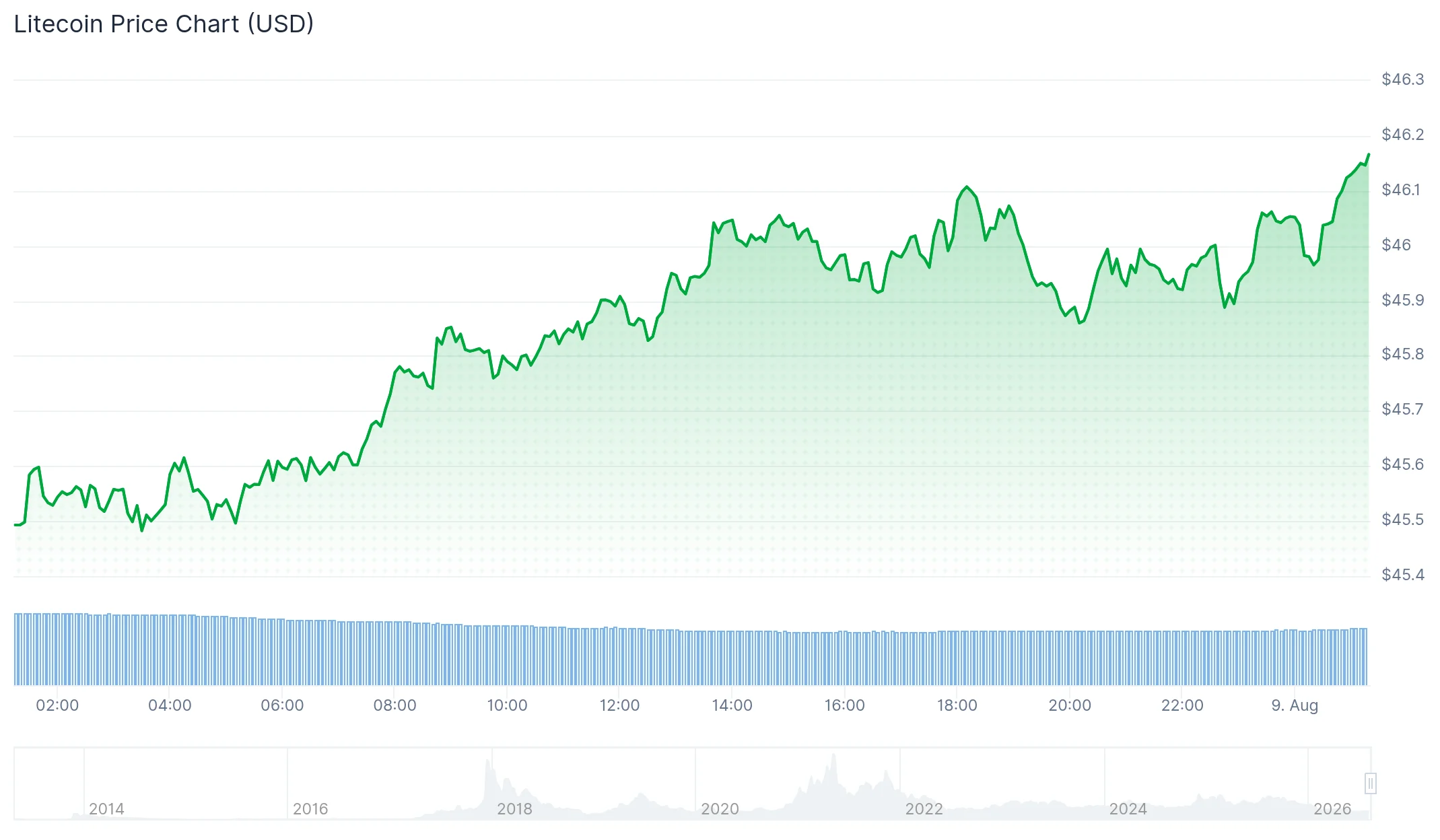
Litecoin is attempting a recovery near $46 after buyers successfully defended an ascending trendline and eased recent selling pressure. LTC traded around $45.98, gaining approximately 1% over 24 hours, according to CoinGecko market data. Its market capitalization stood near $3.56 billion, while daily trading volume approached $135 million.
The rebound brings the $47 to $48 resistance zone back into focus for traders. At the same time, network data indicates rising transaction activity despite limited price progress over the past four years. These technical and on-chain signals present separate tests for Litecoin's short-term momentum and underlying blockchain usage in the sessions ahead.
Litecoin, created in 2011 by former Google engineer Charlie Lee as a faster-transacting complement to Bitcoin, has long occupied a position among the top-ranked cryptocurrencies by market capitalization. Its price history includes a peak above $400 during the 2021 bull cycle, making the current $46 range a fraction of prior highs and a level where long-term holders and traders evaluate whether usage growth can eventually translate into renewed valuation.
Trendline Rebound Places $48 Resistance in Focus
Crypto analyst Marcus Corvinus identified a recovery pattern after LTC bounced from support within its rising price channel. The move carried Litecoin above a short-term descending trendline that had previously capped rebounds, suggesting sellers lost control near the lower channel boundary.
$LTC is showing signs of strength.
Litecoin has rebounded from channel support after breaking its short-term downtrend, suggesting buyers are starting to regain control.
As long as price holds above the rising trendline, bullish momentum could continue to build.
A sustained… pic.twitter.com/FGvpRb36Ke
— Marcus Corvinus (@CryptoBull009) August 7, 2026
However, buyers still need follow-through before the move develops into a stronger reversal. Holding the ascending trendline would preserve the sequence of rising support levels.
Litecoin now faces its first test between $47 and $48. This area previously limited upward movement and may attract traders looking to exit near resistance. Stronger trading volume would provide greater confirmation for any breakout.
A sustained close above $48 could turn former resistance into new support, strengthening the recovery structure and opening room for buyers to challenge higher price levels. Short-lived movement above the zone would offer weaker confirmation.
Momentum could fade if LTC repeatedly fails near $47 or $48. Such rejection would keep the token within its broader channel and expose the rising trendline to another test, forcing buyers to defend that support again.
Litecoin would lose its immediate bullish structure if sellers force a decisive break beneath the ascending trendline. That move could restore earlier downward pressure and shift attention toward lower support areas.
Market data places Litecoin approximately 4.4% below the $48 target. While that distance leaves the resistance level within reach, price must overcome available sell orders. Daily volume near $135 million provides liquidity, though volume expansion would better support a breakout.
On-Chain Activity Expands Despite Restrained Price Performance
Litecoin on-chain activity is increasing even as the token's price records limited long-term progress. A chart from community analyst boglee tracks rising real transaction volume over the past four years.
Litecoin's real onchain volume is going parabollic, and the price stagnation during the past 4 years definitely isn't stopping it. This is what true adoption and use looks like.
Source: pic.twitter.com/HSjbYrjQUc
— boglee (@bogdanoffig) August 5, 2026
The chart contrasts network activity with Litecoin's restrained price performance over the same period, suggesting users are transferring more value without a comparable increase in valuation. Transaction growth can reflect payments, exchange transfers, wallet movements, and other settlement activity.
CoinGecko also highlights recent reports of roughly 400,000 daily transactions and approximately $500 million moving through Litecoin. Those figures reinforce active network use, though both metrics can vary depending on measurement methods.
Rising activity does not by itself establish new exchange demand for LTC. On-chain volume may include repeated transfers or funds moving between addresses controlled by a single entity. Price still depends on liquidity, investor demand, broader market conditions, and available supply.
Even so, sustained usage provides evidence that the blockchain supports activity beyond short-term speculation. Litecoin offers approximately 2.5-minute block intervals and relatively low transaction fees, features that support its established role in payments and routine transfers. The network underwent a halving in August 2023, reducing block rewards from 12.5 to 6.25 LTC and tightening the rate at which new supply enters circulation—a structural factor that some market participants track alongside adoption trends.
The Litecoin price has not matched the reported increase in network activity during the four-year comparison period. That divergence leaves valuation and usage moving along different paths, and traders may watch whether growing transactions eventually coincide with stronger spot demand. Similar gaps between network usage and token price have appeared across other payment-focused cryptocurrencies, where adoption can build without immediately shifting order-book dynamics.
The immediate market setup hinges on the rising trendline and the $47 to $48 resistance zone. On-chain activity offers a separate measure of network health. A trendline break would weaken the technical recovery even if transaction volume remains elevated.

