Holdout Juror in Lindsay Clancy Case Tells Fox News He Had No Reasonable Doubt
Key Takeaways
- •Lindsay Clancy did not dispute accusations that she killed her three children—ages five, three, and eight months—by strangling them with exercise bands, with her defense contending she acted on commands from a voice during postpartum psychosis.
- •Eleven of twelve jurors voted to find Clancy not guilty by reason of insanity, but holdout Michael Desronvil prevented unanimity, producing a mistrial that left the decision on a second trial in prosecutors' hands.
- •Desronvil denied on Fox News that he ever had reasonable doubt, contradicting jury foreperson Roni Carlson's account that he had admitted to reasonable doubt during deliberations.
- •A judge earlier this month rejected Clancy's lawyer's argument that there was insufficient evidence she killed the children, even though the defense had not disputed killings at trial.
- •The case has drawn widespread attention to postpartum psychosis, a condition marked by hallucinations and delusions that occurs in roughly one to two per 1,000 births and that many say is under-treated in the United States.
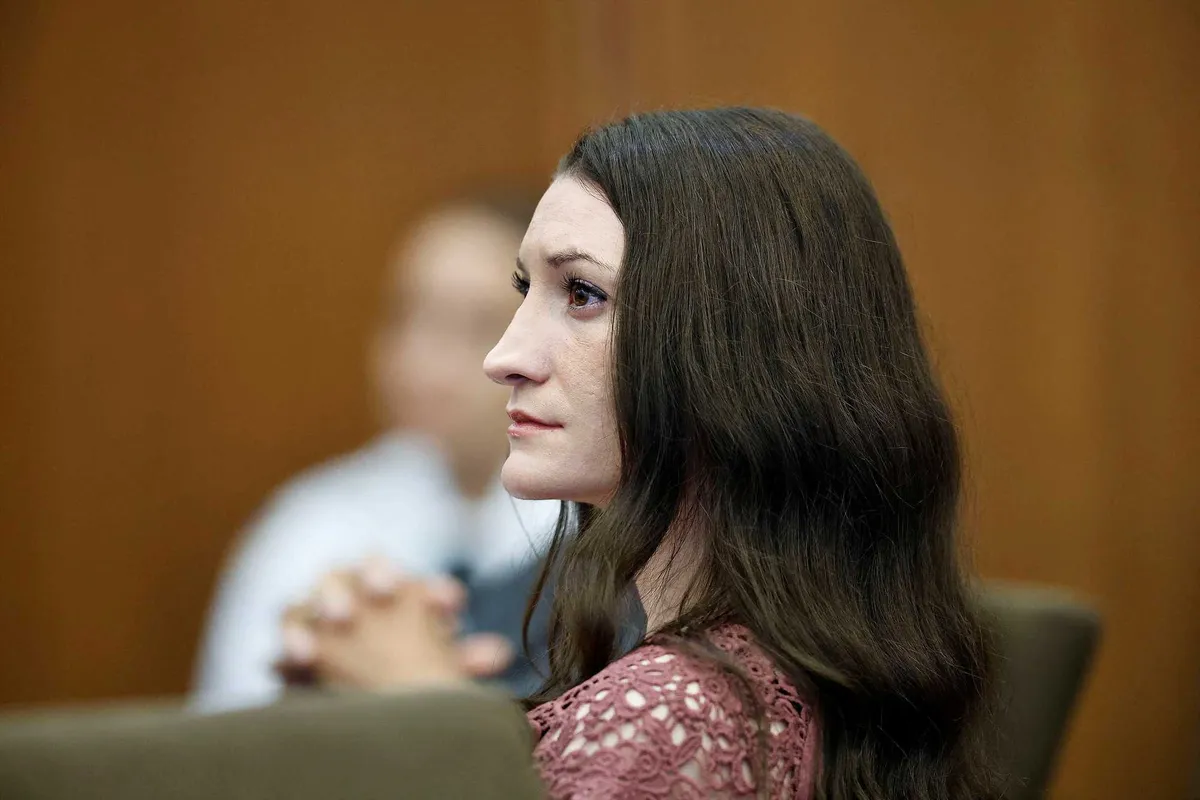
The lone juror who refused to find Lindsay Clancy not criminally responsible for killing her three children is now explaining his controversial vote — a decision that has polarized the American public like few other cases in recent memory.
Clancy did not dispute accusations that she killed her three children — ages five years, three years, and eight months — by strangling them with exercise bands. At her first trial, her defense rested on the argument that she suffered from postpartum psychosis and killed the children after being commanded to do so by a voice. Eleven of the 12 jurors accepted that account and voted to find her not guilty by reason of insanity — a verdict reserved for defendants whose mental illness left them unable to understand the wrongfulness of their actions or to conform their conduct to the law, and one of the rarest outcomes in American criminal court — but a lone holdout insisted she knew what she was doing. That juror, Michael Desronvil, later had his identity leaked. After the mistrial — which left the charges unresolved and put any decision on a second trial in prosecutors' hands — Clancy's lawyer argued there was not enough evidence that she killed the children, even though the defense had not disputed it at trial. A judge rejected that argument earlier this month.
On Wednesday, Desronvil appeared on Fox News to explain to host Kayleigh McEnany why he refused to go along with the other jurors.
"'Did you have reasonable doubt?' McEnany asked," reported Mediaite's Sean James. "'No,' Desronvil answered. That contradicted claims made by several other jurors, including Roni Carlson, the jury foreperson who said Desronvil 'admitted he had reasonable doubt.'"
Carlson told NBC 10 in Boston that she believed Desronvil had acknowledged reasonable doubt but then reneged, while a separate juror complained that Desronvil "had the hardest time getting off the fact that Lindsay viciously killed her children."
"Desronvil told McEnany there were a few 'tense' moments during the trial, especially deliberation," James reported. "'I had a lot of evidence to back up my claim, but because out of respect of the other jurors and the court system, I will put that to sleep for now,' he added." American courts broadly shield jury deliberations from outside questioning, meaning the evidence Desronvil says he assembled may never be laid out publicly.
The Clancy case has received widespread attention in part because many feminists have empathized with Clancy's struggles with postpartum psychosis, a condition they say is under-treated in the United States. Clinicians distinguish postpartum psychosis from the far more common postpartum depression by symptoms such as hallucinations and delusions, and published estimates place its frequency at roughly one to two cases per 1,000 births.
The events underlying the case were recounted by The Conversation in 2023: "When Patrick Clancy returned to their home in Duxbury, Massachusetts, he found Lindsay on the lawn with major injuries, suffered in a jump from a second-story window. Inside, his children – ages 5 years, 3 years and 8 months – were unconscious. The two oldest were pronounced dead at the scene, while the youngest survived for several days."
The outlet added, "As more details of the case became known, a picture emerged of a doting mother and nurse midwife who often shared family photos and anecdotes on social media. After her youngest child's birth, these posts included references to depression, anxiety and her ongoing attempts to find relief via therapy and medication."

