3-MW/12-MWh Energy Storage Project in Lincoln, Nebraska, Nears Final Commissioning
Key Takeaways
- •A 3-MW/12-MWh zinc-based energy storage system in Lincoln, Nebraska, is approaching final commissioning for Lincoln Electric System.
- •The project uses Eos Z3 zinc-based storage technology paired with Wattmore software, offering four-hour duration that exceeds the typical two-hour lithium-ion window.
- •Wattmore's Intellect Operate platform will handle battery monitoring, safety, and customized energy dispatch scheduling.
- •The deployment supports LES's strategic plan to improve grid reliability, resilience, and operational flexibility.
- •LES is among the early municipal utilities to adopt non-lithium energy storage chemistries.
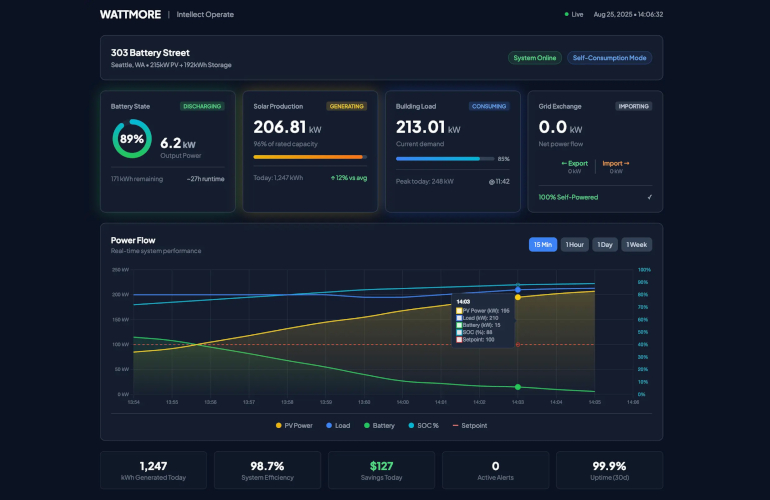
A 3-MW/12-MWh energy storage project in Lincoln, Nebraska, is approaching final commissioning for Lincoln Electric System. The project uses Z3 zinc-based Eos energy storage systems integrated with Wattmore software. The 4-hour duration of the system places it in the category of longer-duration storage applications, which grid operators are increasingly pursuing to extend reliability coverage beyond the 2-hour window typical of many lithium-ion installations.
“In the next few weeks, the teams will finish commissioning and commercial operations requirements,” said Jonathan (J.W.) Postal, founder and CEO of Wattmore. “I want to thank our amazing partners at Pro-Bid Energy for their tireless EPC work; Bridge Renewables, now Apollo Capital, for their financing partnership; and our technology partners from Dynapower and Eos Energy. Finally, I want to give a big shout out to the entire team at Lincoln Electric System for hosting and leading this innovative project.”
Wattmore's Intellect Operate system is designed to monitor and control the battery for health, safety and daily operations. It will also provide a customized energy dispatch schedule for the system.
The project aligns with Lincoln Electric System's strategic plan, Powering LES Forward. According to the companies, the installation is intended to advance reliable and resilient infrastructure, strengthen operational flexibility and create opportunities to manage energy costs through energy storage. For LES, a community-owned, not-for-profit utility, the deployment represents one of the municipally owned power sector's early adopter efforts around non-lithium storage chemistries.
Emeka Anyanwu, CEO of LES, commented at a recent celebratory event, “Today's ribbon cutting reflects LES' long-standing commitment to innovation and responsible planning. Projects like this help ensure we continue delivering safe, resilient and affordable energy while building a stronger future for our community.”
The update was provided by Wattmore.

