Lil Pudgys and Azuki Floor Prices Climb While the Crypto Market Declines
Key Takeaways
- •The total cryptocurrency market capitalization fell 3.85% in 24 hours to approximately $2.198 trillion, while Bitcoin traded near a four-month low at $64,694 and Ethereum slipped to around $1,808.
- •Lil Pudgys floor prices climbed 9.08% to 0.22 ETH on just 11 sales, and Azuki's floor rose 8.06% to 0.48 ETH on 10 sales, illustrating how thin order books can amplify floor moves on minimal volume.
- •The Pudgy ecosystem showed internal divergence, as the Pudgy Penguins floor gained 4.14% to 2.39 ETH while the associated PENGU token fell nearly 21% over seven days to about $0.005.
- •Weekly NFT sales totaled $35.11 million for the week ending November 17, up 6.13% week-on-week despite a 6% decline in transaction counts, with CryptoPunks weekly sales surging 252% to $1.21 million.
- •Pudgy plush toys are available in roughly 2,000 Walmart stores and more than 1,800 Target locations, while Azuki's second physical trading-card set, Fractured Domains, was reportedly due in stores on November 20, 2026, though the date has not been confirmed by Chiru Labs.
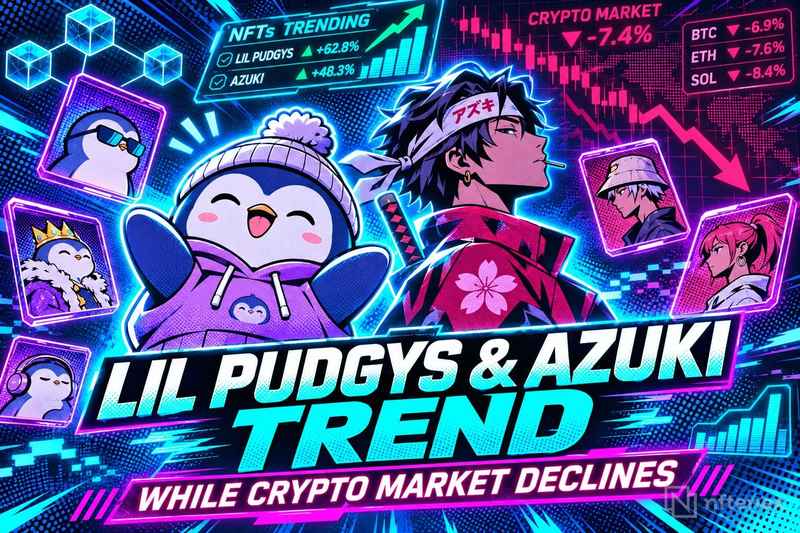
The total cryptocurrency market capitalization fell 3.85% over 24 hours to roughly $2.198 trillion as of November 19, 2026. Bitcoin traded near $64,694, hovering close to a four-month low, while Ethereum slipped to around $1,808. According to NFT Plazas, the preceding weekend produced approximately $2 billion in leveraged liquidations, amplifying the selloff across both spot and derivatives markets.
Yet while fungible-token prices slid, floor prices for two of the most recognizable NFT collections moved higher — a divergence that reflects thin liquidity, collection-specific catalysts, and rotation among remaining buyers rather than broad-based demand. Most of the figures cited here draw on NFT Plazas market data, with global aggregates from CoinGecko.
Lil Pudgys
Against that backdrop, the Lil Pudgys floor price climbed 9.08% in 24 hours to 0.22 ETH, equivalent to roughly $397, on just 11 sales, per NFT Plazas data for November 18. The parent collection, Pudgy Penguins, also gained 4.14% to a floor of 2.39 ETH, or about $4,330. Pudgy NFT sales rose 71% week-on-week to $588,280 for the week ending November 14, the same source noted.
One underreported tension within the Pudgy ecosystem is the divergence between the NFT floor and the associated PENGU token, the ecosystem's fungible token, which fell nearly 21% over seven days to around $0.005, according to NFT Plazas. The collectible and its linked token are therefore trading on opposite trajectories — a split that may reflect different holder bases and liquidity profiles rather than any single narrative about the brand.
Azuki and the Wider Blue-Chip Market
Azuki, created by Chiru Labs, saw its floor price rise 8.06% in 24 hours to 0.48 ETH (approximately $869), with 10 sales recorded on the day, per NFT Plazas. CryptoPunks also gained 4.84% to 28.24 ETH (around $51,140), and the Mutant Ape Yacht Club added 3.87%. Taken together, the moves point to a broader rotation into established, recognizable collections rather than a rally specific to any one project.
Weekly NFT sales for the week ending November 17 totaled $35.11 million, up 6.13% week-on-week, according to NFT Plazas, even as transaction counts fell 6%. CryptoPunks weekly sales surged 252% to $1.21 million, giving the collection roughly 42% NFT market-cap dominance, the same source reported. The global NFT market cap stood at approximately $1.21 billion, with 24-hour NFT volume near $1.42 million, per CoinGecko data cited by NFT Plazas. For scale, that places the entire NFT sector at less than 0.1% of the total crypto market capitalization — a useful reference point when comparing percentage moves across markets of such different sizes.
What May Be Driving Demand for These Collections
Lil Pudgys Catalysts
The Pudgy brand has extended its physical retail presence considerably. Pudgy plush toys are now available in roughly 2,000 Walmart stores and more than 1,800 Target locations, and the brand expanded into 330 Kung Fu Tea outlets in November 2026, according to NFT Plazas. Physical retail distribution creates brand awareness among audiences outside crypto-native circles, which may support collector demand for the digital assets during periods when speculative interest in fungible tokens cools. That retail footprint is a verifiable, real-world anchor that most NFT collections lack.
NFT Plazas also cited three market-mechanics factors as possible contributors to the floor-price divergence across blue-chip collections:
- Thin order books that allow small amounts of buy pressure to move floors materially.
- ETH-denominated floors that can rise in dollar terms even when ETH itself is declining.
- A rotation by remaining active collectors toward established brands perceived as lower-risk within the NFT space.
These are structural observations, not confirmed drivers specific to Lil Pudgys.
Azuki Catalysts
A single source, NFT Plazas, reported that Azuki's second physical trading-card set, Fractured Domains (AZK-02), was due in stores on November 20, 2026. If accurate, pre-release collector interest may have contributed to floor-price activity in the days before the launch; however, the date has not been confirmed via Chiru Labs' official channels and should be treated as an unconfirmed report. The original Azuki card set demonstrated that Chiru Labs can bridge NFT ownership with physical collectibles — a format that proved commercially viable and expanded the collector base beyond on-chain buyers.
Analyst commentary from Sherwood News noted a pattern of floor-price movement without matching volume depth, with one market participant, Shockey of Privy, observing: “Oversold conditions plus exhausted seller bases plus a stabilized macro backdrop equals a snapback.” The observation describes a technical dynamic that can occur in thin-liquidity markets independent of project-specific news.
What the Divergence Means for NFT Traders
The episode highlights structural features of NFT markets that become pronounced during drawdowns.
Key Points
- The divergence is real but narrow: Lil Pudgys and Azuki floor prices rose 9.08% and 8.06% respectively in 24 hours on November 18, while the total crypto market cap fell 3.85% and the Fear & Greed Index sat at 10, signaling Extreme Fear.
- Collection-specific context matters: Pudgy's retail expansion and a reported Azuki card drop on November 20 may reflect identifiable catalysts, but thin order books can amplify floor moves on minimal sales volume — Lil Pudgys saw only 11 trades on the day.
- Liquidity risk is elevated: Floor prices in low-volume collections can reverse as quickly as they rise; the PENGU token's simultaneous 21% weekly decline shows that different instruments tied to the same brand can move in opposite directions.
Liquidity and Floor-Price Risk
Eleven sales moving the Lil Pudgys floor by more than 9% illustrates how thin the actual bid depth is for even well-known collections during a market downturn. A floor price is the cheapest available listing, not a reflection of broad demand; a small number of motivated buyers can reset it upward without signaling a sustainable shift. The floor-price-without-volume pattern documented by Sherwood News across multiple blue-chip collections is precisely the dynamic at work here. In practice, that means headline floor gains during downturns deserve scrutiny until they are confirmed by sustained transaction counts.
The broader crypto market context adds further risk. With approximately $2 billion in leveraged liquidations over the prior weekend and sentiment at Extreme Fear, any recovery in ETH could affect the dollar value of ETH-denominated floors in either direction. Collectors tracking these moves in a week that also included sharp declines in tokenized asset markets on November 18 will recognize how quickly correlated selling can reach across digital asset classes.
For Azuki specifically, the unconfirmed November 20 Fractured Domains card release represents a potential near-term catalyst, but single-source event claims carry execution risk. A canceled or delayed drop could remove one of the narratives supporting the current floor. Pre-event positioning in thin-liquidity collections can unwind sharply if the catalyst disappoints.
The Pudgy brand's physical retail presence across thousands of Walmart and Target locations gives Lil Pudgys a more durable demand story than most PFP (profile-picture) collections, but that retail footprint does not insulate the NFT floor from on-chain selling pressure. Tracking actual secondary sales volume, rather than floor price alone, remains the more reliable signal for whether collector demand is genuine or the product of a thin order book in an Extreme Fear market.
This article is a market observation and does not constitute investment advice.
Source: NFTenex, published November 19, 2026; market data via NFT Plazas and CoinGecko.

