Lien Finance Loses Approximately $542,000 in USDC Following Vulnerability Exploit
Key Takeaways
- •Lien Finance lost approximately $542,000 in USDC after an attacker exploited a vulnerability associated with the protocol.
- •The exact technical method used in the exploit has not been confirmed, as no detailed post-mortem or underlying technical write-up is publicly available.
- •There is no verified information indicating whether the stolen funds belonged to the protocol treasury, users, or a combination of both.
- •No confirmed details have emerged regarding emergency response measures such as contract pauses, official investigations, or recovery coordination.
- •The incident reflects a broader and persistent pattern of DeFi security breaches that have resulted in billions of dollars in losses across the sector in recent years.
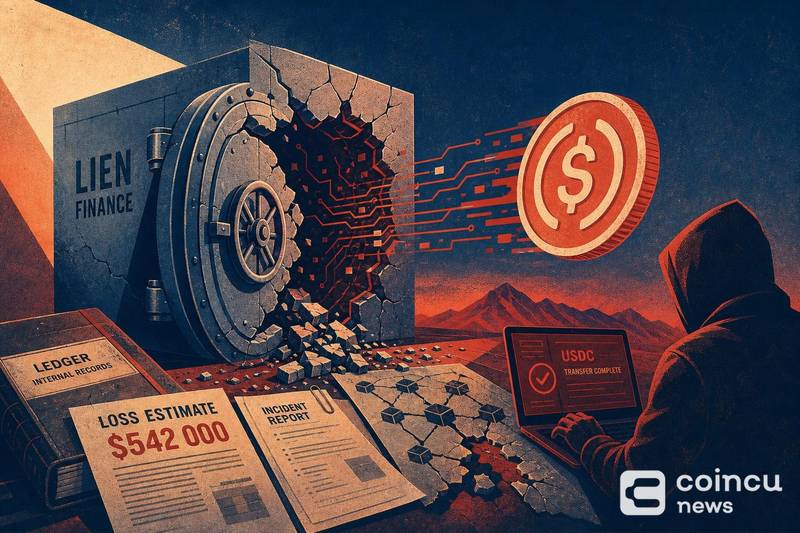
Lien Finance, a decentralized finance (DeFi) protocol, reportedly lost approximately $542,000 worth of USDC after an attacker exploited a vulnerability tied to the platform, according to security tracking of the incident.
The loss stems from a deliberate exploit rather than ordinary market activity. However, details beyond the headline figure remain limited, and the approximate nature of the loss means a precise final tally or a full breakdown of affected balances has not been confirmed. The incident adds to a well-documented pattern of DeFi exploits that have collectively resulted in billions of dollars in losses across the sector in recent years, spanning both large and small protocols.
Confirmed Outcome, Unconfirmed Method
Available evidence indicates that an attacker exploited a vulnerability connected to the protocol, resulting in the unauthorized extraction of USDC. The specific technical path used to drain the funds has not been detailed in the sources reviewed. Common vectors in past DeFi exploits have included oracle manipulation, flash loan attacks, reentrancy bugs, and privilege escalation, though none of these has been identified in this case.
Because no underlying technical write-up is available, the confirmed outcome—an exploit that removed USDC—should be distinguished from unconfirmed assumptions about the exact method. Claims about the precise mechanism remain unverified until a formal post-mortem is published, which is the standard industry practice following incidents of this nature.
Immediate Impact on Lien Finance and Users
The reported drain represents a direct financial hit to the protocol. Exploits of this nature can weigh on user confidence and disrupt normal operations—a dynamic observed across other crypto firms that have experienced financial distress and subsequent creditor recovery efforts.
The reviewed evidence does not confirm whether the stolen funds belonged to the protocol treasury, to users, or to a combination of both. No verified information is currently available regarding emergency measures such as a contract pause, an official investigation, or a recovery effort. In comparable past incidents, affected protocols have sometimes coordinated with blockchain analytics firms and centralized exchanges to trace and potentially freeze stolen funds, though the effectiveness of such measures varies.
The Stolen Asset: USDC
The stolen asset was USDC, a dollar-pegged stablecoin issued by Circle that circulates widely across DeFi lending, trading, and liquidity venues. USDC ranks among the largest dollar stablecoins by circulating supply, and issuance has continued to expand on major networks, including a recent $250 million mint on Solana.
Stablecoins like USDC are frequent targets precisely because they serve as the settlement layer for much of the DeFi ecosystem, from lending markets to institutional tools, and can be quickly moved across decentralized exchanges and bridges.
Broader Context for DeFi Security
The incident underscores that smart contract and protocol vulnerabilities remain a persistent risk across DeFi, where value moves permissionlessly and exploits can settle before defenders are able to react. The sector has seen continued investment in security auditing, bug bounty programs, and real-time monitoring tools, yet no protocol layer has proven immune to novel attack vectors. Broader claims about market contagion or attribution to specific actors are not supported by the current evidence.
Source: CoinCu

