Libya Schedules New Oil Bidding Rounds for 2027 and 2028 Despite Mounting Security Risks
Key Takeaways
- •Libya's National Oil Corporation plans a 2027 bidding round for discovered but undeveloped oil fields, to be followed by a 2028 tender focused on exploration.
- •The NOC's 2025 auction was the first offering of undeveloped fields in 18 years, awarding five of 22 blocks to Chevron, Eni, Repsol, and QatarEnergy, with Exxon and TotalEnergies also among the bidders.
- •The Essar discovery, declared commercially viable by the NOC and Austria's OMV, holds an estimated 195 million barrels with an expected production capacity of about 5,000 barrels per day.
- •The NOC aims to raise production from roughly 1.4 to 1.5 million barrels per day to more than 2 million barrels per day by 2030, a gap of about 500,000 to 600,000 barrels per day the new rounds are intended to help close.
- •Production dropped by about 350,000 barrels per day after an outlaw group closed a valve on the Sharara pipeline, and a more than 20-day armed shutdown of the Hamada pipeline inflicted severe financial losses, highlighting persistent security risks.
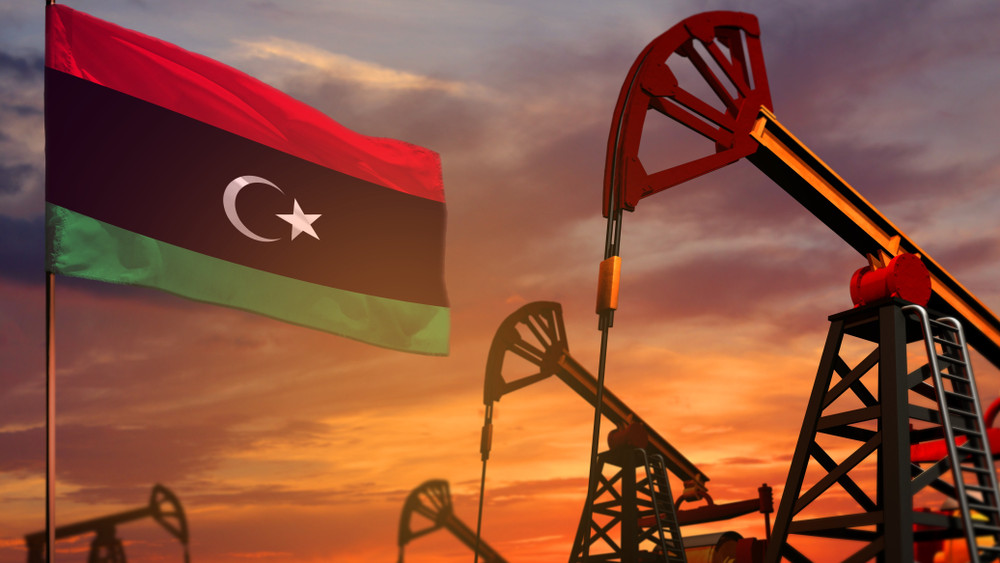
Libya's National Oil Corporation (NOC) has scheduled two new bidding rounds as the state producer pushes to raise output despite a persistently unstable security environment: a 2027 tender covering discovered but undeveloped oil fields, followed by a 2028 round focused on exploration. The sequencing matters: developing fields where oil has already been found generally involves shorter lead times than new exploration, making the 2027 round the nearer-term piece of the NOC's expansion plans.
The upcoming auctions build on a recent milestone. The NOC last held a tender for undeveloped fields in 2025 — the first such offering in 18 years — and last year awarded five of the 22 blocks on offer to companies including Chevron, Eni, Repsol, and QatarEnergy. Bidders also included Exxon and TotalEnergies, completing the wide representation of Big Oil in the process. How quickly those awarded blocks move toward development will be an early indicator of whether the auction format can convert investor interest into new barrels.
Exploration activity has already delivered results. Earlier this year, the NOC and Austria's OMV declared the Essar discovery commercially viable. According to a July statement from the Libyan state oil firm, the discovery holds an estimated 195 million barrels of oil in the upper and lower "Sabil" reservoirs, with an expected production capacity of about 5,000 barrels per day — a fraction of the NOC's stated ambition, underlining that the 2030 target depends on larger developments coming online.
The corporation currently pumps roughly 1.4 million to 1.5 million barrels per day (bpd), but its ambitions are considerably higher: the NOC is targeting output of more than 2 million barrels per day by 2030, a gap of roughly 500,000–600,000 bpd that the new rounds are meant to help close.
Security, however, remains a major obstacle. Rival factions have repeatedly used oil fields, export terminals, and pipelines as bargaining chips against one another, and temporary field closures and export suspensions have become a fixture in the North African country, as groups seize control of a pipeline or a field and press demands on the government. That track record is the backdrop against which companies will weigh any commitment in the upcoming tenders.
The fragility was on display again this week. On Monday, the NOC said Libya's oil production crashed by about 350,000 bpd after an outlaw group closed a valve on the pipeline carrying crude from Sharara, the country's biggest oilfield — a loss equivalent to roughly a quarter of current national output, and one whose duration will be a key early test for the 2030 target.
Over the weekend, the corporation also reported that an armed group's forced shutdown of the Hamada pipeline, which lasted more than 20 days, had triggered severe financial losses and a drop in output, "directly undermining the strategic growth that the entire NOC workforce has been working tirelessly, day and night, to achieve."
By Irina Slav for Oilprice.com
Source: OilPrice.com

