LG Energy Solution Opens Second Michigan Battery Plant; 80% of Global ESS Capacity to Be in North America by Year-End
Key Takeaways
- •The Lansing campus will produce LFP cells for energy storage systems and NMC cells for Toyota battery electric vehicles.
- •LG Energy Solution says the plant is designed to exceed 35 GWh of annual lithium battery manufacturing capacity.
- •The company has invested more than $2 billion in the Lansing facility since 2022 and currently employs about 900 workers there.
- •Employment at the site is expected to increase to 1,700 workers when the plant reaches full capacity.
- •LG Energy Solution plans to have more than 50 GWh of LFP cell capacity in North America by the end of 2026, with 80% of its global ESS capacity located in the region.
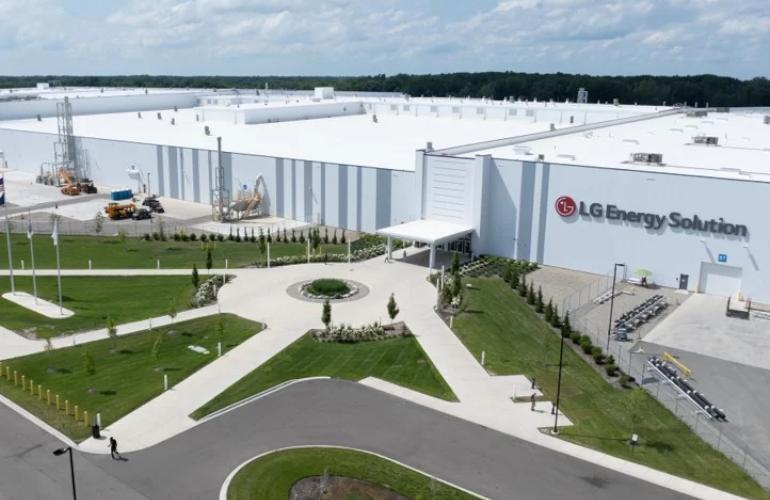
LG Energy Solution (LGES) has begun production at its new manufacturing campus in Lansing, Michigan, where it will build large-format batteries for both energy storage systems (ESS) and electric vehicles. The plant is designed to reach more than 35 GWh of annual lithium battery manufacturing capacity.
LFP cells for energy storage
The Lansing facility will produce lithium-iron phosphate (LFP) battery cells for ESS. Those cells are integrated by LG Energy Solution Vertech, the company's U.S. energy storage division, into complete systems for utility, grid-scale storage, and other commercial and industrial applications.
LFP chemistry uses iron and phosphate instead of nickel and cobalt, trading some energy density for lower cost and longer cycle life — a trade-off that suits stationary storage, where battery weight and size matter less than durability and price. U.S. grid-scale storage installations have grown rapidly in recent years as utilities add batteries to manage intermittent wind and solar output, making domestic cell supply a growing priority for storage developers.
NMC cells for Toyota
The site will also manufacture more energy-dense nickel-manganese-cobalt (NMC) cells for Toyota. These cells will power battery electric vehicles assembled at Toyota Motor Manufacturing Kentucky (TMMK) in Georgetown, Kentucky.
"Today marks a defining milestone for LG Energy Solution. Lansing will produce advanced batteries that support not only the future of mobility, but also America's growing energy infrastructure and digital economy," said David Kim, CEO of LG Energy Solution. "We are strengthening America's battery ecosystem, expanding our manufacturing footprint and reaffirming our long-term commitment to the United States."
Investment and employment
Since 2022, LG Energy Solution has invested more than $2 billion in the Lansing facility, which currently employs about 900 team members. At full capacity, employment is anticipated to grow to 1,700 team members, meeting the company's commitment to incentive job creation requirements.
The Lansing site was previously a joint venture between LGES and General Motors for EV battery production. GM sold its stake to LGES in early 2025, and the nearly completed factory shifted to LGES ownership.
Expanded North American footprint
With the opening of the Lansing facility, LG Energy Solution now operates two facilities in Michigan, with the other located in Holland. The company plans more than 50 GWh of total LFP cell-making capacity in North America by the end of 2026 across three wholly owned plants — Holland, Lansing, and NextStar Energy in Windsor, Ontario — and two joint venture facilities: L-H Battery Company in Jeffersonville, Ohio, and Ultium Cells 2 in Spring Hill, Tennessee.
The build-out is part of a broader industry shift toward North American battery production, as U.S. tariffs on imported cells and incentives for domestic manufacturing have pushed suppliers and customers toward locally made batteries.
Overall, 80% of LG Energy Solution's global ESS capacity will be in North America by the end of 2026.
Source: Solar Power World

