Legend Internet posts ₦104.8m Q1 loss as admin costs and executive pay surge ahead of Spectranet merger
Key Takeaways
- •Legend Internet posted a loss after tax of ₦216.8 million for the period ended April 2026, compared with a ₦32.3 million profit a year earlier, and the loss narrowed to ₦104.8 million after ₦112 million in actuarial gains.
- •Administrative expenses jumped 162% year-on-year to ₦423.8 million, including personnel costs rising to ₦212.5 million and professional fees climbing from ₦1.5 million to ₦355.3 million, driving the loss despite only a modest revenue decline to ₦311.7 million.
- •Fibre accounted for ₦236.7 million, or 76% of revenue, with wholesale bandwidth contributing ₦70 million, while Legend Wifi, Legend Pay and CPE sales generated no revenue.
- •During the nine months ending April 2026, the company paid ₦1.3 billion to acquire a subsidiary, placed ₦5.52 billion in escrow and secured ₦6.88 billion in loan financing as part of its expansion plan.
- •The merger with Spectranet, framed as a rescue plan projected for completion in the second quarter of 2026 and requiring NCC regulatory approval, has yet to be finalised with no explanation disclosed.
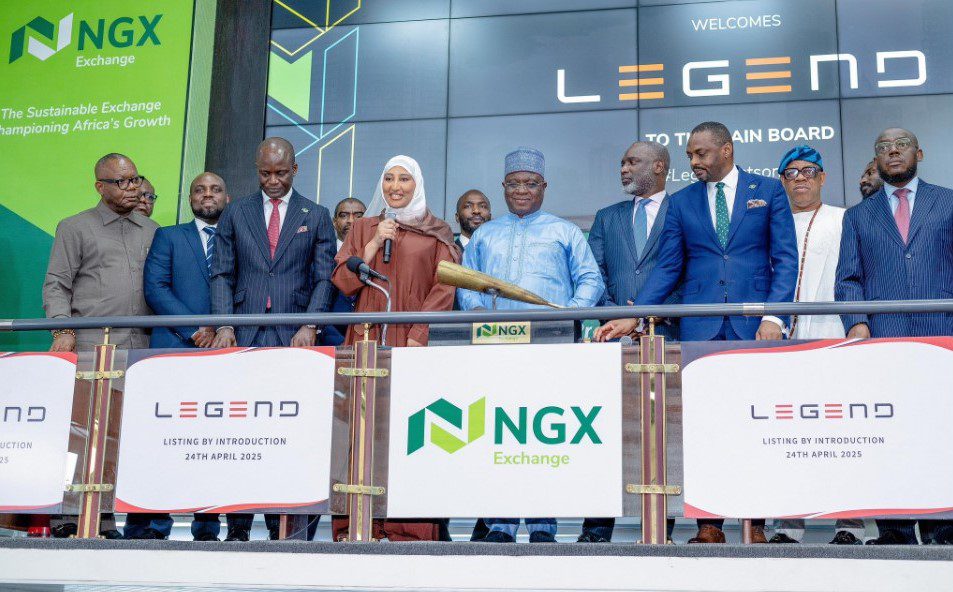
Legend Internet, a Nigerian internet service provider, has recorded another financial loss ahead of its planned merger with Spectranet Limited, according to its financial statement for the period ended April 2026, published on the Nigerian Exchange (NGX).
The company posted a loss after tax of ₦216.8 million for the period ended April 2026, compared with a profit of ₦32.3 million a year earlier. After actuarial gains on defined benefit schemes of ₦112 million were taken into account, the loss was reduced to ₦104.8 million.
The deterioration came despite only a modest decline in revenue, which slipped to ₦311.7 million from ₦320 million in Q1 2026. Instead, the loss was driven by heavy spending on administrative expenses, which surged 162% to ₦423.8 million during the quarter, up from ₦161.7 million a year ago. The cost squeeze is familiar terrain across Nigeria's telecom sector, where naira devaluation, higher energy tariffs and fuel costs have weighed on even the largest carriers in recent reporting periods.
A breakdown of revenue shows the company's core fibre product leading earnings at ₦236.7 million, a 76% share of the total. Wholesale Bandwidth contributed ₦70 million, while other revenue sources — Legend Wifi, Legend Pay and CPE sales — brought in zero figures. Despite generating no revenue, cost of sales for Legend Pay and CPE neared ₦3 million, while total cost of sales, which includes installation, Infraco and bandwidth costs, summed to ₦103.6 million between February and April 2026. That mix leaves the company almost entirely dependent on fibre and wholesale bandwidth in a market where the bulk of internet access still runs over mobile networks.
Reacting to the financial statement, Chief Executive Officer of Legend Internet, Aisha Abdulaziz, said the company's operating fundamentals emerged stronger during the period as management continued to implement its growth plan. She added that the period saw resilient gross margins amid an aggressive expansion and investment drive, despite declines in revenue and profitability.
According to the financial statement, Legend Internet paid ₦1.3 billion for the acquisition of a subsidiary and placed ₦5.52 billion in escrow, while securing ₦6.88 billion in loan financing, a transaction facility, during the nine months ending April 2026.
The bulk of the growth plan's spending was absorbed by administrative expenses of ₦423.8 million, with sharp increases across spending categories. Personnel cost rose from ₦99.3 million to ₦212.5 million in one year, after the company substantially increased the salaries received by key management personnel. A year ago, only one member earned ₦8 million and above; that number has now risen to nine. Professional fees — payments to external third-party experts, advisors and consultants — increased from ₦1.5 million to ₦355.3 million. Marketing expenses and electricity, among others, also increased.
As losses accumulate, the CEO said the increase in investment reflects a drive for expansion.
"Legend Internet has the potential to translate its expansion investments into stronger financial performance. Our robust gross margin, substantial infrastructure base and ongoing expansion programme provide a solid foundation for recovery," she said.
Aisha Abdulaziz added: "We shall utilise the capital deployed to drive the scale, revenue growth and profitability needed to support our ongoing sustainable turnaround."
Legend Internet had earlier slipped to a ₦99 million loss in 2025, also ahead of the Spectranet merger.
In a statement in March disclosing the merger plans, the company said the deal is to bring positive earnings and strengthen the capacity of the fibre and wireless infrastructure. It projected that the deal would deliver improved operational efficiency and expand coverage across key urban markets. The leading cause of the merger is a rescue plan for both Legend Internet and Spectranet: by combining resources, the proposed merger would create a stronger broadband operator capable of competing more effectively in Nigeria's internet market. Consolidation is already a defining feature of that market: the number of internet service providers actively rendering service, as tracked by the Nigerian Communications Commission (NCC), has fallen sharply over the past decade, squeezed by infrastructure costs, foreign exchange pressures and competition from better-resourced mobile network operators — and, since its 2023 launch in the country, Starlink's satellite broadband. Telecom mergers in Nigeria also require regulatory approval from the NCC before they can be completed.
According to the official statement, the merger was projected to be completed in the second quarter of 2026. To date, no release has been made to explain why the deal has yet to be finalised. With the projected window now passed, the items to watch in the company's coming disclosures are the status of the deal itself and how the capital deployed — the subsidiary acquisition, the escrow and the loan facility — moves from the cost line to the revenue line, as management's own projections anticipate.

