Legal experts fault DOJ's California voter-roll lawsuit after 'we might be wrong' admission
Key Takeaways
- •The Justice Department sued California after the state declined a 48-hour ultimatum to purge roughly 20,000 registrations the federal government flagged as belonging to non-citizens.
- •The federal list of alleged non-citizens in California shrank from an initial 190,000 names to about 20,000, and California's own review left only 28 people.
- •Acting Deputy Attorney General Trent McCotter acknowledged at the press conference announcing the lawsuit that the government's list might contain errors, drawing criticism from legal experts.
- •The federal database used to flag non-citizens has proven so error-prone that even some Republican-led states refused to comply with purge demands.
- •Former U.S. Attorney Barbara McQuade noted that criminal voting offenses require knowing intent, a standard separate from the civil suit now pending against California.
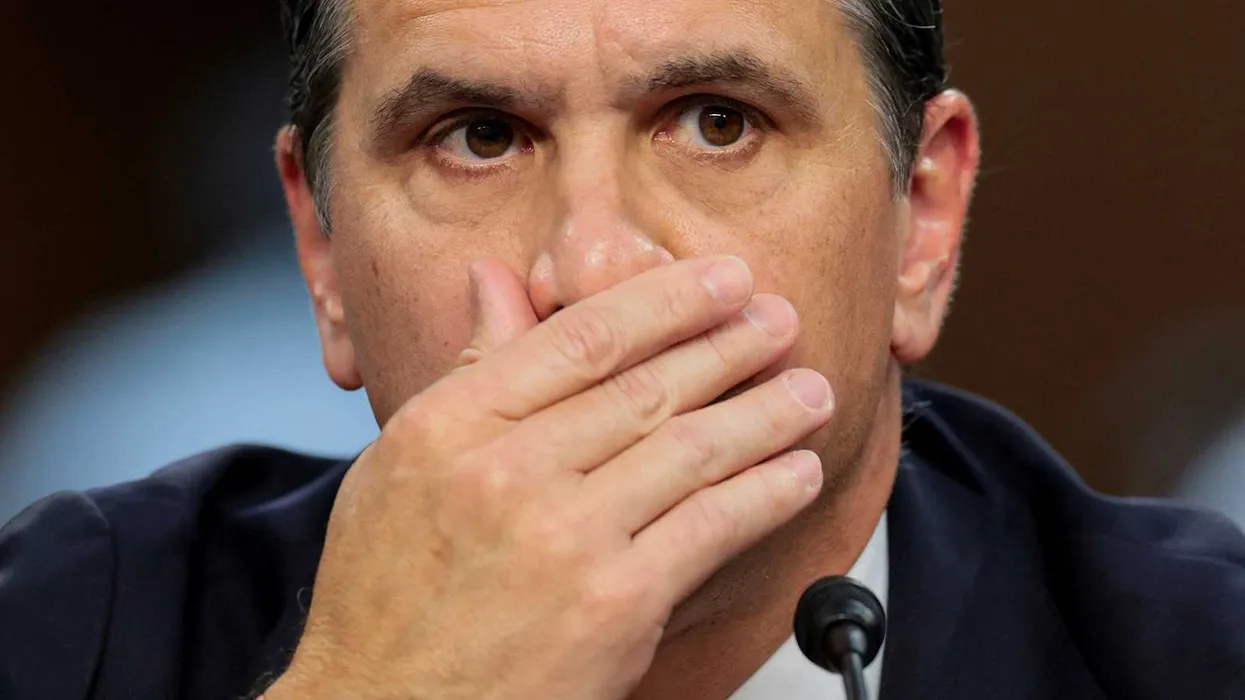
The Justice Department's civil lawsuit against California over roughly 20,000 voter registrations has drawn sharp criticism from legal experts, after a senior department official appeared to acknowledge at a press conference that the government's list of alleged non-citizens might contain errors.
The remarks, made during the announcement of the federal suit, prompted the co-hosts of the "Sisters-in-Law" podcast — all of them experienced legal professionals — to react with a mix of disbelief and laughter.
Kimberly Atkins Stohr, a senior opinion writer at The Boston Globe and a contributor to MS NOW, explained on the podcast that the lawsuit is part of a broader push by the Department of Homeland Security to pressure states into purging their voter rolls of people flagged by a federal database as non-citizens. That database, she noted, has proven to be riddled with errors, and an alarming number of the people it flagged turned out to be lawful voters — enough that even Republican-led states refused to comply with the demand.
According to Stohr, the DOJ initially claimed that California's rolls contained 190,000 non-citizens. That figure later shrank to 20,000. The department gave the state 48 hours to remove the flagged individuals or face "repercussions." California refused, and the DOJ filed a civil suit alleging that the names on the rolls were there illegally.
"California officials and other states have long decried the methods with which the federal government is allegedly cross-checking voter registrations," Stohr said, noting that election officials in blue states and red states alike have raised objections. "You're picking up citizens. You're picking up naturalized citizens. You're picking up citizens who have the same name as somebody who's not a citizen. ... It's a terribly inexact science, and we're not going to boot people off voter rolls" over it.
California ultimately reviewed the list itself. The 190,000 figure fell to 20,000, and by the time every name supplied the federal government had been checked, only 28 people remained. The Los Angeles Times found that most of those 28 did not even know they had been registered to vote; some may have been enrolled automatically through the state's "Motor Voter" program when they obtained a state-issued ID, without choosing to register. It was precisely the kind of gap that election officials in both parties had warned about.
What truly set off the podcast hosts, former federal prosecutor Joyce White Vance explained, was the press conference announcing the lawsuit. Vance said that acting Deputy Attorney General Trent McCotter conceded, in effect: "Well, you know, we might be wrong about some of these people, right?"
Given the Justice Department's longstanding standards for evidence, the admission left the co-hosts astonished. Vance said she could predict exactly how her fellow host, former U.S. Attorney Barbara McQuade, would respond to the slip.
"Barb, I'm going to use my crystal ball to predict your response to that," Vance said. "You thought, 'Holy goodness, DOJ's rules, the Justice Department's manual, it requires you to believe that you have evidence sufficient to obtain a conviction and make it stick on appeal before you bring charges.' And here's the Deputy Attorney General saying, 'I don't know. Some of our cases might not be so good.' I mean, my blood pressure went through the roof."
McQuade later added that intent is central to any prosecution of voting offenses. "Before you can be convicted of a crime, you have to do this knowingly," she said. "It's not that you made a mistake on the form or you were careless or reckless. You have to knowingly check a box that you were a citizen and entitled to vote. It's a crime of intent." That standard applies to criminal cases — a separate track from the civil suit now pending against California.
With the state refusing to purge its rolls and the department pressing ahead, the dispute now moves toward a courtroom test of those competing figures: a federal list once pegged at 190,000, trimmed to 20,000, and cut to 28 after California's review.
The full discussion can be heard on the "Sisters-in-Law" podcast, available on YouTube.

