Ledger Says It Fixed Ethereum Signing Vulnerability
Key Takeaways
- •Ledger states that it has fixed a vulnerability in its Ethereum app related to how transactions were signed.
- •The issue was first disclosed by a security researcher in a post on X.
- •Reports on the patch described the flaw as allowing transaction substitution, where a signed transaction could differ from the one the user believed they were approving.
- •The Ethereum app that contained the flaw is open source, with its code maintained in a public GitHub repository.
- •Users should update their Ledger Ethereum app and device firmware and continue verifying transaction details directly on the device screen.
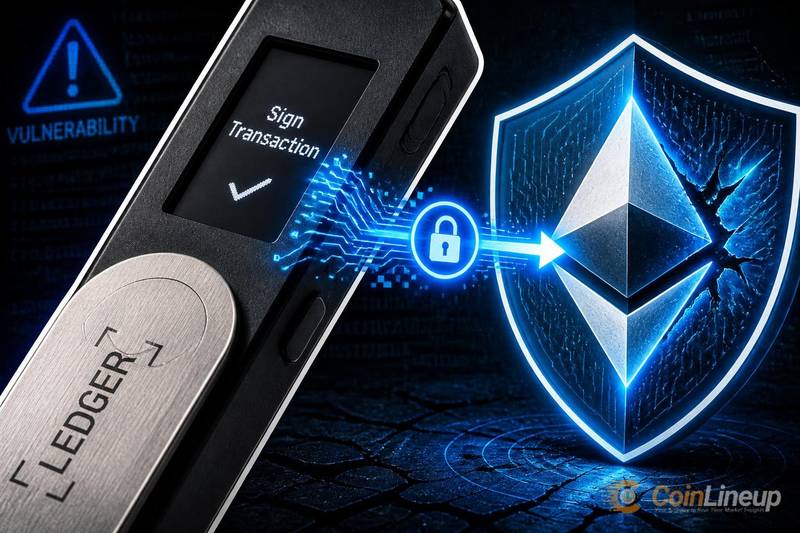
Hardware wallet maker Ledger says it has fixed an Ethereum signing vulnerability, a flaw tied to how its Ethereum app handled transaction signing. The company describes the issue as resolved, and this article is based on that stated fix and the reporting surrounding it.
What Ledger Said About the Ethereum Signing Vulnerability
The issue was first flagged by a security researcher in a post on X about Ledger’s Ethereum app. Ledger later indicated that the flaw had been patched. For related coverage, see XRP Ledger's xrpld 3.3.0 Release Proposes Five Features.
Signing is the step where a hardware wallet approves a transaction. It is the moment when the device confirms, in effect, “yes, send this.” A signing vulnerability means that this confirmation step may not work exactly as a user expects. For related coverage, see Bitcoin and Ethereum Prices Surge as Short Liquidations Top $4B.
According to reporting on the fix, the issue was inside the Ethereum app that runs on Ledger devices. The app is open source, and its code is available in a public GitHub repository. Because the app handles a core security function for Ethereum users, even a software-level flaw can matter beyond Ledger itself, since hardware wallets are often used specifically to reduce the risk of transaction tampering.
Why the Ethereum Signing Issue Mattered for Wallet Users
Hardware wallets are designed to keep the approval step offline and difficult to tamper with. When that step is questioned, so is the core promise of the device.
One report described the flaw as allowing transaction substitution, meaning the transaction a user believes they are approving may not match what is actually signed, according to a summary of the patch. That is exactly the type of risk hardware wallets are intended to reduce.
Even a fixed bug can affect trust. Users who saw The Sandbox contain a recent bridge exploit know that a resolved incident can still leave questions about how it happened in the first place.
Security scrutiny is also normal for widely used crypto software. Independent auditors recently found dozens of bugs in the XRP Ledger before a release, a reminder that identifying and patching flaws is part of how this infrastructure matures.
What the Fix Means and What Users Should Watch Next
A stated fix usually means the vulnerable code has been corrected and distributed through an app or firmware update. For most hardware wallet users, the practical step is to stay current.
Users should check whether their Ledger Ethereum app and device firmware are up to date through the official Ledger software. Applying updates is how a patch reaches the device.
It is also important to keep verifying transactions on the device screen itself, not just in a connected app. That on-device check is the habit signing vulnerabilities are meant to bypass.
The available research is limited, and Ledger has not published extensive technical detail in the sources reviewed. Users should watch for any follow-up disclosure or clarification, especially given ongoing interest in Ethereum-related developments across the market. For now, the basic takeaway is that Ledger says the issue is fixed, and users should make sure their software reflects that.
Disclaimer: This article is for informational purposes only and does not constitute financial or investment advice. Cryptocurrency and digital asset markets carry significant risk. Always do your own research before making decisions.

