LCOY Korea 2026 Centers Youth Voices in Climate Action
Key Takeaways
- •Over 100 participants attended LCOY Korea 2026 at Seoul National University on July 3 to develop youth-led climate solutions ahead of the United Nations Climate Change Conference.
- •The conference is officially recognized by YOUNGO, the UNFCCC's Children and Youth Constituency, serving as Korea's national platform for channeling youth perspectives into the COP process.
- •Participants collaborated on a National Youth Climate Statement intended to inform both national climate dialogue and broader international discussions within the COP framework.
- •Seven interactive sessions addressed topics including marine ecosystem threats, renewable energy, climate justice education, youth climate litigation in Korea and Germany, and Korea's emissions trading system.
- •Korea has committed to carbon neutrality by 2050 and operates the first nationwide cap-and-trade system in East Asia, making policy tools like emissions trading increasingly central to its climate strategy.
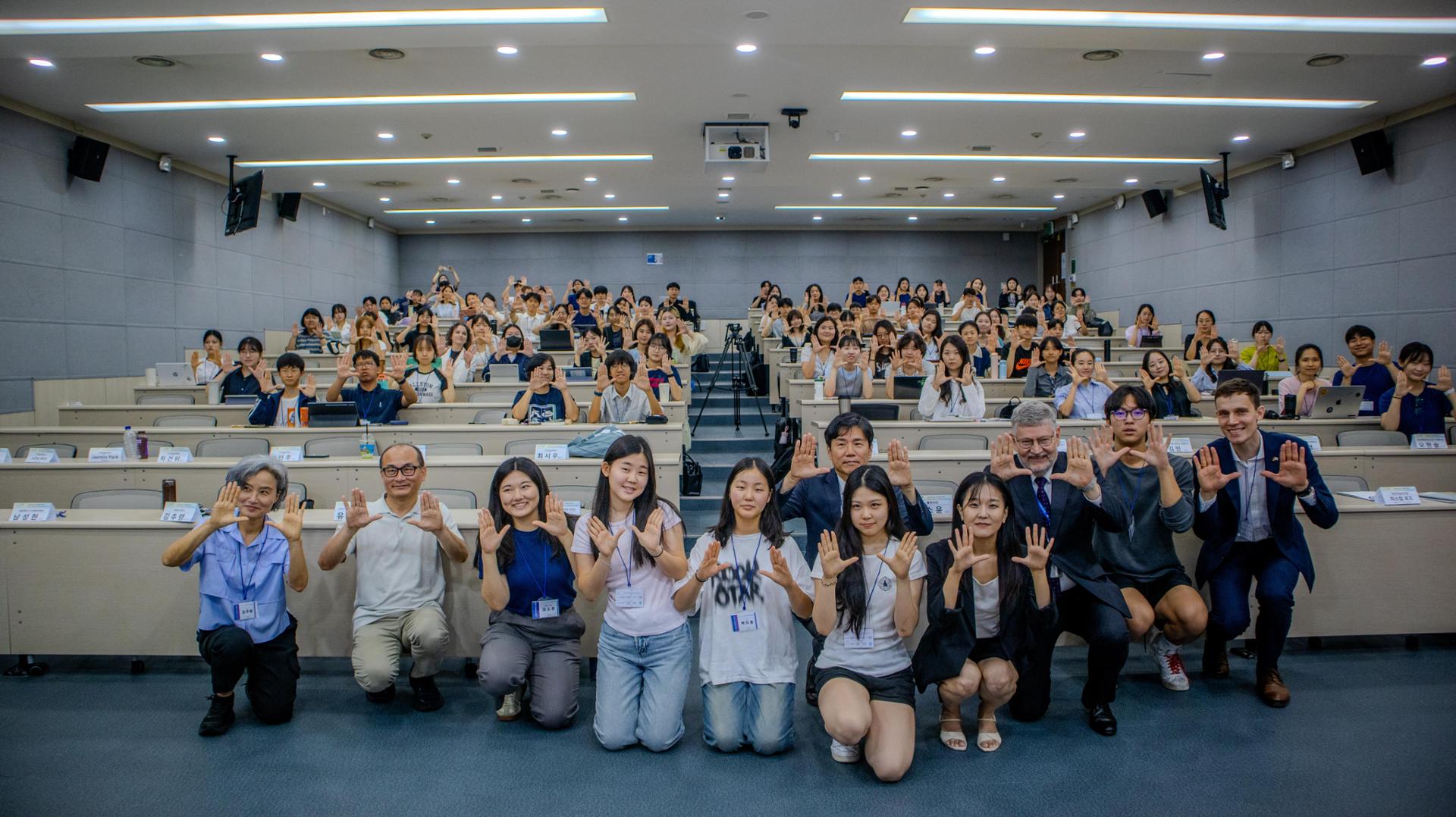
More than 100 participants gathered for the Local Conference of Youth (LCOY) Korea 2026 to develop youth-led climate solutions, deepen collaboration and contribute to international discussions ahead of this year's United Nations Climate Change Conference (COP).
The latest conference was held July 3 at Seoul National University's Gwanak campus. It followed the successful hosting of LCOY Korea on the sidelines of Climate Week 2026 in Yeosu, South Jeolla Province, from April 20 to 25, and reflected a growing movement of young people seeking to influence climate policy from the ground up.
Officially recognized by YOUNGO — the official Children and Youth Constituency of the United Nations Framework Convention on Climate Change (UNFCCC) — LCOY serves as Korea's national youth climate conference. LCOY events are held in countries around the world as part of YOUNGO's framework for channeling youth perspectives into the COP process. The event provides a pathway for young people's voices and policy recommendations to feed into discussions around the annual U.N. Climate Change Conference and broader climate policymaking.
A call for youth leadership
The conference opened with remarks from leaders representing government, academia and the international community.
Distinguished guests included Joern Beissert, deputy chief of mission at the Embassy of Germany in Korea; Yoo Sung-sang, professor of global education cooperation at Seoul National University; and Lee Chang-hoon, co-chair of the Presidential Commission on Climate Crisis Response.
The keynote address was delivered by Kim Chu-ryeong, a professor at Sungkonghoe University. Kim set the tone for the day's discussions by stressing the importance of youth participation, collective responsibility and sustained action in responding to the climate crisis.
Together, the speakers delivered a clear message: young people are not only future leaders, but essential partners in shaping climate solutions today.
The program began with Big Wave's "Climate as a Community," which highlighted how local communities can drive meaningful climate action from the ground up. Big Wave is a youth climate network that promotes youth-led responses to the climate crisis through collaboration and community action.
Participants then collaborated on the National Youth Climate Statement, a document designed to capture the priorities and recommendations of Korean youth. The statement is intended to contribute to national climate dialogue and the broader COP process.
"Meeting people from so many different backgrounds helped me see climate issues from new perspectives. It really changed the way I think and helped me grow," said Kim Na-yeon, a member of the LCOY operations team.
Building on the morning discussions, participants examined climate change through seven interactive sessions spanning science, education, policy and community resilience.
Nam Sung-hyun, a professor of earth and environmental sciences at Seoul National University, led "Ocean S.O.S.," a session that drew attention to growing threats to marine ecosystems and the urgent need for ocean conservation.
The program then turned to renewable energy with a screening of "Sun Farmers in Fukushima," a documentary showing how communities have embraced sustainable energy while rebuilding resilience in the aftermath of disaster.
Climate justice was the focus of a session led by Han Ko-eun of KOWORKS, who discussed the role of education in building a more inclusive and equitable response to climate change. KOWORKS, a subsidiary of the Korea International Cooperation Agency, promotes awareness and education through the agency's development projects.
Participants also explored youth climate litigation in Korea and Germany during a session jointly organized by the Embassy of Germany and Plan 1.5. The session examined how young people are increasingly using legal action to hold governments accountable for their climate commitments. Constitutional climate cases have gained prominence in both countries, including Germany's Federal Constitutional Court ruling in 2021 that found parts of the country's climate protection law insufficient for protecting future generations.
The day's program concluded with CO2 Together's discussion, "Climate Action and Future Generations," which encouraged participants to consider the long-term impact of decisions being made today. CO2 Together advocates for net-zero carbon neutrality and supports improvements to Korea's emissions trading system through policy advocacy. Korea, which committed to carbon neutrality by 2050, operates the first nationwide cap-and-trade system in East Asia, making policy tools like emissions trading increasingly central to its climate strategy.
While the conference provided participants with new knowledge and practical tools, many organizers said its greatest impact came from the personal journey they experienced over months of preparation and collaboration.
For Lee Hyun-ju, who served on LCOY's content team, the reward was seeing months of work come together on the day of the event.
"Paying attention to every little detail wasn't easy, but seeing everything come together on the day made it all worthwhile," Lee said. "It was rewarding to know our work helped share the message of climate action."
Small actions, big impact
For many participants, LCOY also served as a reminder that meaningful climate action often begins with everyday choices.
Na Sang-in, a member of LCOY's policy team, said helping organize the conference changed how he views individual responsibility.
"Climate action starts with small everyday choices. Those small actions may seem insignificant, but together they can make a real difference," he said.
The conference also encouraged participants to explore new academic and professional interests. Cha Ju-mi, whose research focuses on forestry, said the discussions pushed her to broaden her perspective beyond her own field.
"The sessions introduced me to topics I had never explored before, from climate justice to climate litigation. They motivated me to keep learning and growing," she said.
Looking beyond the conference
Although the day's formal discussions ended, organizers said the conversations sparked at LCOY Korea 2026 are only beginning.
The conference closed with remarks from Kim Hye-ae, chair of the Energy and Industry Transition Subcommittee of the Presidential Commission on Climate Crisis Response. Kim applauded the commitment shown by participants and encouraged them to continue leading climate action in their schools, universities, workplaces and local communities.
As the organizing committee reflected on the six-month process of planning the conference, many said LCOY's greatest achievement was not only the dialogue it generated, but also the personal growth it fostered among those involved.
For Park Ji-yoon, a board member of LCOY Korea, the experience changed how she understands climate action and the role young people can play in shaping the future.
"Climate action isn't about waiting for the future — it's about choosing to stand on the side of the future today. That's the biggest lesson LCOY gave me," she said.
The National Youth Climate Statement prepared during the conference is expected to help ensure that the views of young Koreans continue to inform national climate discussions while also contributing to wider exchanges within the COP process.
LCOY Korea 2026 also showed that climate leadership is already emerging across Korea. By bringing together students, researchers, policymakers and young professionals, the conference strengthened a growing network of changemakers committed to turning ideas into action.
As countries prepare for this year's COP, the message from Seoul was clear: meaningful climate action starts long before delegates meet at international negotiations. It begins when young people come together to lead, collaborate and inspire change in their own communities.
Nashon Owano is a freelance journalist and content creator based in Korea. He is passionate about sports, culture and human interest stories.

