Lagos Regulator LASIMRA Orders Telecom Operators to Clean Up Sagging Cable Infrastructure
Key Takeaways
- •LASIMRA issued a public notice on November 3, 2026, requiring ISPs to sanitise and secure overhead and underground telecom infrastructure in designated Lagos zones.
- •Enforcement operations against non-compliant operators are set to begin on November 9, 2026, giving providers less than a week to complete corrective work.
- •The directive covers Ilasan and Ikate in Lekki, Allen Avenue in Ikeja, and the Customs Office area off Toyin Street in Ikeja.
- •Possible sanctions for non-compliance include confiscation of infrastructure and the imposition of heavy administrative penalties.
- •This is the second such order in roughly a month, extending an early-October ultimatum that named MTN, Airtel, ipNX, FibreOne, and 21st Century Technologies and applied only to Ikeja GRA.
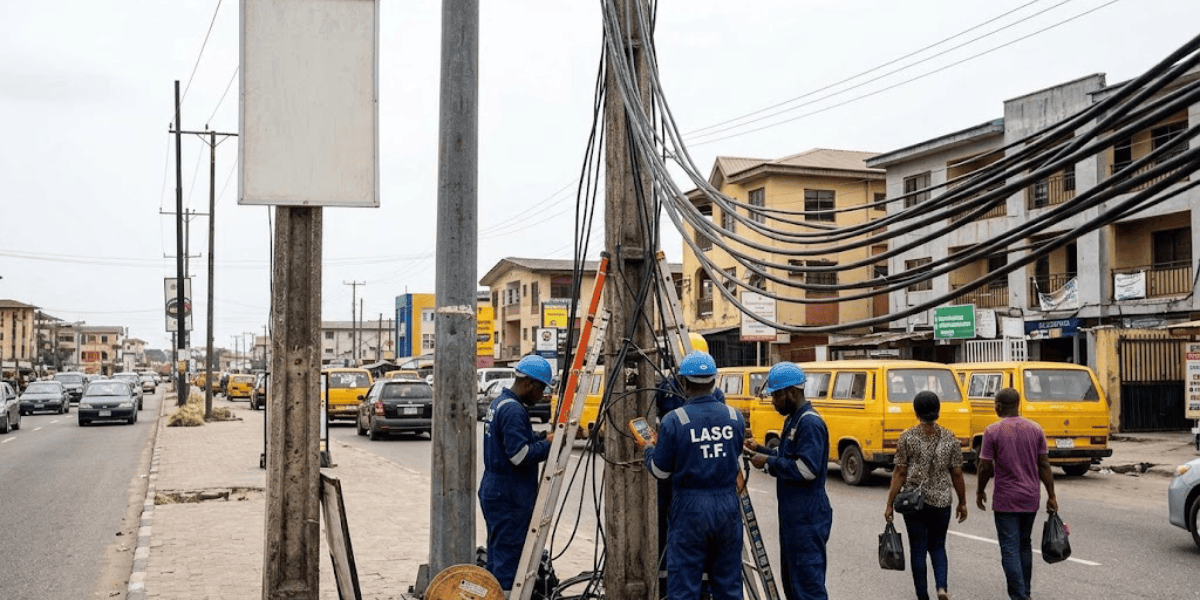
The Lagos State Infrastructure Maintenance and Regulatory Agency (LASIMRA) has issued an urgent directive ordering telecom operators—particularly Internet Service Providers (ISPs)—active in the state's major commercial and residential hubs to immediately clean and sanitise their overhead and underground telecom infrastructure.
According to an official public notice released on Tuesday, November 3, 2026, and signed by the agency's General Manager, Prince Oyekanmi Elegushi, LASIMRA warned that enforcement operations against non-compliant providers will commence on Monday, November 9, 2026—giving affected operators less than a week to complete corrective work. The agency also published the directive through its official X account: LASIMRA on X.
The directive covers three locations: Ilasan and Ikate in Lekki, Allen Avenue in Ikeja, and the Customs Office area off Toyin Street in Ikeja. Operators working within and around these zones are expected to rearrange, secure, and clear all dangling cables, sagging fibre-optic wires, and associated hardware installations that create environmental hazards or obstruct public spaces.
"All ISPs operating within these areas are required to ensure that their network infrastructure, including cables and associated installations, are properly arranged, secured and cleared of any obstruction or environmental nuisance," the notice read.
To underscore the urgency, the agency said operators must complete all corrective work before the November 9 enforcement date to avoid statutory sanctions, which may include the confiscation of non-compliant infrastructure or the imposition of heavy administrative penalties.
Occupants and businesses in the affected parts of Ikeja and Lekki/Ikate have been advised to anticipate temporary maintenance activities by operators' field technicians ahead of the deadline.
The directive forms part of the Lagos State Government's broader drive to eliminate the menace of sagging and hazardous telecom cabling, which poses risks to pedestrians, motorists, and property owners across the affected areas and statewide. Under its mantra, "For a Safer, Cleaner and Better Regulated Lagos," LASIMRA urged all affected internet operators to cooperate fully to protect public safety while maintaining infrastructure integrity.
The move follows an earlier ultimatum issued in early October, when Lagos State ordered leading telecom operators to immediately rectify sagging overhead fibre-optic cables in Ikeja GRA or face severe regulatory penalties. That notice named five major operators—MTN, Airtel, ipNX, FibreOne, and 21st Century Technologies—and gave affected firms 48 hours to inspect, tighten, and properly secure their overhead fibre infrastructure. The new directive effectively broadens that campaign beyond Ikeja GRA, carrying the same compliance demands into the Lekki corridor and additional parts of Ikeja.
Related: Lagos orders MTN, Airtel and others to fix sagging fibre-optic cables within 2 days.
The latest order is not the first time LASIMRA has issued a directive requiring telecom operators to clear badly laid cables. It also comes at a time when operators are racing to expand fibre-to-the-home (FTTH) connections to broaden high-speed internet coverage—a build-out that brings more fibre into residential streets, where cable placement and maintenance practices now face mounting regulatory attention. Poorly deployed cables and infrastructure frequently hang low enough to be caught by delivery trucks, snap onto footpaths, or create dangerous visual obstructions for drivers, contributing to accidents and network outages in the process. With this now the second such order in roughly a month, the key developments to watch are the November 9 enforcement start and any confiscations or administrative penalties imposed on operators that miss the deadline.

