Larry Yon: Why Africa's tech ecosystem should be building the next NVIDIA
Key Takeaways
- •Larry Yon II, co-founder and president of US cybersecurity and AI company CyberAlliance, views trust — underpinned by cybersecurity — as core infrastructure for Africa's digital and AI-driven transformation rather than a secondary technical concern.
- •CyberAlliance has operated across eight African countries, including South Africa, Nigeria, Senegal, and Morocco, and its SallyAI cyber analyst was shaped by language barriers the firm encountered while working in Senegal.
- •Yon says cyber readiness is becoming part of investment readiness, with funders increasingly evaluating how startups protect customer data, storage, and intellectual property before committing capital.
- •Through the nonprofit initiative Africa Diaspora Invests, Yon is working to channel African-American investors, founders, and executives into African markets so that economic engagement with the continent becomes a standard element of Black wealth creation.
- •After a decade of business on the continent, Yon contends that global markets underestimate African innovation and that constraints such as unstable power and bandwidth costs could force engineering breakthroughs capable of producing an NVIDIA-scale company on African soil.
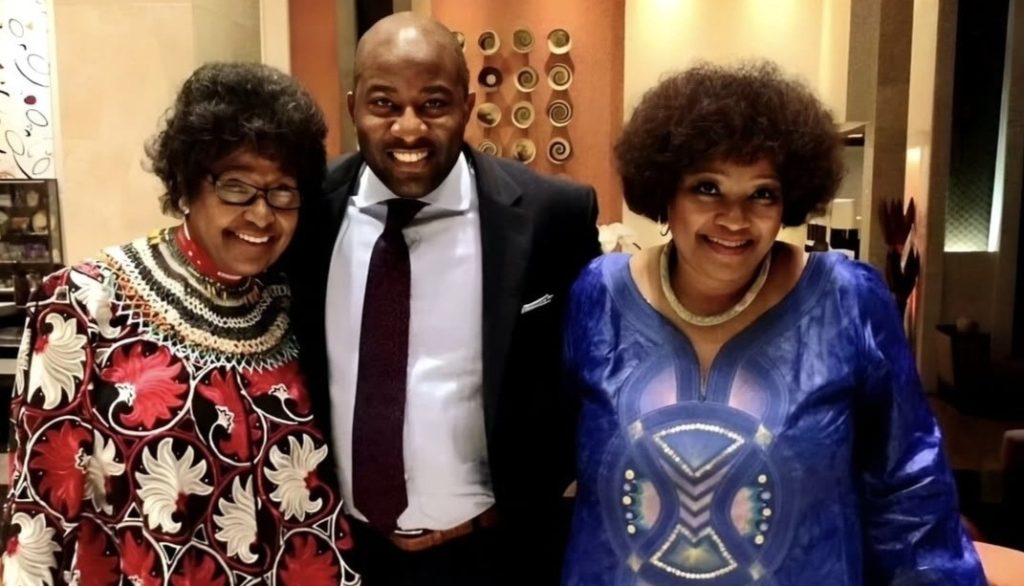
Larry Yon II still remembers his first flight out of South Africa. Seated by the window, he watched the landscape beneath the plane fade from view and wondered whether he would ever see the continent again.
Yon, the co-founder and president of CyberAlliance, a US-based AI-powered cybersecurity firm, had originally arrived in pursuit of commercial opportunities. He left with something far weightier: the recognition that the Africa he encountered bore little resemblance to the one-dimensional narratives he had grown up with in America.
“ I remember sitting in a window seat on the plane preparing to leave South Africa and return to the United States (US),” Yon told TechCabal over coffee on Wednesday. “I looked out the window and felt this tremendous sadness. I didn't know if I would ever have the opportunity to come back.”
Then came a second, lingering thought — one that turned a personal reflection into a broader mission.
“I didn't know whether I would ever be able to bring other people from the US here so they could see what I had seen, feel what I had felt and experience what I had experienced.”
Years later, that question continues to anchor much of his life's work. In a conversation with Phathisani Moyo for TechCabal's Coffee With… series, Yon explained why digital trust and diaspora capital are central to unlocking Africa's true tech potential.
How Africa became personal
Yon's engagement with Africa did not begin with cybersecurity, artificial intelligence, or venture capital. It began with a failed investment.
He had backed an American expatriate operating on the continent and, like many novice investors, was swept up in the promise of the opportunity. He failed to grasp local market nuances and rushed the due diligence process. The venture collapsed.
Rather than walk away, Yon let the setback deepen his curiosity. Determined to understand what he had overlooked, he travelled across the continent, met local founders, and cultivated relationships that would ultimately redefine his career.
Later, as managing partner at B&C International, a prominent Black-owned global strategy consulting firm in the US, Africa fell squarely within his professional remit. He advised American corporations entering African markets while helping African enterprises expand into the United States.
South Africa gave the relationship a more personal, human dimension. While working on a business process outsourcing initiative in KwaZulu-Natal (ZN) Province, Yon crossed paths with two of the country's most prominent figures: the late liberation stalwart Winnie Madikizela-Mandela and the late King Goodwill Zwelithini, eighth monarch of the Zulu Kingdom.
Mama Winnie left him with a simple lesson: “Don't forget about the people.” King Zwelithini offered another.
“He told me that my ability to tell Africa's story in the United States would always be greater than his ability to tell Africa's story in the United States.”
Yon has carried both messages into his work — the first grounding his belief that business is ultimately about people, the second instilling a sense of responsibility that goes beyond identifying commercial opportunities to broadening how Africa is understood and engaged with in America.
From trade to trust
Today, Yon serves as co-founder and president of CyberAlliance, a US cybersecurity and artificial intelligence company operating across American and African markets. On paper, the move from economic development into deep tech may look disjointed, but Yon sees a clear logic running through it.
“Trust has been the common thread throughout my career,” he explained.
Trade depends on trust. So does cross-border investment, and so does the growth of digital businesses. As artificial intelligence embeds itself more deeply in the economy, the stakes climb higher, raising questions about data, privacy, security, and who ultimately controls the technology.
In Yon's view, cybersecurity is not a technical side project attached to Africa's digital transformation. It is part of the infrastructure that allows that transformation to happen.
“If cybersecurity doesn't keep pace with AI adoption, Africa risks losing trust that its innovation is safe, that people's and companies' data will be protected, and that African countries and businesses can adopt global technologies and enter global partnerships without sacrificing sovereignty.”
That concern sits behind CyberAlliance's work with startups, investors, and universities. The company has operated across South Africa, Botswana, Zimbabwe, Senegal, Uganda, Tanzania, Nigeria, and Morocco.
Working across these diverse jurisdictions reinforced a fundamental lesson: Africa is not a monolith. Each nation presents a distinct regulatory landscape, business culture, technological maturity, and threat profile — factors that dictate how software is developed, deployed, and adopted.
“Global capability doesn't replace local intelligence,” Yon explained to TechCabal in an interview on Wednesday. “You can bring world-class technology into a market, but if you don't understand the context in which people will use it, you haven't really solved the problem.”
Making cybersecurity speak human
This is where SallyAI enters the story.
CyberAlliance describes Sally as an AI-powered cyber analyst and translation layer that takes complex cybersecurity information and turns it into prioritised, business-ready intelligence for security teams, executives, and boards.
According to Yon, the idea was influenced by CyberAlliance's early work in Senegal, where he and his US team faced a practical challenge: they did not speak French fluently. The experience reinforced something that went beyond language itself.
“For technology to be adopted and inform decisions, people have to be able to understand it,” he noted. “Cybersecurity is already complex, and technical terminology, language differences and cultural context can make it even harder to understand.”
That experience helped shape a philosophy that now runs through Yon's thinking.
“Technology can be utilised without requiring the person using it to be a technologist,” he added.
The principle extends beyond cybersecurity. Yon sees AI as a tool that can lower the cost of building businesses and accessing expertise — but he also points out that the same technology can lower the cost of cyberattacks while making them faster and more sophisticated.
That is why he believes cyber readiness is becoming part of business readiness. For African startups, the issue tends to surface at decisive moments: seeking investment, courting enterprise customers, securing insurance, or expanding into another country. A founder may be focused on product, revenue, and growth, while investors want to know how customer data is handled, where it is stored, and how intellectual property is protected.
“The mistake is thinking cybersecurity is something you address after you scale,” Yon said. “It's part of what determines whether you can scale.”
His work across venture capital and investment ecosystems has reinforced that view. Cyber readiness, he says, is becoming part of investment readiness, with funders looking beyond a company's financial health and growth prospects to how well its technology, data, and intellectual property are protected.
Then there was jollof
Not all of Yon's African lessons arrived wrapped in enterprise security parlance. Senegal taught him about digital communication — and permanently altered his culinary hierarchy.
“And on a much less serious note, Senegal also changed my opinion about jollof rice. I will leave it there before I get myself in trouble with my Nigerian or Ghanaian friends,” he chuckled.
The aside nods to the long-running, good-natured rivalry between Nigeria and Ghana over whose jollof reigns supreme — a debate that has become a fixture of West African popular culture.
It is a lighthearted moment, but one that highlights Yon's genuine affinity for the continent. His engagement extends far beyond spreadsheets, venture capital metrics, and software stacks; it is rooted in culture, community, and personal connection.
Mobilising the African diaspora
That connection fuels his current mission: persuading more African-American investors, founders, and executives to experience the continent firsthand.
Through Africa Diaspora Invests, a nonprofit CyberAlliance initiative focused on growing diaspora investment and engagement in Africa, Yon helps Black American entrepreneurs and investors — along with other friends of Africa — find opportunities to do business and build connections on the continent.
He wants more people in the West to see African markets as places where they can build companies, invest money, form partnerships, and create wealth. “The goal is for economic engagement with Africa to become an expected part of the conversation about Black wealth creation, not an exception to it,” he said.
Some of barriers, he believes, are cultural and informational.
“Americans don't speak African, and Africans don't speak American,” he stated, explaining that investors and entrepreneurs can sometimes use different business languages even when they are discussing similar opportunities.
To bridge that gap, Yon advocates direct engagement and nuanced market intelligence. Johannesburg operates differently from Lagos; Dakar is not Nairobi; Casablanca has its own commercial rhythms. Understanding these distinctions, he argues, is critical to navigating cross-border trade successfully. Just as importantly, he wants more success stories from African tech hubs to reach mainstream American media to dismantle outdated stereotypes.
During a private meeting at the United Nations General Assembly on Tuesday — the annual New York gathering that draws world leaders, executives, and investors — Yon described a dream of boarding a US flight to Africa and finding it filled with African-American families and businesspeople.
“That is not even close to what I see now.”
The words carry Yon back to that first flight, when Africa was still an unfamiliar place and he wondered whether he would ever return. Now he imagines the same planes travelling in the opposite direction, filled with African-Americans arriving not as visitors passing through, but as investors, entrepreneurs, and partners.
What Africa will build for the world
After a decade of doing business across the continent, Yon remains convinced that global markets vastly underestimate African innovation.
“We have grown comfortable asking whether Africa can produce another tech unicorn. I think that question is far too modest,” Yon asserted. “Why couldn't the next NVIDIA be built on African soil?”
NVIDIA, the US semiconductor company whose chips underpin much of the global AI boom, is among the world's most valuable publicly traded companies — the benchmark Yon is invoking when he points to deep-tech ambition.
He acknowledges that significant infrastructure and compute gaps remain. But he points to several forces converging across the continent, including AI investment, expanding digital infrastructure and data-centre capacity, a young population, a growing consumer market, abundant resources, and maturing technology ecosystems.
Environmental constraints, he argues, spur world-class engineering: “When you build software for environments where power stability, bandwidth cost, purchasing power, and language diversity are daily challenges, you are forced to innovate differently.”
Products forged under those conditions, Yon believes, will eventually export solutions to global markets.
How quickly those infrastructure and compute gaps close — and whether diaspora capital scales alongside them — will help shape the answer to Yon's question.
It has been a long journey for the young American executive who once sat in an airplane window seat leaving South Africa, uncertain whether he would ever set foot on the continent again. He returned, and has spent the years since bringing global capital and talent with him.
Now, Yon wants the next wave of diaspora founders, angel investors, and venture capitalists to approach Africa with an ambition that far exceeds his own when he first landed.

