US Rep. Lance Gooden Says AI and Bitcoin Are Reshaping Global Power
Key Takeaways
- •Rep. Lance Gooden said artificial intelligence and Bitcoin are reshaping the global balance of power and should be treated as national-security issues.
- •At an April House Armed Services Committee hearing, Adm. Samuel Paparo said the U.S. military operates a Bitcoin node to monitor the network and conduct operational security tests.
- •Gooden says he is working on a 'crypto-forward' 2027 National Defense Authorization Act to give digital assets a broader role in national-security policy.
- •In July, Gooden urged the Justice Department to investigate potential foreign influence in U.S. artificial intelligence policy.
- •In March, the House Judiciary Committee advanced Gooden-backed legislation to create a Justice Department initiative countering Chinese Communist Party-backed economic espionage and intellectual-property theft.
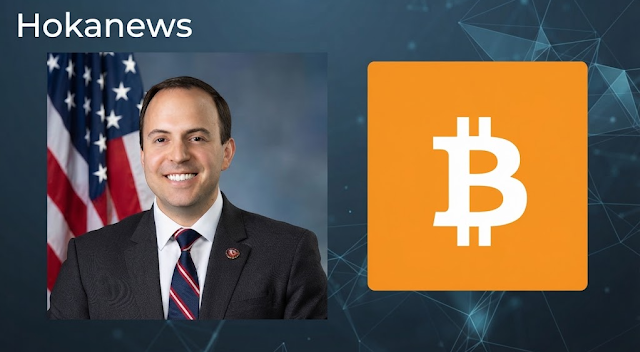
Rep. Lance Gooden (R-Texas) said artificial intelligence and Bitcoin are reshaping the global balance of power, remarks that Cointelegraph reported in a post on X amid the growing strategic significance of AI and digital assets.
The comments extend a framing Gooden has advanced across hearings and legislation: that digital assets and artificial intelligence belong in national-security debates, not only in financial and technology policy.
Gooden Ties AI and Bitcoin to Strategic Competition
Gooden, who represents Texas' 5th Congressional District, has increasingly addressed cryptocurrency and emerging technologies through a national-security lens.
In April, he questioned senior U.S. military officials about Bitcoin's potential role in national security. During a House Armed Services Committee hearing, U.S. Indo-Pacific Commander Adm. Samuel Paparo said the military was operating a Bitcoin node to monitor the network and conduct operational tests aimed at securing and protecting networks that use the Bitcoin protocol. Bitcoin nodes are the computers that maintain copies of the network's ledger and validate transactions and blocks, a role that makes network-level monitoring and security testing possible.
Gooden subsequently said he was working on a "crypto-forward" 2027 National Defense Authorization Act and has advocated for broader consideration of digital assets in national-security policy. The NDAA is the annual defense policy bill that sets policy direction and funding priorities for the Department of Defense, and it is among the few major bills Congress has passed every year for decades.
The congressman has also focused on artificial intelligence as a strategic technology. In July, he urged the Justice Department to investigate what he described as potential foreign influence in U.S. AI policy, arguing that American policymaking should not be shaped by undisclosed foreign interests.
AI and Bitcoin Enter the National-Security Debate
Gooden's comments place Bitcoin alongside artificial intelligence in a broader discussion about technological competition between major powers. He has argued that emerging technologies are not limited to commercial applications but also carry implications for national security and economic competitiveness.
In April, Gooden told the House Armed Services Committee that he saw "direct national security implications" for Bitcoin and asked whether the United States was adequately prepared to respond to China's strategic direction regarding digital assets.
His remarks come as U.S. policymakers examine how technological infrastructure, digital assets and artificial intelligence intersect with national-security priorities. Gooden has separately supported measures addressing foreign influence, economic espionage and intellectual-property theft involving U.S. technology.
In March, the House Judiciary Committee advanced legislation backed by Gooden that would establish a Justice Department initiative focused on countering Chinese Communist Party-backed economic espionage and intellectual-property theft.
U.S. Policy Remains a Key Focus
Gooden's latest remarks do not establish a specific new policy or legislative measure. Instead, they underscore his argument that the United States should treat AI and Bitcoin as part of a wider strategic competition over emerging technology.
His recent congressional activity shows that both subjects have become recurring parts of his policy agenda. The "crypto-forward" 2027 NDAA he says he is drafting is the most concrete legislative vehicle attached to that agenda so far, and its contents will become clearer as drafts of the annual defense bill move through the legislative process. For now, the next steps will depend on how Congress and federal agencies address digital assets, artificial intelligence and their broader national-security implications.

