Lagos Life: Nigerian Sims-style game delivers real-world value where Zuckerberg's $80 billion metaverse push fell short
Key Takeaways
- •A professional therapist known as Vincent The Therapist conducted a complete therapy session with a client entirely inside the Lagos Life game, using only voice notes and text.
- •The session's payment was settled directly into the therapist's real-world Opay account, with the client first tipping two billion in-game tokens, showing a direct link between in-game activity and Nigerian fintech.
- •Built by Nigerian developer Shalom Rayhamen, Lagos Life reportedly reached one million users within days of its launch by reflecting the authentic culture and street life of Lagos.
- •The startup raised $500,000 in pre-seed funding from Flutterwave CEO Olugbenga Agboola through Resilience17, joined by Oo Nwoye and executives of Terra Industries and Mono, at a $10 million valuation.
- •The platform already generates early revenue by allowing real-world advertisers to rent digital billboards across its virtual city, positioning it as a potential marketplace for virtual service providers.
Years before the current artificial intelligence (AI) revolution went into overdrive, the global tech ecosystem was fixated on virtual reality. Mark Zuckerberg, through his Reality Labs, reportedly burned roughly $80 billion in pursuit of a single dream: helping people connect when they are not physically in the same place, and bringing them even closer to the feeling of being together in person.
That effort has not been a success; his metaverse vision collapsed under the weight of its own corporate awkwardness. Yet the core promise behind that grand ambition has quietly materialised inside a Sims-style mobile game built in Nigeria for Nigerians. A virtual space where digital lives carry tangible physical-world value is no longer a corporate fantasy. It is happening now on Lagos Life, powered entirely by the chaotic, vibrant energy of Nigeria's commercial capital, Lagos, from which the game draws both its name and its spirit.
A therapy session held inside a game
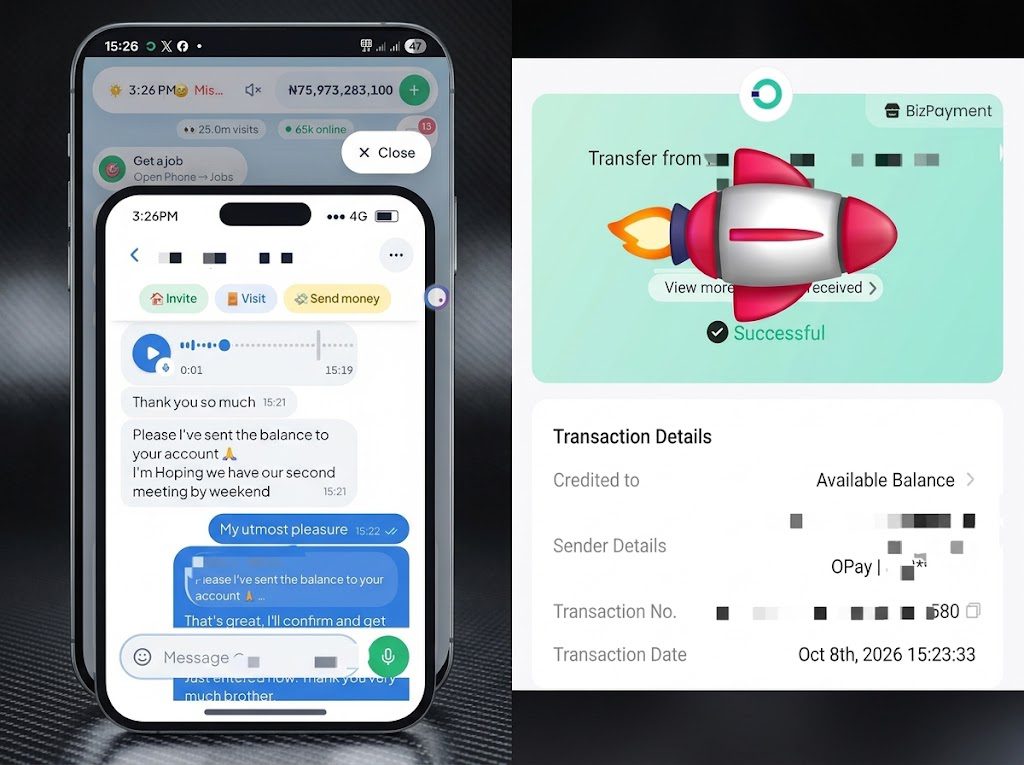
The clearest signal that a virtual economy has successfully crossed into the real world came in a recent post shared on X (https://x.com/mrhighfoster/status/2108211964702818331?s=20). Vincent The Therapist, a professional therapist who posts as @mrhighfoster, logged into the Lagos Life app not to play, but to work. He conducted a full therapy session with a client entirely within the game's chat interface, using only voice notes and text.
“I had a therapy session with a client on the #lagoslife game app, and I just got paid into my real-life Opay account. This is the first client that wanted everything to be done on the Lagoslife app, instead of transitioning to WhatsApp, Google meet or zoom. The client felt more autonomous and “hidden” in the game, which made them open up more in the sessions. We used voice note and text only. It first started as a short free therapy session that I gave. The client liked it and sent me game tokens (2 billion tokens), and then proceeded to book and continue with the fully detailed therapy session,” the post reads.
The client had asked for the session to be conducted entirely through the game's interface. Operating as an avatar in a virtual Lagos gave them a sense of autonomy and psychological cover that traditional video calls often strip away. That digital veil allowed them to open up in ways they might not have in a clinical setting. In a society where seeking mental health support can still carry a heavy stigma, and where mental health professionals remain scarce relative to a population of more than 200 million, a gamified environment provides an effective shield: there is no physical waiting room to sit in and no face-to-face video feed to worry about.
The financial crossover is where the true metaverse concept solidifies. The therapist did not need a separate platform, an external booking flow, or a conventional video call. The engagement began as a short free session. Impressed by the experience, the client tipped the therapist two billion in-game tokens — a staggering figure that highlights the playful, hyper-inflated nature of the game's internal currency — and then booked and completed a fully detailed consultation. The final payment for the virtual service bypassed the virtual world entirely and landed directly in the therapist's physical-world Opay account, one of Nigeria's most widely used mobile payment platforms.
Lagos Life accidentally brings the metaverse home
Tech giants have spent the past half-decade trying to push users into conducting real-world business inside virtual spaces, from virtual meetings to digital office parks. They failed largely because they built the infrastructure first and hoped the culture would follow. Lagos Life did the exact opposite: the culture arrived first, and the commerce is following.
Built by Nigerian software developer Shalom Rayhamen, the life-simulation game reportedly hit one million users within days of launch. It captured the cultural moment by reflecting the gritty, colourful reality of Lagos streets and the hustle-and-bustle spirit of Eko, as the city is known locally. Players do not log into a sterile corporate plaza; they navigate an environment complete with notorious Danfo drivers, relentless street touts known locally as agberos, and the city's infamous traffic gridlock. It is a world that commands instant recognition, and users log in because it feels deeply authentic. The commerce now emerging is a byproduct of that high engagement.
Investors are acutely aware of what these organic user behaviours could mean for long-term retention. Lagos Life has just raised $500,000 in pre-seed funding from Olugbenga Agboola, the chief executive of Flutterwave, one of Africa's most prominent payment companies, through Resilience17. He was joined by tech ecosystem veteran Oo Nwoye, alongside the chief executives of Terra Industries and Mono, taking the startup's valuation to $10 million. TechNext24 previously reported on the game's creator and its funding round.
The $10 million valuation represents a striking outcome for a project that reportedly took Rayhamen under twelve hours to initially develop. The $500,000 capital injection provides the startup with a critical runway to scale its product architecture and expand its marketing efforts beyond the initial wave of viral hype.
The implications for the African tech ecosystem are considerable. What is taking shape is a naturalised digital economy built on local context rather than imported templates. If the developers listen to users such as Vincent The Therapist, who has requested dedicated one-on-one audio call features to move his practice officially into the game, Lagos Life could evolve into a sprawling marketplace for virtual service providers — and, by implication, deliver on the metaverse's core promisen
It is easy to imagine tutors, legal consultants, and medical professionals renting virtual office space inside Lagos Life to serve clients who prefer the anonymity of an avatar. The platform is already generating early revenue streams by allowing real-world advertisers to rent digital billboards across its virtual city. Bridging the gap between in-game activity and real-world fintech platforms creates a closed-loop economy — precisely the vision Web3 advocates have promised for years but have rarely managed to deliver in a form that feels natural to everyday consumers.
African builders have often been trapped in the cycle of forcing Western solutions onto local markets: a ride-hailing app for this, a food delivery clone for that. Lagos Life breaks that mould completely. It proves that the most compelling digital worlds do not need hyper-realistic graphics or legless avatars floating around a virtual boardroom. They just need a pulse and a storyline that everyone can relate to.

