'We are not slaves': Protesting Nigerian e-hailing drivers tell Bolt and inDrive to raise fares or leave
Key Takeaways
- •A video showing Lagos e-hailing drivers demanding inDrive's exit and higher Bolt fares has exceeded 62,000 views on X since surfacing on Monday, Oct 12, coinciding with the start of an indefinite strike.
- •The protesting driver said he earned ₦60,000 overnight while spending ₦80,000 on fuel and criticised a ₦200 per kilometre rate, though Technext could verify only the video's authenticity, not his identity or claims.
- •AUATON launched the Lagos shutdown with demands including a fare review, a 10 per cent commission cap, and consultation with drivers before any changes to fares or commissions.
- •Since the strike began, riders have reported fewer available cars, waiting times of 16 to 20 minutes, and higher fares.
- •Bolt's Head of Regulatory and Policy in Africa has called for dialogue with the union, whose Lagos chairman declared that app companies will no longer determine the price of drivers' services.
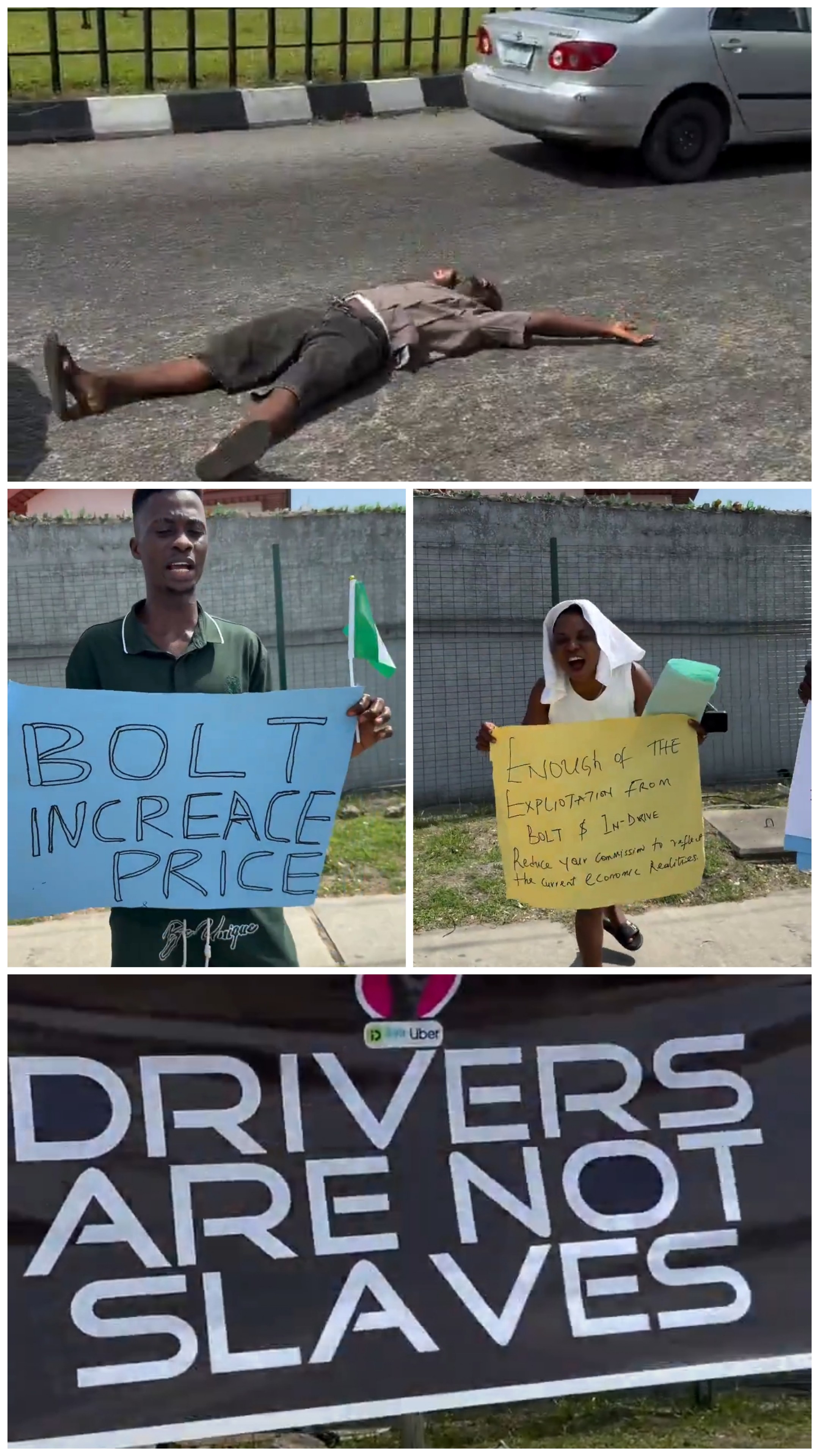
A video of e-hailing drivers protesting inDrive and Bolt is trending on X, with one driver demanding that inDrive “pack your load and go” while calling on Bolt to “increase your price”. The clip surfaced on Monday, Oct 12, as drivers began an indefinite strike in Lagos, and it had passed 62,000 views at the time of filing.
Posted by Nigeria Stories, the video shows drivers chanting “inDrive must go” and “enough is enough”. The camera stays mostly on one man, who is not named; he says he is a driver and a father of four.
At stake is a question that reaches beyond one viral clip: who sets prices on apps like Bolt and inDrive — the platforms or the drivers — and the answer shapes what Lagos riders pay and how long they wait for a car.
“Do you want to kill us?”
The man claims he worked from the previous night into Monday and earned ₦60,000 while spending ₦80,000 on fuel. “Nothing to go home with,” he laments.
He blames the apps’ pricing rather than the drivers. “We did not increase the price of fuel; the government increased the price,” he says.
He also complains about a rate of ₦200 per kilometre charged by the e-hailing companies, insists that drivers are not slaves, and tells anyone who cannot afford Uber to “enter Danfo”, the yellow minibuses that are a fixture of Lagos commuting.
Technext ran a reverse image search on snapshots from the video using TinEye and confirmed that it is genuine and recent. The outlet could not independently verify the man’s identity, his earnings or the rate he cites, and it remains unclear whether he belongs to the union behind the strike.
How Nigerians on X reacted
At the time of filing, the post had 940 likes, 212 reposts and 111 replies, and the responses were clearly split.
Some users backed the drivers. Obi of Abuja said drivers are “really suffering” and that fares should reflect today’s reality. Femi Demo proposed metered pricing — a charge per kilometre and per minute in slow traffic — so drivers do not lose money in Lagos congestion. Sani-Dauran suggested the apps should cut their commissions from 25 per cent to 10 per cent.
Many others pointed at the government instead. “Hold ur government accountable,” wrote Skymike Crypto, who said the anger was aimed at the wrong target. Temidayo wrote that nobody protested when the subsidy was removed, so drivers should not expect the apps to carry the burden.
A third group focused on passengers. @Maryeyo asked whether riders were not “in the same economy” as the driver. The Old Protege said raising fares too aggressively risks losing customers already struggling with the cost of living, while keeping them too low leaves drivers short on fuel and maintenance.
A number of replies also fixated on the number of children the man says he has. Paul War called the video part of a “well-scripted and organised campaign” — a claim Technext found no evidence to support.
The strike behind the video
The Amalgamated Union of App-based Transporters of Nigeria (AUATON) began the shutdown of Bolt and inDrive in Lagos on Monday. Riders have reported fewer available cars, waiting times of 16 to 20 minutes and higher fares.
The union is demanding a fare review and a commission cap of 10 per cent, subject to negotiation. It also wants any change to fares or commissions to be preceded by consultation with drivers.
Bolt has called for dialogue with the union Its Head of Regulatory and Policy in Africa, Weyinmi Aghadiuno, said the company’s focus is “on listening, understanding the issues and identifying practical ways to strengthen the driver experience.”
The union’s Lagos chairman, Jaiyesimi Azeez, has shown little sign of backing down. “The app companies will no longer determine the price of our service. They are middlemen,” he said.
What to watch next is whether Bolt’s call for dialogue develops into formal negotiations with AUATON over the fare review and the proposed 10 per cent commission cap — demands the union has framed as subject to negotiation — while the indefinite shutdown it began on Monday continues.
This article is based on reporting by TechNext24.

