ECB President Christine Lagarde to Step Down on February 7, 2027
Key Takeaways
- •Christine Lagarde announced on October 29 that she will step down as ECB President on February 7, 2027, almost nine months before her term was scheduled to expire in October 2027.
- •Lagarde, the first woman to lead the ECB, has headed the institution since November 2019 following her tenure as Managing Director of the International Monetary Fund.
- •European Council President António Costa confirmed that the process of selecting Lagarde's successor will begin immediately, though no official nomination has yet been made.
- •The resignation announcement was published on the same day as the ECB's interest rate decision, drawing additional attention to the central bank's leadership plans.
- •Lagarde's successor will lead the ECB as the EU advances its Markets in Crypto-Assets framework, deepens stablecoin oversight, and continues work on the digital euro.
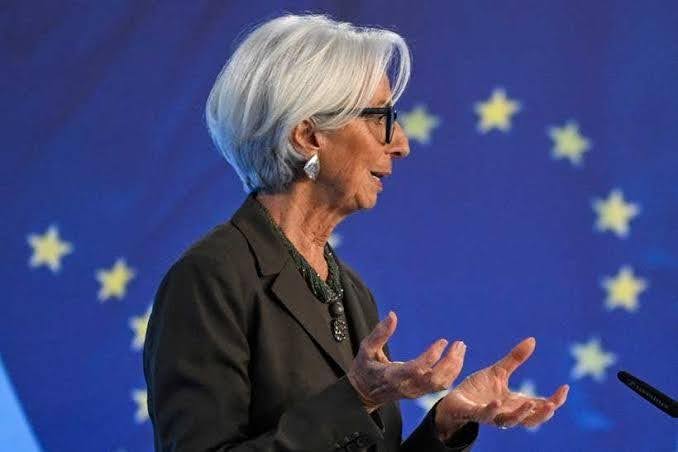
Christine Lagarde has confirmed that she will leave the European Central Bank (ECB) before completing her full term, setting in motion one of the most significant leadership changes in European finance. While the announcement does not introduce any new crypto policies, it arrives at a time when digital assets, stablecoins, and blockchain-based payments are growing in significance across the eurozone's financial landscape — bringing the ECB's leadership transition squarely into the spotlight.
Lagarde shared the news on October 29 in a post on her official X account:
“I have just informed my colleagues that I will step down as @ECB President on 7 February 2027. It has been a source of great pride to serve this institution. I thank all of those who have supported me on this journey over the past seven years.”
— Christine Lagarde (@Lagarde) October 29, 2026
Lagarde Confirms Early Departure
On October 29, Lagarde announced that she will resign on February 7, 2027, almost nine months before her tenure was set to expire in October 2027. She described the role of ECB president as a great source of pride and expressed gratitude to the colleagues who supported her over the past seven years.
Lagarde has led the institution since November 2019, becoming the first woman to hold the ECB presidency after serving as Managing Director of the International Monetary Fund.
The ECB has already begun preparations for the transition. European Council President António Costa has announced that the process of selecting her successor will begin immediately to ensure a seamless handover.
Notably, the announcement was published on the same day as the ECB's own interest rate decision, a timing overlap that drew additional attention to the central bank's leadership plans. The presidency carries that day-to-day weight because the ECB president chairs the Governing Council, the body that sets the euro area's key interest rates.
Why Crypto Markets Will Watch the Next ECB Leader
The ECB remains one of the most influential central banks in the world, and its leadership carries strong influence over European policy in both monetary affairs and financial innovation.
Lagarde's comments did not include any specific remarks on cryptocurrencies. Even so, her successor will preside over the central bank at a moment when the EU is moving forward with digital-asset regulation under its Markets in Crypto-Assets (MiCA) framework, deepening its oversight of stablecoins, and continuing progress on the digital euro, the ECB's central bank digital currency project.
For crypto businesses operating across Europe, the incoming ECB president will be a crucial voice in discussions on payment infrastructure, tokenized finance, and financial stability.
Leadership Change Arrives During Europe's Digital Finance Push
The transition stands out because several other top roles at the ECB will also fall vacant within months of one another, producing one of the biggest leadership reshuffles at the institution in years.
The reshuffle coincides with rising institutional adoption of blockchain-based financial services, including tokenized assets and regulated stablecoins. Companies such as Ripple and Circle, together with leading European banks, have continued to ramp up their tokenization efforts in payments and capital markets, further raising the importance of clear regulation.
Succession Process Moves Into Focus
Under EU legislation, the European Council will select the next ECB president, a process that includes the backing of eurozone finance ministers, the European Parliament, and the ECB's Governing Council. A number of potential candidates have drawn media attention, but no official nomination has yet been made.
Under EU law, the ECB presidency carries a non-renewable eight-year term, underscoring the long-term stakes of a selection that will extend well beyond Lagarde's departure date.
The change signals more than a routine policy shift: it represents a leadership transition that could shape the future outlook for digital finance across Europe.

