Christine Lagarde Reportedly Blocked Binance's EU MiCA License; Greek Regulator Denies Role
Key Takeaways
- •A Wall Street Journal report cites anonymous sources claiming ECB President Christine Lagarde called Greek Prime Minister Kyriakos Mitsotakis in early June 2026, prompting the HCMC to reverse course on Binance's license application.
- •The Hellenic Capital Market Commission denies the reported intervention and says it reviewed the application independently under European and Greek law, while the ECB declined to comment.
- •Binance withdrew its Greek application on June 16, 2026, fourteen days before the MiCA transition period expired, and it still holds no EU authorization as of mid-September 2026.
- •Competitors including Coinbase, Kraken, OKX and Crypto.com secured MiCA licenses with passporting rights across all 27 member states, and around 2 million French Binance customers lost trading access on the July 1 cutoff.
- •Binance currently serves European customers via the reverse solicitation exemption while ESMA examines whether routing European trading flow through an Abu Dhabi entity amounts to a de facto withdrawal from the EU.
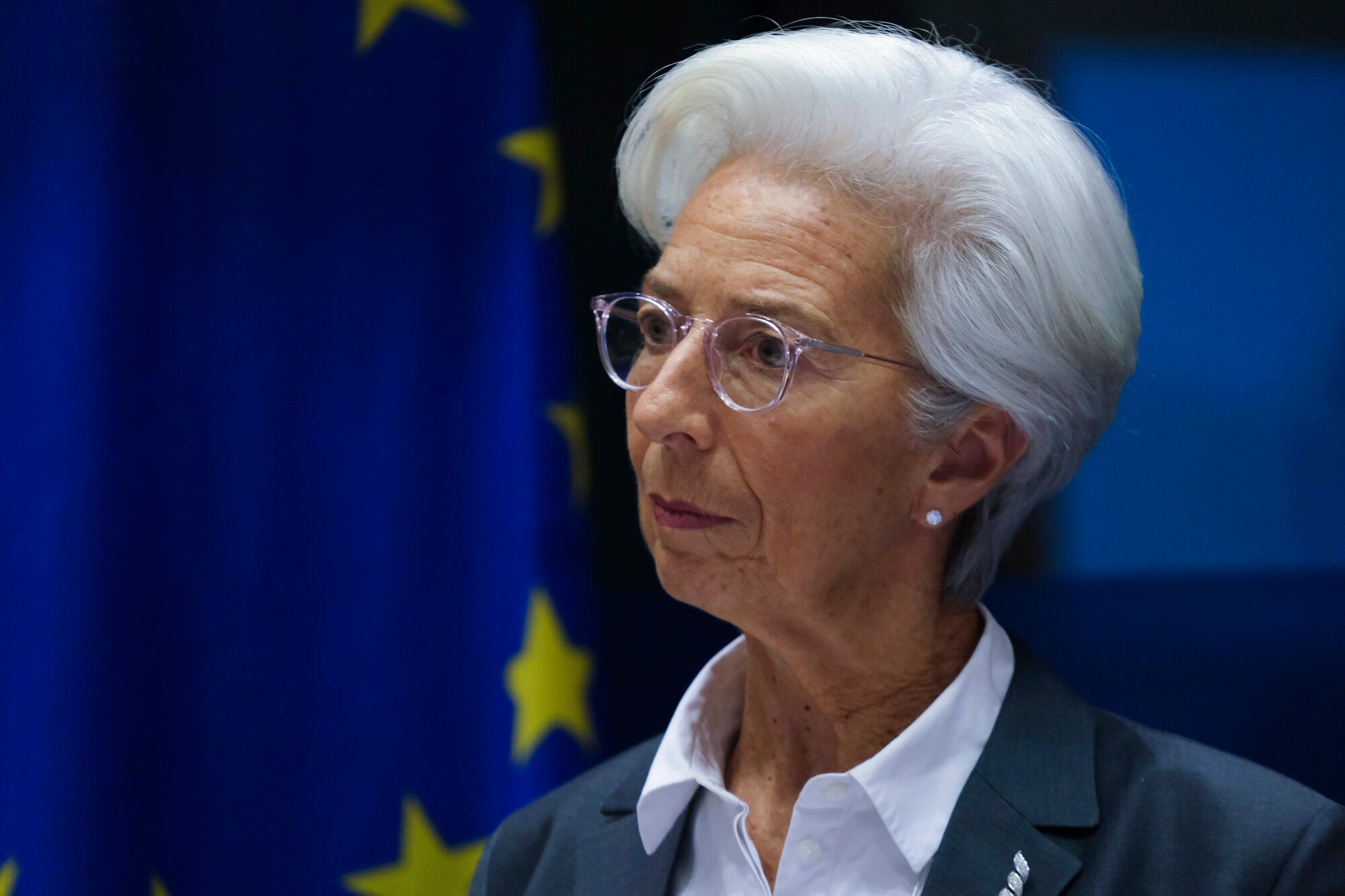
European Central Bank President Christine Lagarde is said to have personally intervened to deny Binance a license for the EU market. That is the account of a Wall Street Journal report, and the Greek securities regulator rejects it.
How MiCA licensing works
The EU Markets in Crypto-Assets Regulation (MiCA) has governed access to the European crypto market since December 2024. Under the framework, a single national authorization allows a firm to offer services in all 27 member states. The respective national regulator decides on each application — in Greece, the Hellenic Capital Market Commission (HCMC). The European securities regulator ESMA, in contrast, is only responsible for coordinating the consistent application of the rules.
A heavyweight applicant
Binance filed its application in January 2026, at a point when the transition period still ran until the end of June 2026. Among the large centralized trading venues, the exchange held a global spot market share of around 45% — a figure dating from the end of August 2026. Since its USD 4.3 billion settlement with authorities in 2023, however, the company has faced heightened scrutiny.
Binance was nonetheless not among the firms that cleared the first licensing round. Of more than 3,000 European crypto firms, only around 210 received full authorization by the deadline. That group includes Coinbase, Kraken, OKX and Crypto.com — but not Binance.
The expected approval collapses in early June
According to the Wall Street Journal, the process ran favorably for a long time. In late May 2026, the Greek authorities signaled that approval was imminent, according to the report's sources. By then, the application had sat with the regulator for around four months. As a result, Binance prepared an announcement. Those preparations reportedly included a photo opportunity for CEO Richard Teng with Prime Minister Kyriakos Mitsotakis.
Shortly afterwards, the situation turned. In early June, the HCMC is said to have changed course. The process could not continue without political backing, the regulator reportedly told the company. Specifically, the anonymous sources cite a call from Lagarde to Mitsotakis as the reason.
The report also provides an account of the sequence inside ESMA. The HCMC reportedly told ESMA's Digital Finance Standing Committee in early June that it intended to approve the application. Around a week later, Binance reportedly learned that it would not receive a license. Notably, the sources cite the term "convergence" as the justification — meaning a lack of convergence. Only the outcome itself is certain.
The HCMC dates the withdrawal of the application to 16 June 2026, one day before the scheduled meeting of its board. The exchange made the step public only on 24 June. In its official statement, the company said it would pursue authorization in another EU member state. The HCMC never took a formal decision on the matter.
The timing carried weight. Fourteen days after the withdrawal, the transition period expired, and a new authorization was practically out of reach within that window. The withdrawal therefore ended regular EU access for the world's largest crypto exchange.
HCMC denies the reported Lagarde role
The Greek regulator disputes the account. Its staff did not make the statements about an intervention by Lagarde that were attributed to them, the authority said. According to reports, it furthermore reviewed the application independently and solely under European and Greek law.
The ECB declined to comment. Formally, the central bank holds no licensing competence under MiCA in any case. It grants no licenses and reviews no applications; only the national regulators issue authorizations, while ESMA coordinates their practice.
That does not refute the allegation, however. A missing formal competence does not rule out a call to a member state's head of government. Lagarde has repeatedly warned against Bitcoin as a reserve asset, and she has also raised the risks stablecoins pose to the monetary sovereignty of the euro area. Similar rumors about a personal intervention by the ECB president had already circulated in July.
Binance loses EU market access to competitors
While Binance withdrew the Greek application, its competitors secured EU access. Coinbase had earlier received its authorization from the Luxembourg regulator CSSF. Kraken, OKX and Crypto.com likewise obtained their licenses on time. Because of the passporting principle, these approvals took effect immediately in all 27 member states. From 1 July 2026, unlicensed providers could no longer offer services in the EU, leaving Binance without regular authorization.
The consequences for users were immediate. Around 2 million French customers lost their trading access on the cut-off date. As of mid-September 2026, the company still holds no MiCA authorization in any EU country. Talks with the French regulator AMF are reportedly under way, yet a formal application there remained unconfirmed as of mid-September.
In the meantime, the exchange serves European customers through the so-called reverse solicitation exemption. Under that rule, the customer approaches the provider on their own initiative, and the provider does not market actively. At the same time, part of the European trading flow runs through an entity in Abu Dhabi. As a result, ESMA has asked Binance whether this amounts to a de facto withdrawal from the EU. Market access for the world's largest trading platform thus rests on an exemption that the regulator itself questions. Two questions therefore remain open: whether the reported talks with the AMF turn into a formal application, and how ESMA follows up on its inquiry.
The case raises questions about MiCA licensing practice
Beyond the individual case, the allegation touches the core promise of MiCA. Before the regulation, every exchange had to apply for permission in each country separately; since December 2024, a passporting system has replaced that fragmentation. Ultimately, this model holds only if national authorities decide solely by the rules. Informal pressure from Frankfurt on a head of government would undermine that assumption — and any other applicant would face the same problem, not just Binance.
Meanwhile, the ECB is working on the digital euro, a project that counts as the centerpiece of Lagarde's term. In July 2026, the EU Parliament voted 416 to 169 in favor of trilogue negotiations. Shortly afterwards, the central bank selected 36 payment service providers for a pilot phase, a list that includes Deutsche Bank, Revolut and Stripe. Plans ultimately point to a launch in the second half of 2027; an issuance decision requires an adopted regulation and a successful pilot phase.
Source: Crypto Valley Journal

