Matthew Cole book alleges secret Kushner-linked funds and Middle East policy arrangement
Key Takeaways
- •A newly published book excerpt alleges Saudi and Emirati leaders secretly funneled at least $2 billion into accounts Jared Kushner could access while serving in the Trump White House.
- •According to the book, Kushner was an authorized signatory on a UAE-based account that allegedly sent an $85 million transfer to Libyan commander Khalifa Haftar and an earlier payment to Blackwater founder Erik Prince.
- •Cole further alleges Kushner gave a green light to the 2017 Qatar blockade, and that Qatar's sovereign wealth fund later became a passive investor in the purchase of the Kushner family's debt-burdened 666 Fifth Avenue building.
- •Kushner denied the allegations as categorically false, and his lawyers demanded a retraction and threatened legal action against publisher Simon & Schuster.
- •House Judiciary Committee Democrat Jamie Raskin urged Kushner to recuse himself from Middle East and Ukraine negotiations and to disclose any bank accounts he could access during his government service.
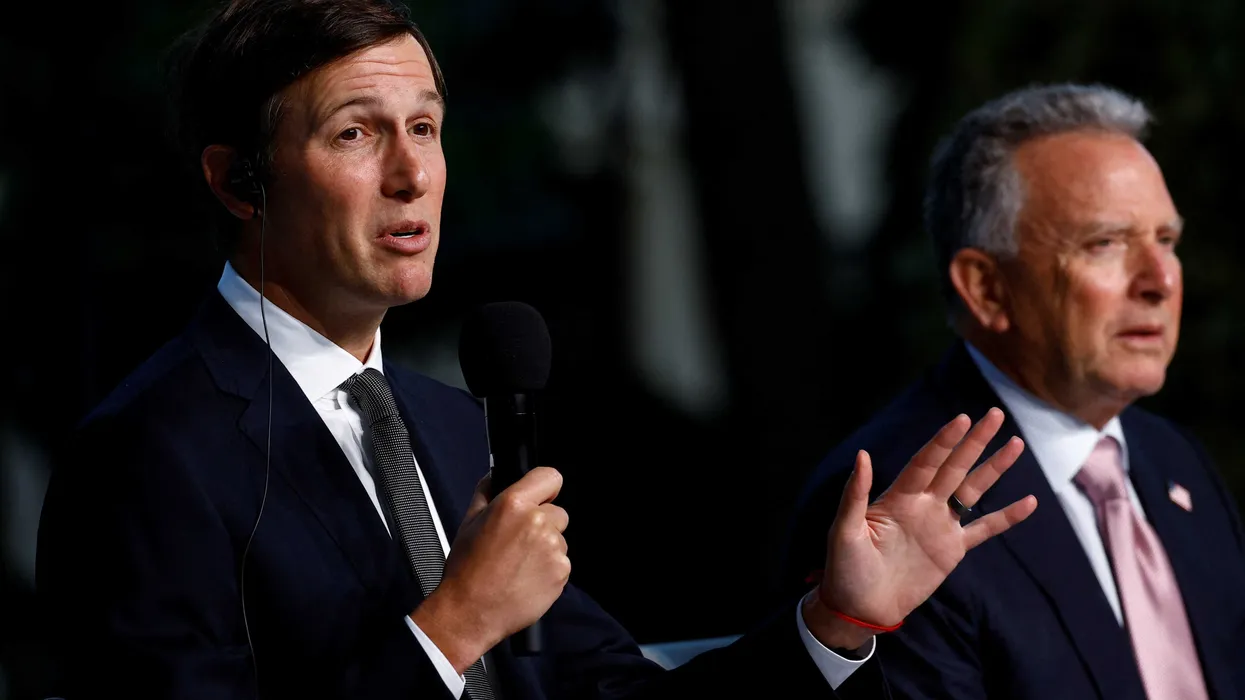
Vanity Fair has published an excerpt from investigative reporter Matthew Cole’s book, Princes and Thieves: Jared Kushner and Mohamed bin Zayed’s Secret Plot to Remake the Middle East, alleging that Saudi and Emirati leaders secretly placed at least $2 billion into accounts accessible to Jared Kushner during Donald Trump’s first term.
The excerpt, titled “The Art of the Deal: Jared Kushner’s Hacked Phone Revealed His Secret Negotiations — Including More Than $700 Million in Transfers”, concerns Kushner’s role as a senior adviser to Trump, his father-in-law. Kushner is now serving as Trump’s special envoy.
Kushner’s lawyers demanded that Vanity Fair retract the article and threatened legal action against the book’s publisher, Simon & Schuster. Kushner has denied Cole’s reporting, saying: “The allegations made by this author are completely insane, categorically false, and never happened. We denied every one of these claims on the record, yet the author failed to provide a single shred of evidence to substantiate any of them.”
His lawyers have said that no such bank accounts existed and that the allegations are not supported by verifiable evidence. In a letter to Simon & Schuster, Kushner’s lawyer also wrote that Kushner was not involved in, and had no knowledge of, any alleged quid pro quo with the Qatari government. Kushner repeated his denial on X, writing that the allegations were “completely insane … and never happened.”
Cole defended the book and his reporting in an extended interview with Democracy Now! “This book is a result of more than 50 sources. There was an enormous amount of fact-checking and legal vetting that went into this book,” Cole said. “There’s plenty of information and reporting in the book that lets us establish and understand that there was … an unholy alliance between Jared Kushner and the leader of the UAE, the leader of Saudi Arabia and, at the time, Benjamin Netanyahu, the prime minister of Israel.”
A review by Fintan O’Toole in The New York Times said: “If Cole’s claims are accurate, Kushner’s political and financial relationship with the UAE’s president Mohammed bin Zayed constitutes what must surely be the worst case of U.S. foreign policy being conducted outside the law and democratic oversight since the Iran-Contra scandal during the Reagan administration in the 1980s.”
Jamie Raskin, the ranking Democrat on the House Judiciary Committee, called on Kushner to recuse himself from negotiations involving the Middle East and Ukraine. Raskin also asked him to provide a “comprehensive list of bank accounts or other financial instruments” to which he had access while serving in government. His letter is available here.
A proposed foreign-policy fund
In an interview with Amy Goodman, Cole said the arrangement described in his book began after Trump entered office in 2017. According to Cole, Trump gave Kushner a central role in U.S. Middle East policy and assigned him responsibility for attempting to resolve the Israeli-Palestinian conflict.
Cole said Mohamed bin Zayed, the ruler of the United Arab Emirates, known as MBZ, and Mohammed bin Salman, then Saudi Arabia’s deputy crown prince and now known as MBS, traveled to New York before Trump entered the White House to meet with the transition team.
According to Cole, Trump, Kushner, MBZ and MBS shared a desire to reshape the Middle East. Their objectives included countering Iran, reversing what they viewed as the remaining effects of the Arab Spring, pursuing an Israeli-Palestinian agreement favorable to Israel and marginalizing the Palestinians. MBS also wanted to become crown prince and position himself to become Saudi Arabia’s future king, Cole said.
Cole described an initial proposal for a foreign-policy fund financed openly by Saudi Arabia and the UAE. The fund would have supported Trump’s international initiatives, including efforts to reduce U.S. spending and troop commitments in the Middle East. One idea, Cole said, was for the two countries to help finance construction of the wall along the U.S.-Mexico border, giving Trump accomplishments to cite during his 2020 reelection campaign.
Cole said the proposal raised legal and practical complications involving congressional authorization and restrictions on outside spending, and eventually faded. He alleged that it was followed by a secret arrangement involving Kushner, MBS and MBZ under which a pool of foreign money could be used to advance the Saudi and Emirati leaders’ regional objectives.
Those objectives included ending the war in Yemen on terms favorable to Saudi Arabia and the UAE, removing Qatar’s ruler and supporting Khalifa Haftar in eastern Libya in an effort to overthrow the internationally recognized government in Tripoli.
The Qatar blockade and 666 Fifth Avenue
Saudi Arabia and the UAE announced a blockade of Qatar in June 2017, during Trump’s first administration. The three countries are wealthy Gulf Arab states and U.S. allies, and all host U.S. troops or military bases. Qatar is home to the forward headquarters of U.S. Central Command, which had about 10,000 U.S. troops and served as a key base for operations in Afghanistan and against Islamic State forces in the Middle East.
Cole said MBS and MBZ objected to Qatar’s relationship with Al Jazeera and accused its government of supporting the Muslim Brotherhood, Hamas and terrorism. They wanted Qatar’s emir, Tamim al-Thani, to change course and were prepared to remove him if he refused, Cole said.
According to Cole, Kushner gave the leaders what amounted to a green light for the blockade without informing other members of the administration. The announcement reportedly took the rest of the Trump administration by surprise and created a major diplomatic crisis. Cole said the movement of money associated with the alleged arrangement began at or around the same time, while emphasizing that his book does not establish that the two events were directly connected.
Trump publicly backed the blockade. In remarks from the Rose Garden in June 2017, he said: “The nation of Qatar, unfortunately, has historically been a funder of terrorism at a very high level. And in the wake of that conference, nations came together and spoke to me about confronting Qatar over its behavior. So we had a decision to make: Do we take the easy road, or do we finally take a hard but necessary action? We have to stop the funding of terrorism.”
Secretary of State Rex Tillerson and Defense Secretary Jim Mattis, however, sought to prevent an escalation and protect Qatar. Cole said two senior White House officials told him that administration officials repeatedly tried to explain to Trump that the dispute was more complicated than he understood. According to Cole, Trump would sometimes acknowledge their arguments but later return to the position that Qatar was the bad actor, which Cole said reflected information he was receiving from Kushner.
Several days after the blockade began, Tillerson learned that Saudi Arabia might be preparing a military incursion into Qatar, Cole said. Tillerson reportedly told MBS, who had not yet become crown prince, to stand down. According to one senior White House official cited by Cole, Qatar’s ruling family may have been about 72 hours from being toppled.
Cole also alleged that Qatar’s government learned about a financial arrangement involving Kushner, MBS and MBZ. According to a senior U.S. official cited by Cole, messages sent to Qatar about resolving the blockade referred to a Kushner family building with substantial debt that needed to be purchased.
The building was 666 Fifth Avenue in Manhattan, which carried $1.2 billion in debt when Kushner joined the White House. Cole noted that Kushner divested his direct ownership interest in the building when he took the government position, while also saying that Kushner remained extremely close to his family and had helped assemble the property.
The Kushner family had reportedly approached Qatar twice in the months before the blockade about purchasing the building. Qatar rejected the proposal, with officials considering it a poor investment, Cole said.
After Tillerson was fired in March 2018, Qatar’s ruling family feared that MBS and MBZ might again attempt to overthrow the government with Washington’s acquiescence, according to Cole. The family then decided to acquire 666 Fifth Avenue through an arrangement designed to provide plausible deniability and avoid a direct purchase.
In April, Tillerson’s replacement, Secretary of State Mike Pompeo, traveled to Saudi Arabia and told MBS that the blockade had to be resolved peacefully, Cole said. Weeks later, Qatar’s emir was invited to the White House, where Trump spoke positively about him. The blockade was subsequently resolved.
Cole said the structure of the transaction raised public questions because the company that bought 666 Fifth Avenue included Qatar’s sovereign wealth fund as a passive investor, and a subsidiary of that company purchased the building. Kushner’s lawyers have denied that he was involved in, or had knowledge of, any alleged quid pro quo involving Qatar.
The alleged Alpha and Beta accounts
Cole said the alleged arrangement shifted during the summer of 2017 from a possible fund for Trump’s initiatives to a pool of money supporting the regional plans of MBS and MBZ. He described two accounts, which he named the Alpha and Beta accounts for clarity.
The Alpha account was allegedly held in the UAE and initially contained about $1 billion. Cole said the UAE deducted an administrative fee from Saudi Arabia’s contribution for managing the funds. He characterized the account as similar to an Iran-Contra-style arrangement involving foreign money for foreign-policy and off-the-books operations.
Cole explained that the Iran-Contra affair under President Ronald Reagan involved the sale of Iranian weapons to fund the Contra forces in Nicaragua after Congress had prohibited the CIA and the U.S. government from supporting them. He said the alleged operation described in his book differed because it was not a government-within-a-government program, but rather involved Kushner working with foreign governments and using their money in overseas operations.
Cole alleged that Kushner had access to the UAE-based account and was a signatory authorized to make transfers, while emphasizing that the book does not say Kushner personally made the transfers. He said the account belonged to the Watani Al Emarat Foundation, an Emirati domestic charity allegedly used as a cover for military and intelligence operations abroad. During the period examined in the book, Cole said, the account was used primarily to support Haftar and the civil war in Libya.
According to Cole, the first transfer from the account in the summer of 2018 went to Erik Prince, the founder of Blackwater. The second, $85 million, went to Haftar, the eastern Libyan commander who was attempting to overthrow the internationally recognized government in Tripoli.
Cole said his reporting on Prince drew on more than a decade of work, much of it conducted while he was at The Intercept, and that his reporting on Prince, the UAE and the UAE’s covert intelligence operations eventually converged in the book.
The Beta account was allegedly a separate pool funded solely by MBZ. Cole described it as containing roughly $1 billion, sent to Israel and held at the Central Bank of Israel for Kushner’s personal benefit. He emphasized that the central bank is a government institution that does not hold personal accounts and that the alleged account was not in Kushner’s name, but was allegedly held for him.
Cole acknowledged ambiguity over what “personal benefit” meant and said it was not clear whether the Beta account was another foreign-policy fund like the Alpha account. He said the book details how money moved from both accounts and identifies the people who controlled them.
Cole said the book was based on more than 50 sources and underwent extensive fact-checking and legal review. He acknowledged that questions remained unanswered but argued that the details about the accounts and their operation established the basis for his allegations.
The alleged phone hack
The Vanity Fair excerpt also concerns an alleged compromise of Kushner’s cellphone. Cole said the phone-hacking account was less significant than the alleged financial relationships and mainly explained how some people learned about the accounts.
In late 2017, according to Cole, Dutch intelligence officers encountered a Russian military intelligence operative from the GRU traveling through Europe. The Dutch approached British authorities about attempting to recruit the operative in the United Kingdom. The operative cooperated after being told that he could either work with the Dutch or face imprisonment in the U.K.
Cole said the operative provided access to a remote GRU server in Rostov, Russia. Dutch intelligence officers who entered the server allegedly found screenshots of Kushner’s cellphone. The discovery raised concerns in the Netherlands, a NATO member worried about Trump’s relationship with Russian President Vladimir Putin, his attitude toward NATO and the possibility that he might seek to dissolve the alliance.
After several months, the Dutch allegedly determined how Russian operatives had accessed Kushner’s phone. By early 2018, they could view the phone while Kushner was using it, although they did not control the device, Cole said. The intelligence service involved was the MIVD, the Netherlands’ military intelligence and security service, which Cole compared to the U.S. National Security Agency.
Cole said the Dutch saw Kushner’s access to the Alpha account and observed hundreds of millions of dollars flowing into it from a bank in Azerbaijan. The alleged transfers raised questions about why Azerbaijani money was entering a UAE account accessible to Kushner and why funds were then sent to people including Prince and Haftar.
Cole said he initially learned about the account through a source who provided a series of questions. After six months, he found an unrelated source in another part of the world who independently verified details of the account and provided a broader understanding of its alleged purpose. Cole said the book’s endnotes contain additional information about his sources.
Oversight and Kushner’s role
Goodman noted that Kushner had not been approved by the Senate to conduct foreign policy. Cole responded that Kushner’s appointment as a senior White House adviser in 2017 gave him a role resembling that of a shadow secretary of state, with little oversight beyond the president.
Cole said Kushner remained subject to U.S. laws and regulations as a government employee and citizen, but argued that the administration deliberately placed him in a position with limited institutional oversight. He said Trump’s second administration had adopted a similar model, relying on family members and close business associates as emissaries and leaders of U.S. foreign policy.
Cole also said Kushner was not serving in an official U.S. government capacity during the second administration, leaving him with even less oversight. He characterized the arrangement as a serious governance concern because conversations between Kushner and foreign leaders allegedly occurred without State Department, CIA or other government officials present and without detailed notes or memoranda.
Cole said the book presents the first Trump administration as the starting point for a broader breakdown of traditional foreign-policy norms. He linked the administration’s efforts to counter Iran with Israel, Saudi Arabia and the UAE to what he described as later developments, including the war in Iran that he said was underway in February 2026. Those claims are part of Cole’s interpretation of the book’s broader narrative and have not been established independently in the material provided.
Habib al-Sayegh and normalization with Israel
The interview also addressed Habib al-Sayegh, an Emirati poet and prominent editor of the Khaleej Times. Cole said al-Sayegh was a respected intellectual who regularly attended MBZ’s weekly salon, known as the Majlis or Diwan, but was not a member of the ruling family.
According to Cole, al-Sayegh publicly criticized the normalization of relations between Arab governments and Israel during the summer of 2019. In an Arabic editorial published in August 2019, he reportedly argued that Arab governments should not normalize relations with Israel unless they compensated Palestinians or otherwise addressed what Israel had done to them.
Cole said al-Sayegh was arrested at his home in the middle of the night several days later, taken to a UAE security facility and tortured. Three days afterward, the UAE government announced his death without providing details about how he died, while praising him publicly.
Cole alleged, based on sources familiar with the case, that al-Sayegh was murdered because his position had become unacceptable to MBZ and the UAE’s leadership. He said al-Sayegh had previously supported the blockade of Qatar and had acted as a mouthpiece for the Emirati government, but was killed after opposing normalization with Israel.
Cole compared the alleged killing with the 2018 murder of Saudi journalist Jamal Khashoggi, a Washington Post columnist who was killed and dismembered at the Saudi consulate in Istanbul. Cole said al-Sayegh was not a dissident in the same sense and that the alleged killing demonstrated the risks faced even by figures who had previously supported the ruling government.
Cole said the broader significance of Kushner’s relationship with MBS and MBZ was that Trump and Kushner were embracing the rulers’ worldview, which he characterized as authoritarian and intolerant of dissent and free speech.
The advocacy group DAWN has called on the United Nations to open an independent investigation into al-Sayegh’s death. Raskin has also urged Kushner to recuse himself from Middle East and Ukraine negotiations in light of the allegations in Cole’s book.
Kushner continues to deny the reporting. “The allegations made by this author are completely insane, categorically false, and never happened,” he said.

