KuCoin VP Edwin Wong Presents Four-Pillar Trust Framework for Digital Asset Infrastructure
Key Takeaways
- •Edwin Wong, KuCoin's Vice President and Head of Risk Control, proposed a four-pillar framework for assessing digital asset infrastructure: legal and regulatory trust, technological trust, security trust, and enduring trust.
- •Wong said institutionalization changes market benchmarks by adding emphasis on governance, operational resilience, security, risk management and long-term trust rather than replacing growth.
- •Hong Kong milestones cited include a virtual asset trading platform licensing regime effective June 2023, first spot Bitcoin and Ether ETFs trading from April 2024, and a Stablecoins Ordinance in force from August 2025 under the Hong Kong Monetary Authority.
- •After FTX's collapse in November 2022, proof-of-reserves attestations, third-party audits, and certifications such as SOC 2 and ISO/IEC 27001 became standard benchmarks in institutional due diligence.
- •Wong argued that a trusted ecosystem requires each participant, from custodians to auditors and infrastructure providers, to perform specialist roles with clear responsibilities rather than one institution doing everything.
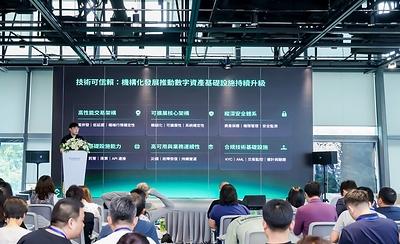
HONG KONG, Aug. 28, 2026 /PRNewswire/ — Edwin Wong, Vice President and Head of Risk Control at KuCoin, delivered a keynote address at the CYPHER ASIA Intelligent Crypto Finance Summit, setting out his perspective on how the industry can build a more resilient, verifiable and sustainable foundation for trust as institutional participation in digital assets deepens.
As Hong Kong continues to advance its regulatory framework, tokenization initiatives and financial infrastructure for digital assets, deeper institutional participation is reshaping market development. The city's recent milestones include a licensing regime for virtual asset trading platforms that took effect in June 2023, Hong Kong's first spot Bitcoin and Ether exchange-traded funds, which began trading in April 2024, and the Stablecoins Ordinance that came into force in August 2025 under the Hong Kong Monetary Authority. The broader institutional turn in the asset class has been equally visible elsewhere, with the United States approving spot Bitcoin exchange-traded funds in January 2024 and spot Ether funds later that year. Wong noted that institutionalization is not simply about attracting more institutions to trade. It also means the benchmarks by which the market is assessed are changing — expanding beyond growth and market access to place greater emphasis on governance, operational resilience, security, risk management and long-term trust.
"Institutionalization does not replace growth; it adds a more rigorous standard of trust on top of it."
Wong outlined a four-pillar framework that institutions can use to assess digital asset infrastructure:
- Legal and regulatory trust — clear rules and well-defined responsibilities
- Technological trust — proven capability to deliver reliably and maintain operational continuity
- Security trust — security controls whose effectiveness can be demonstrated through outcomes and independent validation
- Enduring trust — sustained commitment to long-term investment and accountability across market cycles
Risk management, he emphasized, must be embedded across platform governance, technology operations and user protection. Trust cannot rest on promises alone; it must be grounded in governance frameworks, operational capability, verifiable evidence and sustained execution. The insistence on demonstrable evidence echoes hard-won lessons elsewhere in the sector: after the collapse of FTX in November 2022, when investigations found customer assets had been commingled with the failed exchange's own funds, proof-of-reserves attestations and third-party audits became widespread practice among major platforms, and external certifications such as SOC 2 and ISO/IEC 27001 turned into standard benchmarks in institutional due diligence.
Turning to the development of a trusted ecosystem, Wong said the institutionalization of digital assets cannot be achieved by any single participant. Asset issuance, custody, risk management and market infrastructure each require specialist expertise and clearly defined roles. Trust, in turn, depends on asset segregation, a clear allocation of responsibilities and effective coordination. That division of labor mirrors how the market has matured, with specialist custodians, market makers, auditors and infrastructure providers now operating alongside trading venues rather than under a single roof.
"A trusted ecosystem does not require one institution to do everything. It requires each participant to play its role, with clear responsibilities and effective collaboration."
He concluded: "Law provides the rules; technology provides the capability; security provides verification; long-term commitment sustains accountability; and the ecosystem enables collaboration." Hong Kong's distinctive strength lies in its ability to bring these elements together, helping build more mature and trusted infrastructure for Asia's digital asset market, he said.
About KuCoin
Founded in 2017, KuCoin is a leading global crypto platform with more than 45 million users across 200+ countries and regions. The platform offers trading in 1,500+ digital assets, along with spot, futures, institutional wealth management and Web3 wallet services, and has been recognized by authorities including Forbes and Hurun. KuCoin has obtained SOC 2 Type II, ISO/IEC 27001:2022, ISO/IEC 27701:2019, ISO 22301:2019 and ISO/IEC 42001:2023 certifications, continuing to strengthen its security and privacy capabilities. Supported by its AUSTRAC registration in Australia and MiCA license in Austria — the latter issued under the European Union's Markets in Crypto-Assets regulation, fully applicable across the bloc since the end of 2024 — and under the leadership of CEO BC Wong, KuCoin continues to advance global compliance and innovation. Company website: www.kucoin.com
Disclaimer: This article is for corporate PR purposes only. It does not constitute an offer, invitation, solicitation, recommendation or promotion of any virtual asset products or services in Hong Kong, nor does it constitute investment advice.
