KRX Activates Buy-Side Sidecar for KOSPI Amid Sharp Rally
Key Takeaways
- •The Korea Exchange activated a buy-side sidecar for KOSPI on Friday after the index surged 11.05% shortly after the market opened.
- •Program trading for KOSPI-listed shares was suspended for five minutes beginning at 9:06 a.m. to restore orderly trading.
- •A buy-side sidecar is triggered under KRX rules when the KOSPI 200 Futures index rises at least 5% for one minute or longer.
- •Buy-side sidecar activations are less commonly reported than sell-side sidecars, which are deployed during sharp market declines.
- •The sidecar is one of several market stability measures operated by the KRX, including circuit breakers that halt trading across all securities when predefined thresholds are breached.
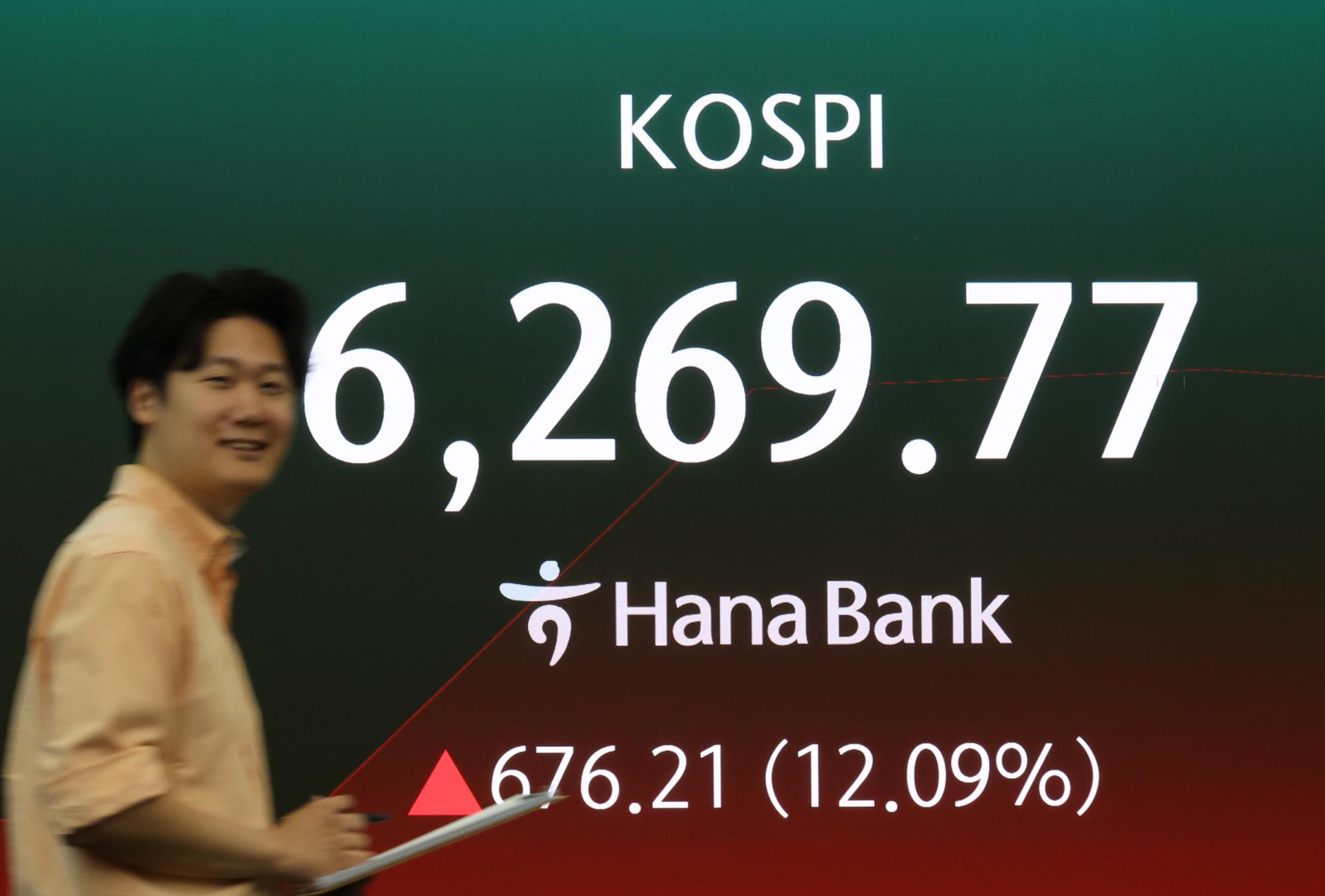
The Korea Exchange (KRX) activated a buy-side sidecar for the benchmark Korea Composite Stock Price Index (KOSPI) on Friday morning after the index surged sharply at the open, driven by gains in technology stocks.
Program trading for KOSPI-listed shares was suspended for five minutes beginning at 9:06 a.m., shortly after the market opened, according to the KRX.
The KOSPI opened 1.15 percent higher and then climbed 11.05 percent as of 9:07 a.m., triggering the protective mechanism. The surge represented an unusually large single-session move for the index.
A buy-side sidecar is designed to restore orderly trading during periods of rapid upward price movement. Under KRX rules, the sidecar is triggered when the KOSPI 200 Futures index rises 5 percent or more for at least one minute. Once activated, program trading is temporarily halted to give market participants time to reassess orders and conditions before resuming. Buy-side sidecar activations are less commonly reported than their sell-side counterparts, which are typically deployed during sharp market declines.
The sidecar is one of several market stability measures operated by the KRX, which also include circuit breakers that halt trading across all listed securities when the KOSPI or KOSDAQ moves beyond predefined thresholds. These mechanisms are intended to curb excessive volatility and maintain orderly market conditions. Similar volatility controls are employed by major exchanges globally, including the Tokyo Stock Exchange and the New York Stock Exchange, as part of standard market integrity frameworks.
The Korea Composite Stock Price Index, commonly known as the KOSPI, is the principal stock market index of South Korea and tracks the performance of all common stocks traded on the KRX's main board. It is one of the most widely followed benchmarks for Asia's fourth-largest economy.
The index was displayed on screens at a dealing room of Hana Bank in central Seoul on Friday. (Yonhap)

