KRX Activates Sell-Side Sidecar as KOSPI Falls 5.6% in Early Trading
Key Takeaways
- •The Korea Exchange halted program trading in KOSPI-listed shares for five minutes starting at 9:06 a.m. after activating a sell-side sidecar.
- •The KOSPI opened 4.96 percent lower and stood at 6,485.01 as of 9:07 a.m., down 384.82 points, or 5.6 percent.
- •Selling pressure centered on semiconductor stocks, including Samsung Electronics and SK hynix, following overnight Wall Street declines linked to stalled U.S.-Iran peace talks that pushed up oil prices and bond yields.
- •The sidecar is triggered when the KOSPI 200 Futures Index falls 5 percent or more for at least one minute, pausing automated program orders for five minutes while ordinary manual trading continues.
- •The sidecar is separate from the marketwide circuit-breaker system, which imposes 20-minute, 30-minute, and full-day halts at decline thresholds of 8, 15, and 20 percent respectively.
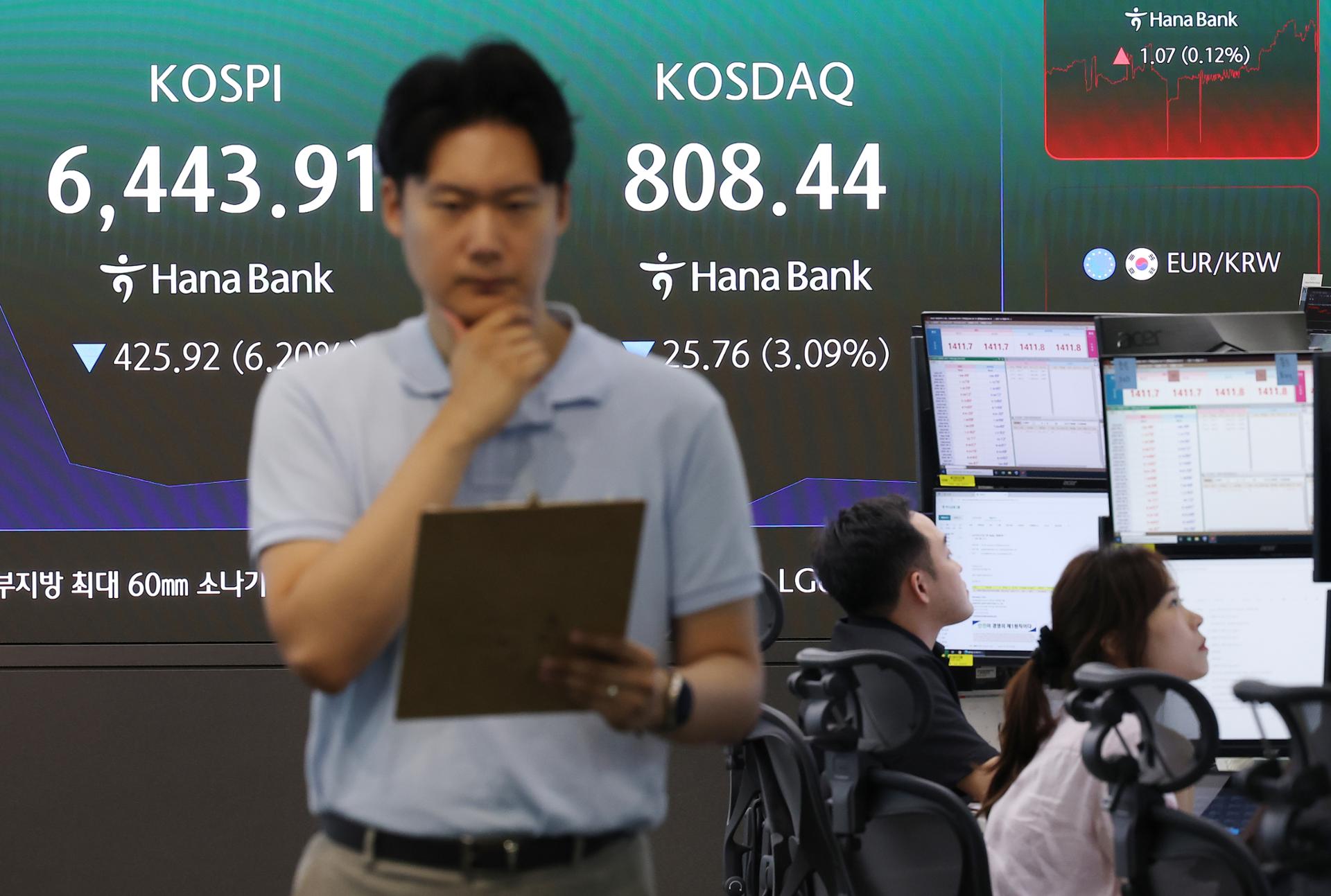
Korea's stock market operator activated a sell-side sidecar on the benchmark Korea Composite Stock Price Index (KOSPI) on Wednesday after the market opened sharply lower.
The Korea Exchange (KRX) suspended program trading in KOSPI-listed shares for five minutes beginning at 09:06 a.m., according to the exchange.
The KOSPI opened 4.96 percent lower and had lost 384.82 points, or 5.6 percent, to stand at 6,485.01 as of 09:07 a.m.
Investors sold off semiconductor shares, including Samsung Electronics and SK hynix, tracking overnight losses on Wall Street as stalled U.S.-Iran peace talks pushed up oil prices and bond yields.
A sell-side sidecar is triggered when the KOSPI 200 Futures Index falls 5 percent or more for at least one minute. The mechanism pauses program trading — computer-driven orders executed automatically under preset conditions — for five minutes, giving the market a brief window to absorb a rapid wave of selling. Ordinary manual trading continues during the pause; the restriction applies only to program orders.
The sidecar is one of several market-stability tools operated by the KRX, South Korea's securities exchange operator, which was created in 2005 through the merger of the country's stock, futures and KOSDAQ markets. It is distinct from the broader circuit-breaker system, which halts trading across the entire market for longer periods when declines exceed preset thresholds: a one-minute fall of 8 percent or more from the previous close triggers a 20-minute marketwide halt, while declines of 15 percent and 20 percent bring 30-minute and full-day halts. The tech-heavy KOSDAQ market operates its own sidecar tied to the KOSDAQ 150 futures index. Both tools were deployed repeatedly during the March 2020 pandemic selloff, when marketwide circuit breakers were triggered four times in a single month.
Samsung Electronics and SK hynix are South Korea's two largest chipmakers and rank among the world's leading suppliers of memory chips. Both companies carry heavy weightings in the KOSPI, and moves in semiconductor shares are closely watched as a result.
The Korea Times published the report at 9:20 a.m. KST on Aug. 19, 2026. Source: The Korea Times

