Nobel laureate Paul Krugman accuses Trump of 'light treason' over Nvidia chip dealings
Key Takeaways
- •Nobel laureate Paul Krugman said during an MS NOW interview with Ari Melber that President Trump's conduct involving Nvidia CEO Jensen Huang could constitute what he termed "light treason."
- •Krugman alleged Nvidia sold US-restricted AI chips, which cannot go to China without a government license under controls imposed in October 2022, through intermediaries such as Alice Huang's company Megaspeed, which he said were passing the chips to China.
- •He cited Nvidia's late-year shift in geographic sales reporting from billing address to company headquarters, which he said removed Singapore—previously shown as receiving 20% to as much as 50% of the chips—from the figures.
- •According to Krugman, Marco Rubio told Trump that Alice Huang was a Chinese asset and Treasury Secretary Scott Bessent tried to halt chip shipments to Megaspeed, yet the administration took no action, which he suggested was driven by money flowing to Trump, his projects, and a firm run by Commerce Secretary Howard Lutnick's sons.
- •Krugman separately warned after Democrats' victories in the 2026 midterm elections that Trump might punish Americans who voted against him, drawing a parallel to Adolf Hitler's final months and the Nero decree ordering the destruction of Germany's own infrastructure.
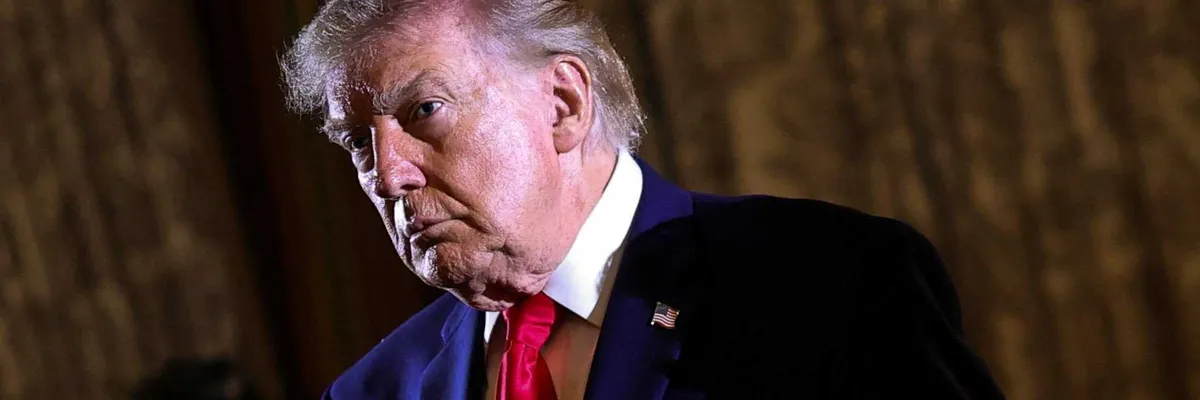
Nobel Prize-winning economist Dr. Paul Krugman, who won the 2008 Nobel Memorial Prize in Economic Sciences and spent nearly a quarter century as a New York Times columnist before departing the paper in late 2024, warned Monday night that President Donald Trump's conduct in connection with Nvidia CEO Jensen Huang could amount to what he called "light treason," speaking in an interview with MS NOW host Ari Melber.
Melber asked Krugman: "Professor — what's wrong with the way Huang was returned to this role, from a corporate governance and legal view, today?"
Krugman responded that observers were missing the larger picture. "What you really need to understand, what a lot of people are getting wrong, is that they're not seeing the forest for the trees. Everything is about Alice Huang and her relationship with Chinese intelligence," he said. "But the really big story here is that we now know that Nvidia was making betrayal of US national security a key part of its business model."
According to Krugman, Nvidia had been selling restricted chips — ones "not supposed to go to China" — to intermediaries, "among other things Megaspeed, Alice Huang's company — who were for sure passing those chips on to China." US export controls first imposed in October 2022 bar sales of the most advanced AI chips to China without a government license, with violations subject to civil and criminal penalties. He argued the company was aware of this, pointing to a change in its financial reporting: "Late last year Nvidia suddenly changed the way it reported its geographic sales, from billing address to company headquarters, in a way that made Singapore disappear from the numbers. And the numbers had been saying that at least 20 percent, possibly as much as 50 percent, of those chips were going to Singapore, which makes no sense." Singapore, a global logistics and re-export hub, has previously said it will investigate any attempts to use its territory to evade US chip controls.
He added, "There's no possible demand there. Basically, Nvidia was in the process of shipping critically important technology to a US adversary, and they knew it. And the White House knew it."
Krugman further asserted that senior officials had been aware of the issue. "We know that Rubio told Trump that Alice Huang was a Chinese asset. We also know that Scott Bessent, the Treasury secretary, tried to stop the shipment of chips to Megaspeed. So there were people in the administration who were well aware that, essentially, Nvidia was laundering critical US technology to China, and did nothing." He suggested the inaction was financially motivated: "Probably because, in effect, they were getting a cut — that there was money flowing to Trump and his projects, that there was money flowing to Howard Lutnick's firm, which is run by his sons." Lutnick serves as US Secretary of Commerce, whose department administers the chip export controls Krugman referenced.
The economist concluded that the core of the story was impunity rather than the salacious details drawing attention. "And now we have the statement that doing all of that — which I think would count as at least light treason — has no consequences. That the real thing that all the tech bros rally around, and then Donald Trump rallied around, was that selling critical US technology to a country that was supposedly enemy number one is not only no big deal — you don't even get a slap on the wrist. So it's this impunity, this elite impunity, that is at the core of the story. And that's much more important. The salacious aspect gets everybody's attention, but it's really this: it's okay to make money by selling critical technology to a foreign rival."
The appearance was not Krugman's only recent warning about Trump. After Democrats won historic victories over Trump's Republicans in the 2026 midterm elections, Krugman raised the prospect of Trump punishing Americans who voted against him, drawing a parallel to Adolf Hitler's final months in power.
"By the middle of March 1945," Krugman wrote, "even Adolf Hitler knew that the war was lost. Soviet forces were within 45 miles of Berlin. American forces had crossed the Rhine and were well on their way to encircling the remaining German defenders. But Hitler didn't believe that he had failed. He believed that he had been failed by the German people. So on March 19 he issued the 'Decree concerning demolitions in the Reich territory,' which has come to be known as the Nerobefehl or Nero decree. It ordered the destruction of Germany's own infrastructure — supposedly to deny that infrastructure to the Allies, but the obvious purpose was to punish his own country."
The full interview is available here: https://youtu.be/lylRLXyjYJ0

