Nobel Economist Paul Krugman: Trump and MAGA Engage in 'Totalitarian' Rejection of Objective Reality
Key Takeaways
- •Krugman contends that Trump's pattern of factual inaccuracy reflects a totalitarian-style rejection of objective reality rather than ordinary political deception.
- •The economist invoked George Orwell's writings to draw parallels between MAGA's denial of verifiable facts and the methods of historical totalitarian regimes.
- •Krugman argues that MAGA misinformation has already produced tangible harm, including elevated COVID-19 death tolls, rising measles cases, and the rapid depletion of U.S. precision weapons in the Iran war.
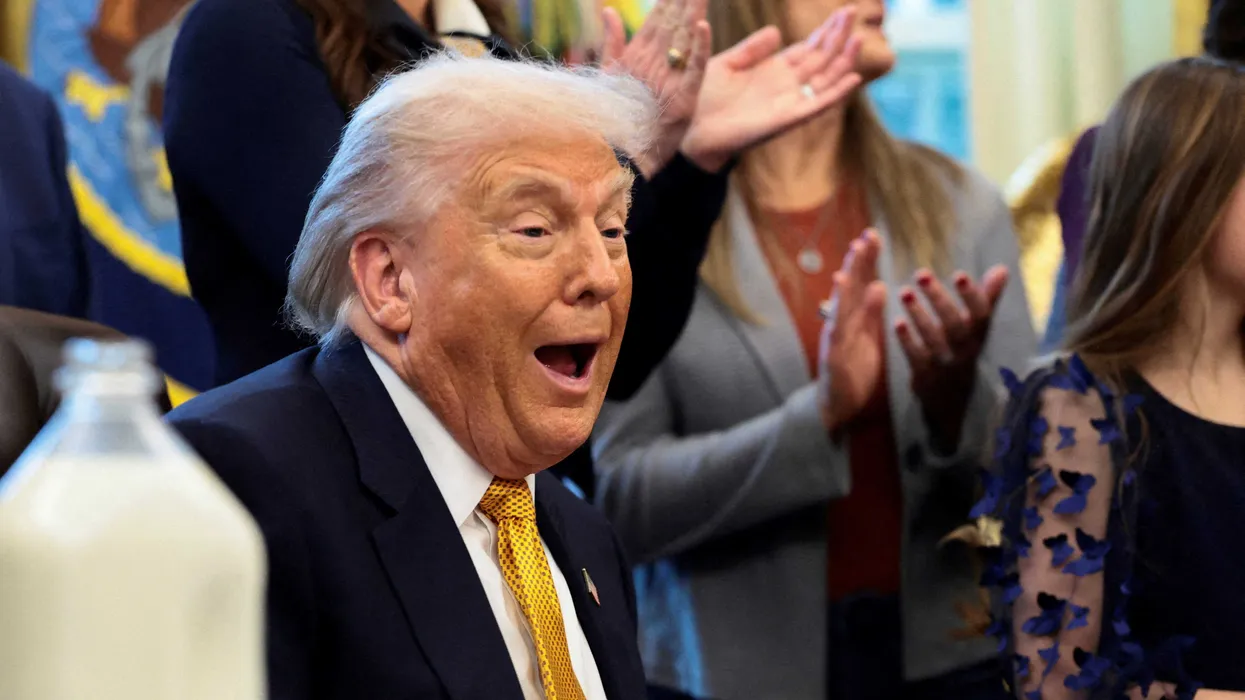
- •He compared Republican Party behavior to courtiers in authoritarian systems, noting that Trump loyalists avoid being the first to stop applauding at his speeches.
- •Krugman warns that the erosion of a shared factual baseline undermines the accountability mechanisms that democratic institutions depend on.
Nobel Prize-winning economist Paul Krugman, who spent more than two decades as a New York Times columnist before launching his Substack newsletter, argued on Thursday that President Donald Trump's frequent departures from factual accuracy are not merely cases of lying but reflect what he described as an alarmingly "extreme" rejection of objective reality shared by Trump and his MAGA movement.
In his Substack newsletter, Krugman contended that MAGA is fundamentally characterized by a denial of reality, offering a broad catalog of examples:
"The Covid vaccine didn't work, and vaccines cause autism. But hydroxychloroquine worked, and so did ivermectin. Anthony Fauci killed millions of people. Climate change is a hoax. Wind power caused a massive TV blackout during the Trump-Biden debate. Solar power is useless because the sun doesn't shine at night, and batteries don't exist. Smoke blanketed North America, not because of climate change, but because Canada didn't rake its 2 million square miles of boreal forest. We've destroyed Iran's military, and the Iranian regime is begging for a deal. Also, the U.S. isn't running out of precision weapons as a result of the Iran war, and furthermore the shortage is Joe Biden's fault. The economy is in a 'golden age.' Prices are down. And Trump has a 59 percent approval rating. Trump won the 2020 election. Communism is the greatest threat facing America."
Krugman wrote that this pattern goes well beyond ordinary wishful thinking. "What Trump and his supporters hate most of all is reality," he wrote. "They know what they want to believe. They fly into paroxysms of rage whenever someone points out that the world isn't what they want it to be. And they always want to shoot the messenger." He added that while anyone can experience a bout of wishful thinking, "what we're seeing now isn't run-of-the-mill motivated reasoning. It's something far more extreme."
To contextualize the phenomenon, Krugman turned to author George Orwell, who described a historical shift in how political actors relate to truth. Orwell wrote: "In the past people deliberately lied, or they unconsciously coloured what they wrote, or they struggled after the truth, well knowing that they must make many mistakes; but in each case they believed that 'the facts' existed and were more or less discoverable. And in practice there was always a considerable body of fact which would have been agreed to by almost everyone."
"Totalitarians, however," Krugman wrote, "denied that objective facts existed. Furthermore, reality is mutable, changing with the leader's whims." He cited Orwell's formulation: "If the Leader says of such and such an event, 'It never happened' — well, it never happened. If he says that two and two are five — well, two and two are five."
Krugman asserted that the Republican Party has proven surprisingly susceptible to this "totalitarian mindset," drawing a comparison to authoritarian regimes. "They behave as if they were courtiers to Kim Jong Un," he wrote. "Trump speeches are sometimes followed by 'endless applause moments,' because none of Trump's loyalists wants to be seen as the first person to stop clapping." The dynamic Krugman describes echoes patterns that political scientists studying democratic backsliding have identified in other countries, where the erosion of a shared factual baseline undermines the accountability mechanisms that democratic institutions depend on.
According to Krugman, Americans are already bearing tangible costs from what he termed MAGA's "war on reality."
"Remember," he wrote, "1.2 million Americans died from Covid — a number that would have been much lower if MAGA misinformation hadn't caused so many people to refuse vaccination. Now we're seeing a frightening rise in measles and other infectious diseases, and God help us if another pandemic strikes with Trump or his successor still in charge. Climate denial and hostility to renewable energy will mean more pollution even as it consigns the U.S. to energy and economic backwardness. And the Iran war — which Trump started and now refuses to end because he won't accept reality — has destroyed America's credibility and depleted our weapon stocks with stunning speed."
"But," Krugman concluded, "anyone pointing out the obvious is, of course, a Communist."

