Nobel Economist Paul Krugman Explains the Dark Psychology Behind Trump's Inner Circle
Key Takeaways
- •Paul Krugman, the 2008 Nobel Memorial Prize winner in Economic Sciences, argues that Trump deliberately aligns with corrupt wealthy individuals rather than merely favoring the rich.
- •The One Big Beautiful Bill Act, signed by Trump in July 2025, rolled back much of the IRS funding increase enacted under the 2022 Inflation Reduction Act.
- •Congressional Budget Office analyses projected that reduced IRS enforcement funding will shrink revenue collections over the coming decade, with unpaid taxes historically concentrated among the highest earners.
- •Krugman asserts that the Republican Party, controlling Congress, the White House, and the Supreme Court, shows what he calls a positive preference for wealthy cheaters.
- •Krugman invokes Theodore Roosevelt's phrase 'malefactors of great wealth,' drawing a parallel to early twentieth-century progressive campaigns against corporate trusts.
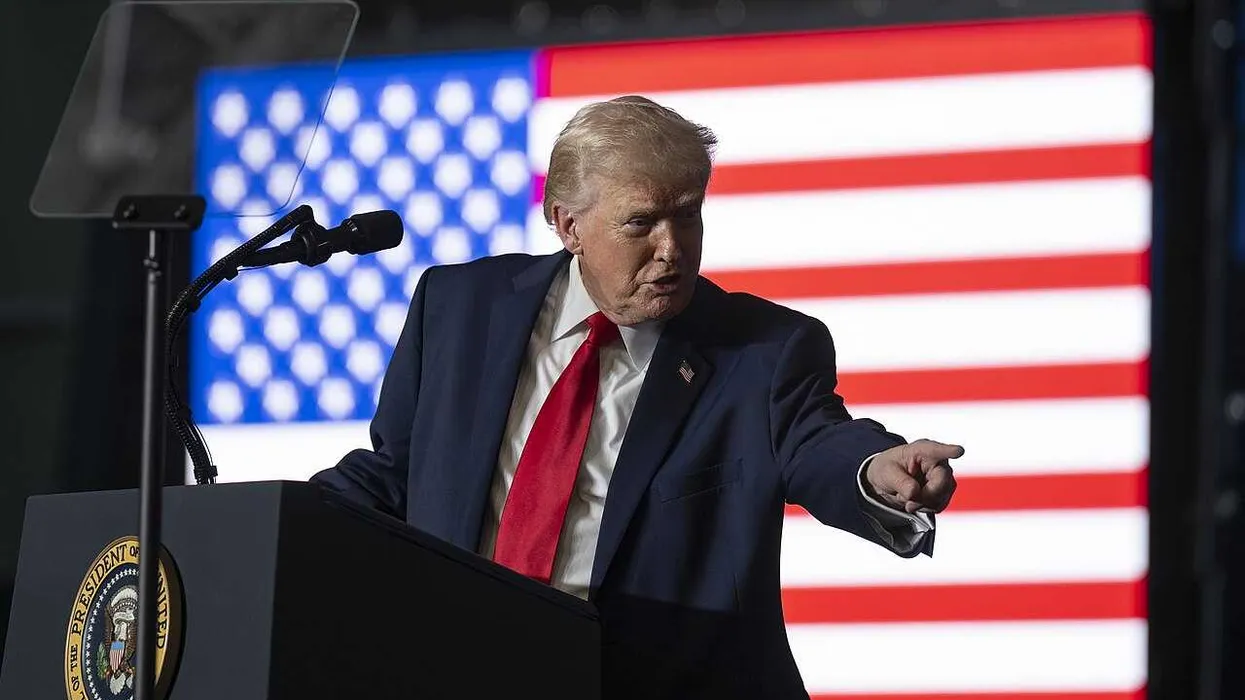
For generations, liberals and progressives have accused Republicans of favoring the ultra-wealthy over working-class Americans. But according to liberal economist Paul Krugman, President Donald Trump goes far beyond the usual GOP embrace of the super rich: as Krugman argues in his Substack column, Trump deliberately aligns himself with millionaires and billionaires who are especially corrupt.
Krugman, who won the Nobel Memorial Prize in Economic Sciences in 2008 and wrote for The New York Times opinion pages for decades before launching his Substack in 2024, has been a persistent critic of Trump-era economic policy.
"I mean, it's one thing to favor the interests of the uber-wealthy," Krugman writes. "OK, we know that's what the modern Republican Party is, whatever it may claim to be. But it's another thing to systematically favor the least honest."
According to Krugman, Trump's tax policy is specifically designed to help millionaires and billionaires dodge IRS rules.
"Of course, Trump's One Big Beautiful Bill did savage cuts in IRS resources for enforcement," Krugman writes. "Savage cuts in personnel. We're now back to a situation where things are worse than they were before (former President Joe) Biden started to try to fix it. So, this is going to continue."
The One Big Beautiful Bill Act, the tax-and-spending law Trump signed in July 2025, rolled back much of the IRS funding boost enacted under the 2022 Inflation Reduction Act. Congressional Budget Office analyses projected that reduced enforcement funding would shrink revenue collections over the coming decade, with the largest share of unpaid taxes historically concentrated among the highest earners.
Krugman laments that Trump has a particular "preference" for wealthy but "dishonest" men, because they are more likely to go along with his power grabs.
"What this policy does is it basically says if you are an honest billionaire — I'm afraid to name somebody because who knows what may come out in some future set of files — but if you are an honest billionaire, you are disadvantaged by the fact that dishonest billionaires are able to get away with cheating on their taxes," the former New York Times columnist warns. "You should be opposed to that, but obviously, the party that currently controls Congress, the White House, and the Supreme Court, that party actually prefers dishonest men of great wealth. It's actually a positive preference for cheaters."
Krugman continues: "I can speculate very loosely. It's often been observed of Trump, and it's probably true of some others in his camp, that at a fundamental level, he does not believe that anyone has good motives. And that someone who appears to actually be a decent person who plays by the rules is, by that very token, someone Trump distrusts. He kind of assumes that they must be even worse than he is. Otherwise, they wouldn't be faking having good intentions, which people like him never have…. But in any case, we have developed a system where not only do we enormously favor the interests of people who already have vast amounts of money, but we literally favor malefactors of great wealth, to use Teddy Roosevelt's phrase."
The phrase Krugman invokes dates to Theodore Roosevelt's early-twentieth-century progressive campaign against corporate trusts, an era when the federal income tax and modern enforcement apparatus were still taking shape — a historical parallel Krugman draws to argue that concentrated wealth paired with weakened oversight is an old American problem resurfacing in new form.
