Nobel economist Paul Krugman: Trump's Canada gambit backfires as world stops fearing him
Key Takeaways
- •Krugman argues that Trump's pressure campaign against Canada backfired, placing him in the opposite of the position Machiavelli prescribed for rulers: hated but not feared.
- •European Commission President Ursula von der Leyen signaled the EU's willingness to make Canada an associate member, an idea Canadian Prime Minister Mark Carney quickly and strongly endorsed.
- •Trump responded by calling the EU-Canada overture a "hostile act" and threatening to cut off all trade with Europe, yet the threat produced little alarm among allies.
- •Krugman links the erosion of international fear of Trump to the Iran debacle, awareness that an all-out trade war would also damage the United States, and midterm polls suggesting Democratic control of the House and possibly the Senate.
- •A Navigator poll shows 48 percent of Americans strongly disapprove of Trump, exceeding his total approval and far outpacing strong approval, while U.S. businesses, including the auto industry, remain quiet out of concern the administration could retaliate.
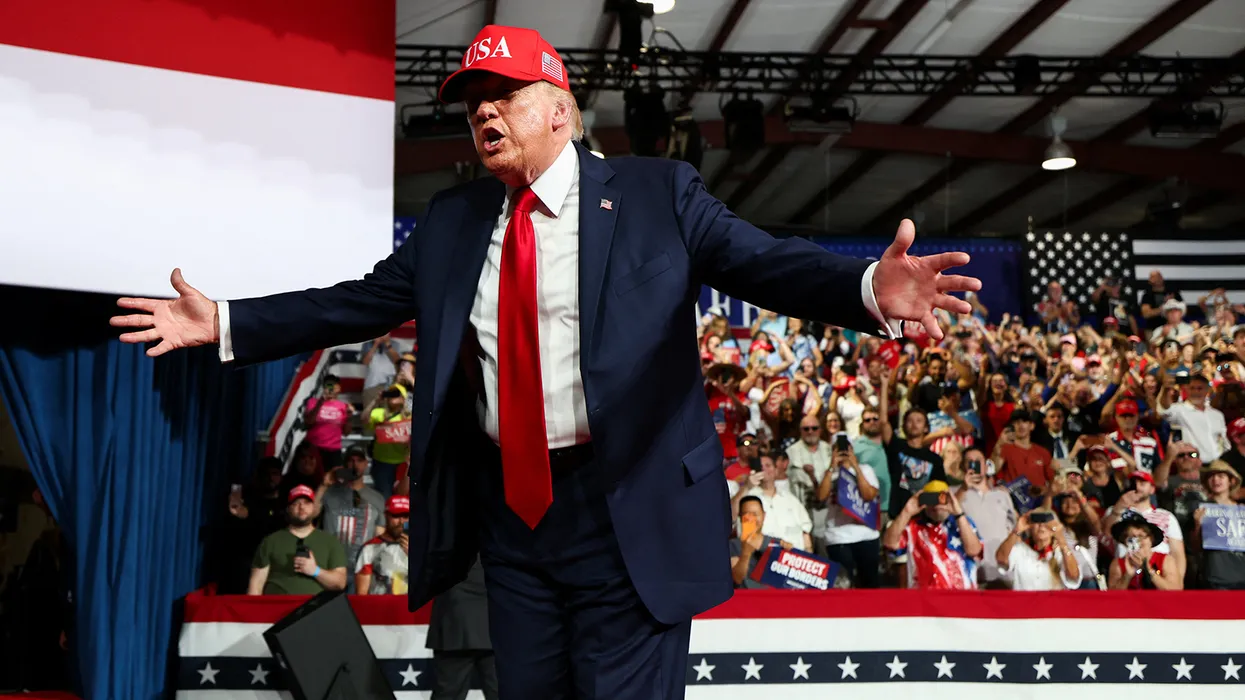
Nobel Prize-winning economist Paul Krugman argues that President Donald Trump's pressure campaign against Canada has not merely failed but backfired, leaving the U.S. president in the opposite of the position Machiavelli prescribed for rulers: hated, but no longer feared.
Writing on Friday in his Substack newsletter, Krugman traced the turn of events to a speech delivered on Wednesday by Ursula von der Leyen, president of the European Commission, affirming the EU's willingness to move toward making Canada an “associate member.” Krugman notes that nobody quite knows what associate membership would entail and that it might be mostly symbolic. Even so, he writes, it would amount to “a kind of declaration, by both Europe and Canada, of reduced dependence on the United States.”
The next day, Canadian Prime Minister Mark Carney strongly endorsed the idea. Trump “predictably, reacted with rage, calling it a ‘hostile act,’ threatening to cut off all trade with Europe,” Krugman writes. “And nobody cared.”
In Krugman's view, the EU was once willing to strike questionable deals with Trump, but Europe has now decided to stop fearing him. Canada's defiance, he adds, is “even more remarkable,” because “Canada's economy is extremely dependent on the United States both as an export market and as a supplier.” Pivoting from the U.S. to Europe would cost the country dearly and leave many problems to overcome, yet Carney and other world leaders have concluded that it beats trying to placate Trump.
To make sense of the current state of “Trumpism,” Krugman says he finds himself revisiting Machiavelli's The Prince, “which is, after all, sort of a user's manual for autocrats.” He points out that Machiavelli is often cited as having said it is better to be feared than loved, but that what he actually wrote was somewhat more complex:
“Upon this a question arises: whether it be better to be loved than feared or feared than loved? It may be answered that one should wish to be both, but, because it is difficult to unite them in one person, it is much safer to be feared than loved, when, of the two, either must be dispensed with … Nevertheless a prince ought to inspire fear in such a way that, if he does not win love, he avoids hatred.”
By that standard, Krugman argues, Trump “isn't doing well on the ‘avoiding hatred’ front.” Pew's survey of international views of the United States shows a stunning collapse in confidence that the U.S. president will do the right thing. Domestic polls likewise show very low approval for Trump, but what strikes Krugman as truly notable is the intensity of disapproval: the Navigator poll, for example, shows 48 percent of Americans strongly disapproving of Trump — far larger than the total number approving and two and a half times the number who strongly approve.
Plenty of people hate Trump, in other words, but they no longer fear him. Krugman largely attributes this to Trump's “debacle in Iran,” which has demonstrated the limits of American military and diplomatic might. At the same time, the world has come to realize that the United States would suffer as well from an all-out trade war. World leaders are also watching midterm polls that suggest Trump is about to see his efforts checked by a Democratic House — and perhaps even a Democratic Senate.
The global upshot, Krugman concludes: “Trump is in exactly the opposite position of where Machiavelli said a prince should be: hated but not feared.”
The situation inside the United States is “somewhat less blatant.” Businesses — including the auto industry, which has a lot to lose from trade wars — remain quiet, presumably because the Trump administration retains considerable power to punish them via contracts, regulations and so on. Krugman adds that in many ways Trump has been acting as if he wants to destroy the U.S. auto industry, or at least leave it hopelessly uncompetitive as the world electrifies. Even in America, however, “fear of Trump is palpably fading.”

