Nobel Economist Krugman: Trump Allies Increasingly Desperate to “Gaslight” Voters on the Economy
Key Takeaways
- •Krugman accused Trump and his allies of using Biden as a scapegoat while simultaneously promoting the economy as being in a “golden age.”
- •He said inflation peaked during the Biden administration in 2022 and later eased without a recession, leaving the U.S. economy in strong shape by the end of Biden’s term.
- •Krugman argued that since Trump returned to office, economic growth has slowed, inflation and interest rates have risen, and inequality has increased.
- •He said wages have not kept pace with inflation even as corporate profits have climbed in the current economy.
- •Krugman linked the administration’s blame-Biden messaging to its poor economic approval ratings and the upcoming 2026 midterm elections.
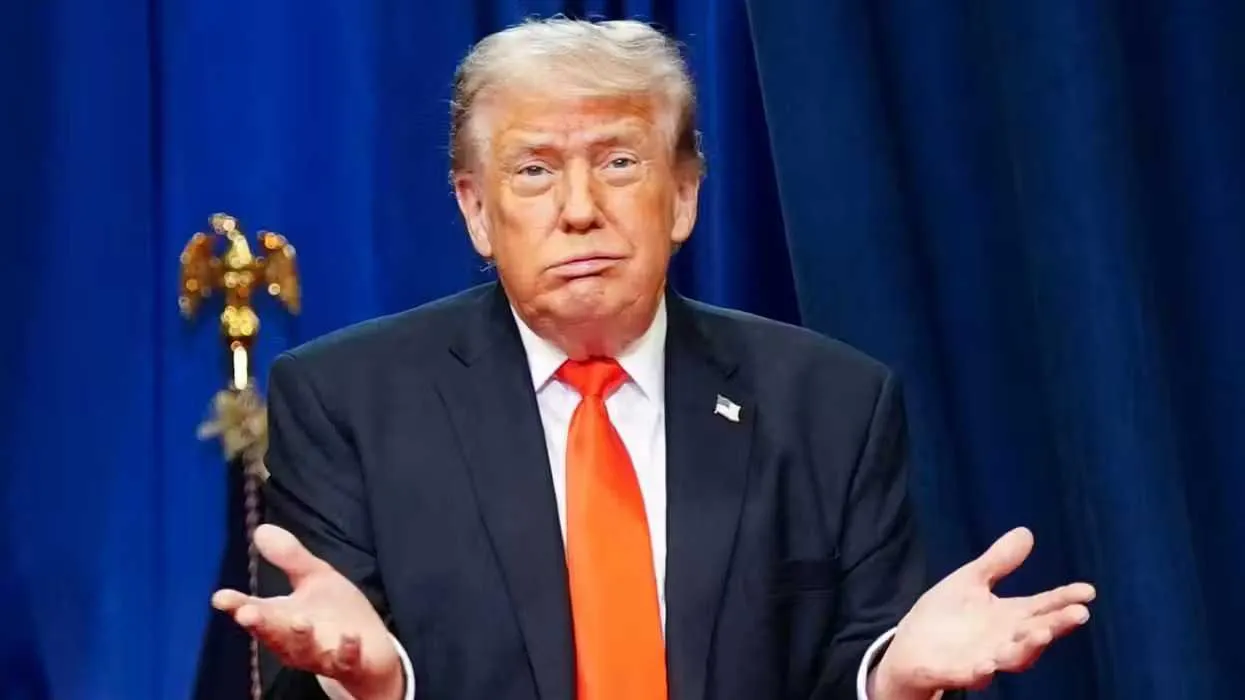
Nobel Prize-winning economist Paul Krugman said Thursday that President Donald Trump and his allies are becoming increasingly desperate in their effort to “gaslight” voters about the state of the U.S. economy. In a commentary published on his Substack — the newsletter he launched after stepping away from his long-running New York Times column — Krugman argued that there is a cognitive dissonance at the heart of the administration’s messaging: on one hand, officials attempt to “shift the blame” for the poor economy onto one of Trump’s longtime adversaries, while on the other they insist the country is in a “golden age.”
Krugman began by pointing to the text that appears when a visitor clicks an economic “fact sheet” on the White House website, which reads in all caps, “Welcome to the golden age!” “Yes, Trump’s lackeys are still peddling claims that things are great, that we have the hottest economy in the world, like nobody has ever seen before. But even they know better,” the economist responded.
The way administration officials answer questions about economic difficulties, Krugman asserted, shows they recognize the problem. “A clear indicator that Trump sycophants realize that they are caught in reality’s snare is how they respond to any question about current economic difficulties,” he wrote. “Their first sentence almost always contains the word ‘Biden,’ as they make the false claim that things were worse under Joe Biden, or that Biden somehow caused all of our current problems (including high gas prices and depleted munitions), or that Biden left an economy in shambles. Call it a bad case of Biden derangement syndrome, a desperate and utterly transparent attempt to shift the blame for the gratuitous mess that Trump and his minions have made.”
On the economic record itself, Krugman noted that the United States, along with the rest of the world, experienced a surge of inflation in 2021–2022, which corresponded with the Biden administration. However, “inflation then proceeded to fall significantly, a case of ‘immaculate disinflation’ – a drop in inflation without a recession. By the end of Biden’s term, the U.S. economy was not only in good shape, but it was doing better than every other advanced country,” he wrote. As evidence, he cited an Economist cover from October 2024 that declared the U.S. the “envy of the world” for its unparalleled post-pandemic economic recovery, headed by Biden. The inflation surge Krugman referenced peaked at a 9.1% annual rate in June 2022, the fastest pace in roughly four decades, before receding over the remainder of Biden’s term.
“Yet, since Trump re-assumed the presidency, most measures of economic performance have deteriorated significantly,” Krugman wrote. “Economic growth has slowed despite the AI boom. Inflation has accelerated. Interest rates have surged. Furthermore, inequality has surged in the current K-shaped economy. Wages haven’t kept up with inflation, but corporate profits have soared.” The “K-shaped” label describes an economy in which, like the diverging strokes of the letter, higher-income and asset-owning households pull ahead while lower-income households fall further behind.
Krugman acknowledged that “things could be worse,” observing that inflation is still below historic highs and unemployment remains relatively low. Still, he argued, such details are “cold comfort given that today’s economic difficulties were all self-inflicted by Trump.” He added that “today’s economy is a far cry from the paradise that Trump promised in order to beat Kamala Harris. Remember how he was going to cut energy prices in half and bring down grocery prices on day one? The dissonance between his constant boasting and the reality of an economy in which households saying that they are worse off than a year ago outnumber those saying they’re better off almost two to one is surely a major factor in Trump’s surreally poor approval rating on the economy.”
In his conclusion, Krugman compared the blame-Biden strategy to other administration initiatives, including Treasury Secretary Scott Bessent’s approach to the bond market: “Just like Trump’s farcical plan to lower beef prices to consumers by importing (possibly unsafe) foreign mystery meat, or Bessent’s attempt to gaslight the bond markets (as one wag accurately put it, Bessent’s plan is like using your credit card to pay down your mortgage), blaming Biden for the Trump economy smells of desperation.”
“My advice: they should save themselves the bother. That ship has sailed and it’s heading straight for the November elections,” Krugman wrote. The November elections he referenced are the 2026 midterms, when all 435 House seats and more than 30 Senate seats will be on the ballot.

