Nobel economist Paul Krugman lays out 'really, really bad news' for Trump and Republicans before midterms
Key Takeaways
- •Economist Paul Krugman, winner of the 2008 Nobel Memorial Prize in Economic Sciences, wrote on his Substack that sour sentiment, a weakening labor market and higher borrowing costs spell trouble for Trump and Republicans ahead of the November midterms.
- •The September AP-NORC poll of 2,140 adults found 74 percent of Americans view the national economy as poor, while only 26 percent approve of Trump's economic handling and 17 percent approve of his response to the cost of living.
- •Perceptions have shifted since the Biden era: 61 percent of adults said the national economy and 55 percent said their local economy are worse off than when Trump took office in 2025.
- •The Conference Board reported that the share of consumers calling jobs plentiful fell to 23.6 percent in September from 24.5 percent in August, with consumer confidence declining for a third consecutive month.
- •Freddie Mac data showed the average 30-year fixed mortgage rate jumped to 7.28 percent this week, its highest level since November 2023 and the largest weekly increase in four years.
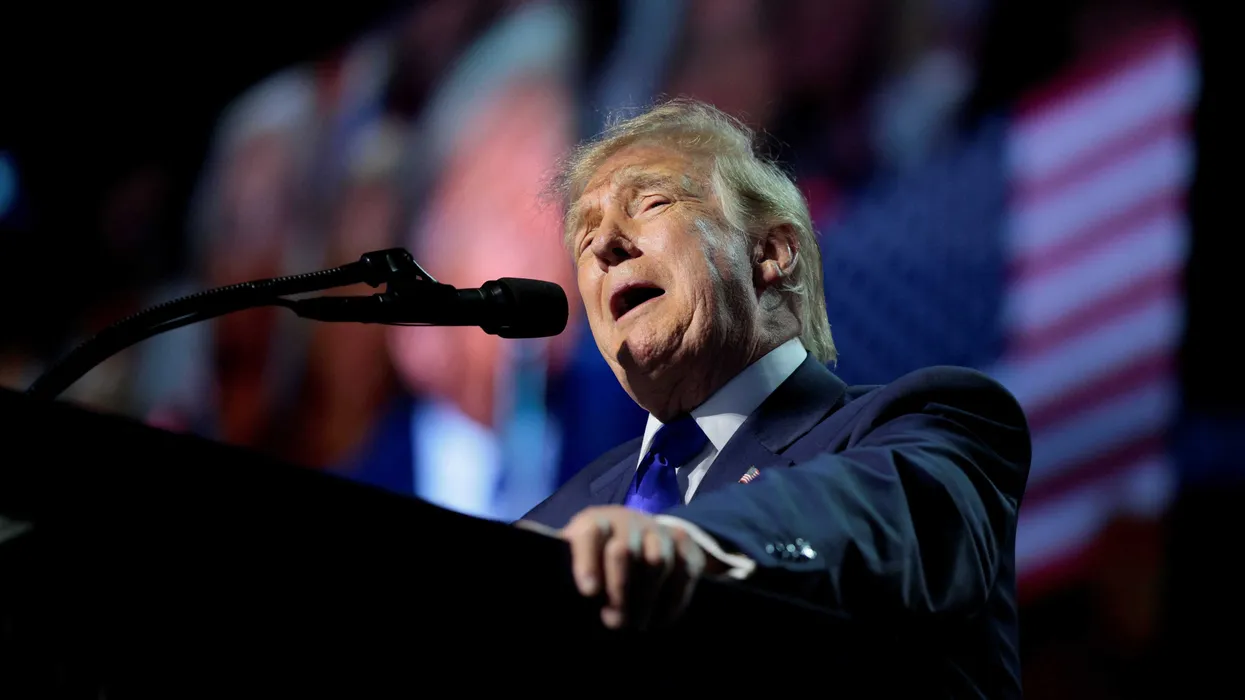
Nobel Prize-winning economist Paul Krugman says a combination of sour economic sentiment, a weakening job market and rising borrowing costs amounts to “really, really bad news” for President Donald Trump and Republicans heading into the midterm elections.
Writing Thursday on his Substack, Krugman — who won the 2008 Nobel Memorial Prize in Economic Sciences and left The New York Times in 2024 after more than two decades as a columnist — argued that the White House is trying to sell Americans on an economic picture that increasingly conflicts with how voters say they are doing.
The latest AP-NORC poll — a nonpartisan survey partnership between The Associated Press and NORC, a research organization based at the University of Chicago — underscored the gap. It found 74 percent of adults described the national economy as poor, compared with 26 percent who called it good. The numbers were just as bleak for Trump, who campaigned on economic prosperity for everyday Americans: only 26 percent approved of his handling of the economy, while 73 percent disapproved. On the cost of living, 17 percent approved of his performance and 82 percent disapproved. The survey of 2,140 adults was conducted Sept. 24-28 and had a margin of sampling error of plus or minus 2.9 percentage points.
Krugman also highlighted a change in how Americans view the economy close to home. During the Biden administration, he wrote, “Americans generally had a much more positive view of their local economy — which they could observe with their own eyes — than they did of the national economy.” The September AP-NORC survey, however, found that 61 percent of adults said the national economy was worse off than when Trump took office in 2025, while 23 percent said it was better. Fifty-five percent said their local economy was worse off, compared with 20 percent who said it was better.
The labor market was Krugman’s second warning sign. Official employment measures remain relatively strong by historical standards, he noted, but Americans’ perception of job availability has deteriorated. The Conference Board, a nonprofit business research group whose monthly survey is among the most closely watched gauges of consumer sentiment, reported this week that 23.6 percent of consumers said jobs were plentiful in September, down from 24.5 percent in August, while 21.9 percent said jobs were hard to get, up from 20.3 percent. Consumer confidence fell for a third consecutive month.
Housing costs add another layer of strain. The average rate on a 30-year fixed mortgage jumped to 7.28 percent this week, according to Freddie Mac, its highest level since November 2023 and the biggest weekly increase in four years.
Citing those figures, Krugman described a “troubled environment” that runs counter to the administration’s characterization of the country as being in a Golden Age.
“And while I’m not a political consultant, I don’t think ‘Who are you gonna believe, me or your own eyes?’ is a winning strategy,” he wrote.
With a month remaining before the midterms, Krugman said the economic environment matters as much as political polling. The November elections will decide all 435 House seats and roughly one-third of the Senate, and midterm contests have historically gone against the party holding the White House. Although some headline economic statistics remain solid, he argued that voters’ experience with prices, housing costs and the job market is moving in the opposite direction from the White House’s message.

