Nobel economist Paul Krugman alleges ‘betrayal at the highest levels’ in Trump's orbit over Nvidia CEO scandal
Key Takeaways
- •Nobel Prize-winning economist Paul Krugman published a Thursday Substack essay titled 'Climates of Treason' claiming the Jensen Huang scandal reflects a broader pattern of betrayal at the highest levels of the Trump administration.
- •Nvidia CEO Jensen Huang admitted to an affair with Alice Huang, a former executive at Singapore-based Megaspeed whom U.S. intelligence reportedly suspects of spying for Beijing.
- •Commerce Department agents reportedly stopped an inquiry into whether Megaspeed smuggled Nvidia chips into China after contact from Nvidia's top lawyer, and the Justice Department subsequently took over the case.
- •Nvidia's board is conducting its own investigation and says it has seen no indication that national security was compromised, while President Trump publicly defended Huang on Sunday.
- •Krugman attributed the administration's protective stance toward Huang partly to financial ties, citing Nvidia's $25 million contribution to Trump's ballroom and the AI industry's substantial donations to Trump.
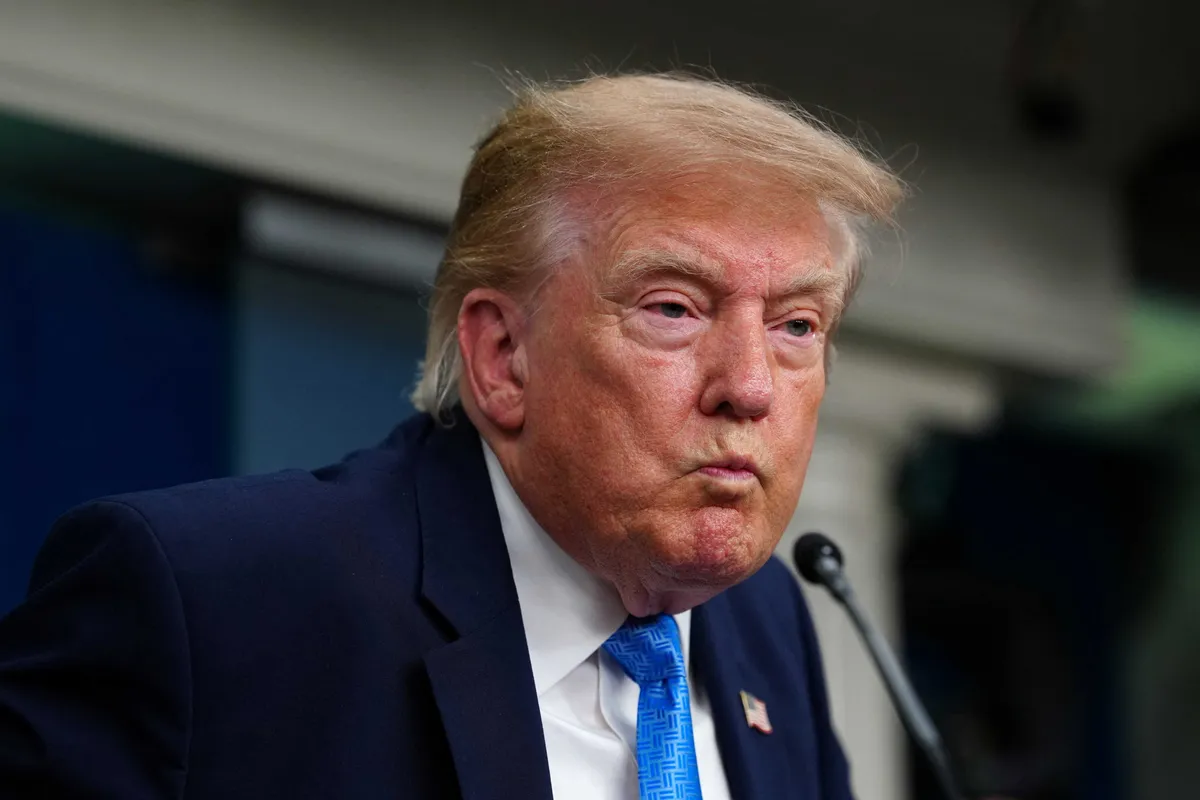
Nobel Prize-winning economist Paul Krugman says a scandal surrounding Nvidia CEO Jensen Huang offers a glimpse into the darker side of President Donald Trump's inner circle.
In a Thursday Substack post, Climates of Treason, Krugman — the 2008 Nobel economics laureate who left his longtime New York Times column to publish independently — argued that Huang was a fool who should never be allowed near national security again. The real issue, he said, is that the Trump administration tried to bury any inquiry into the threat posed by Huang's affair — part, in his view, of “a bigger story of betrayal at the highest levels.”
Huang admitted to an affair with Alice Huang, no relation, a former executive at Singapore-based Megaspeed whom U.S. intelligence reportedly suspects of spying for Beijing. The accusation lands with unusual force because of where Nvidia sits: the company supplies the processors at the center of the global A.I. buildout, and Washington has spent years restricting exports of its most advanced chips to China over concerns that the computing power could aid Beijing's military.
According to The New York Times, Commerce Department agents investigating whether Megaspeed had smuggled Nvidia chips into China halted their probe after Nvidia's top lawyer contacted them, and the Justice Department took over the case. The Commerce Department said it handled the matter by the book, and Nvidia's board — which is now conducting its own investigation — said it has seen no indication that national security was compromised. Trump defended Huang on Sunday. For readers weighing the competing accounts, the open questions are concrete: what the Justice Department does with the case it inherited, what the board's review finds, and whether the reported intelligence suspicions about Alice Huang are ever substantiated.
Krugman contended that after two years of Trump, the United States is neither loved nor feared: it cannot be trusted to keep its promises or defend its allies, and it seems unable to punish its enemies. In his assessment, the country has essentially lost a war with Iran and a trade war with China, and may be losing the technology race as well.
“How did we fall so far, so fast? It's all about Trump,” he wrote.
Part of the explanation, Krugman said, is plain incompetence. As one example, he pointed to Defense Secretary Pete Hegseth's belief that a military in the age of drones and artificial intelligence needs testosterone shots. That, he argued, is no accident.
“MAGA hates people with expertise, because such people might engage in critical thinking and might care about their reputations,” he wrote. “Only the truly hapless can be counted on to be truly loyal.”
Key figures in or near the administration, he said, are knowingly making the United States less secure.
“I don't know how much of this betrayal meets the legal standard of treason, but morally that's what it amounts to.”
Krugman borrowed his title from a 1979 book about the Cambridge spies who served Stalin out of conviction — a ring of British recruits from the 1930s who spent decades feeding secrets to Moscow — and he sees a mix of motives at work. When it comes to Russia, he believes the alignment is largely ideological: Trump, Elon Musk and other hard-right figures look up to Putinism, with its authoritarianism, male supremacy and crony capitalism. Money, he suggested, is probably only a secondary factor there.
When it comes to China, he argued, it is about money: Nvidia gave $25 million to Trump's ballroom, Krugman wrote, and the A.I. industry appears to have funneled hundreds of millions of dollars in Trump's direction. People around Trump protected Huang, he wrote, partly out of fear that exposing the scandal would be damaging for a major source of money.
He also predicted that the vast payments made to Jared Kushner by Middle Eastern rulers will eventually turn out to have been in return for favors.
“This is a huge scandal even if there weren't any quid pro quos. And I'll bet that we'll eventually learn that there were, in fact, favors exchanged for that money.”
Those in charge of the country, Krugman said, are all about waving the flag while in fact being completely unpatriotic — unwilling to sacrifice for the country and hostile to democracy and the rule of law.
“They are completely unwilling to make personal sacrifices, no matter how small, or to pass up personal opportunities, for the sake of the nation.”
“In other words,” he wrote, “USA! USA! USA!”
Source: Alternet

