Krugman Says Bessent’s Attempts to Defend Trump’s Economy Have Failed
Key Takeaways
- •Krugman said Bessent has shifted from being seen as a credible economist to acting as a Trump loyalist who damages his own standing.
- •Bessent said the U.S. was headed for stronger growth and fiscal stability when he announced that Trump’s name would appear on U.S. currency.
- •Krugman disputed Bessent’s claim that a K-shaped economy was over, saying income data still show gains at the top and weakness for the bottom half.
- •Krugman said Treasury’s 30-year bond buyback did not address the fiscal forces behind higher long-term yields and quickly failed to hold the market down.
- •Krugman warned that Bessent’s loss of credibility could matter if the Treasury faces a future financial crisis.
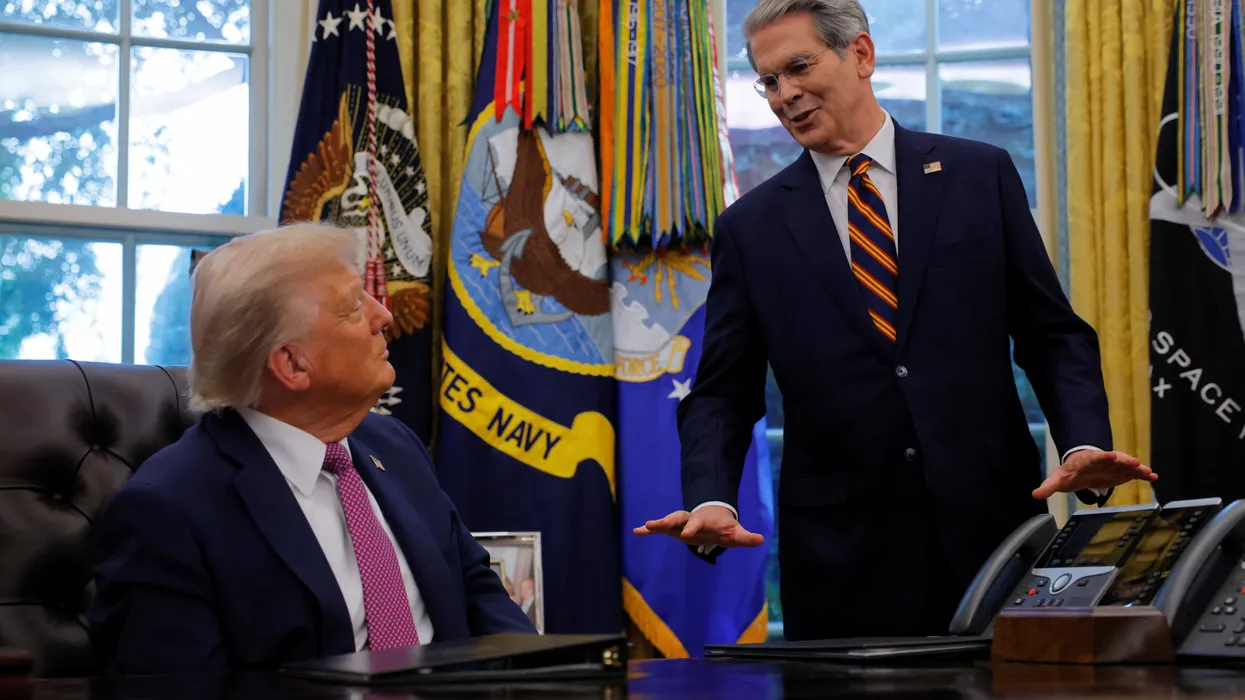
Nobel Prize-winning economist Paul Krugman says Treasury Secretary Scott Bessent has tried to “sell his soul” to “gaslight” Americans about the economy, but that the effort has instead damaged the United States and destroyed his own credibility.
In a Friday column on his Substack newsletter, The Krugman Wonks Out, Krugman argued that Bessent’s “Dear Leader” approach has backfired. He said that when Bessent was first appointed, experts were relieved that Trump had selected a “credible Treasury secretary who has a real understanding of the global economy” — and Bessent brought that kind of background, having made his name at Soros Fund Management as part of the team behind the 1992 bet against the British pound before founding the macro hedge fund Key Square Group. The job is unusually tied to credibility: the Treasury secretary serves as the administration’s principal economic voice to financial markets and manages a debt load whose interest costs depend on investor confidence. Since then, Krugman wrote, Bessent has emerged as a “consummate Trump sycophant.”
Krugman pointed to Bessent’s remarks announcing that Trump’s signature would appear on money, a first for a sitting president. Bessent said, “Under President Trump’s leadership, we are on a path toward unprecedented economic growth, lasting dollar dominance, and fiscal strength and stability. There is no more powerful way to recognize the historic achievements of our great country and President Donald J. Trump than U.S dollar bills bearing his name.”
According to Krugman, Bessent made the statement in March, when the economy was already showing warning signs and was beginning to feel the effects of Trump’s decision to launch war with Iran. Krugman said that kind of “love-struck” rhetoric “carries the potential for enormous financial and economic costs for the country.”
Since then, Krugman said, Bessent has repeatedly made “assertions about the state of the economy that are manifestly, glaringly untrue — as if he can gaslight the professionals who closely track economic data.” As one example, Krugman cited Bessent’s rejection of the idea that the U.S. has a “K-shaped economy,” in which a small number of people are doing well while many others fall behind. Bessent said, “I get sick of hearing about this K-shaped economy, I can say here definitively, the K-shaped economy is over.”
Krugman wrote that Bessent tried to support that claim with wage data showing slightly smaller wage gains for the top 25 percent than for the bottom 25 percent. But, Krugman said, the comparison was misleading because high-income Americans get much of their income from capital rather than labor, while many lower-income Americans depend on food stamps — formally the Supplemental Nutrition Assistance Program — and other programs that are facing sharp cuts under Trump.
Krugman also pointed to a graph showing the real after-tax income of American adults during Trump’s second term, with the top 1 percent separated from the bottom 50 percent. The chart, he said, showed income for the wealthy rising steadily while the bottom half experienced stagnation followed by a steep decline beginning in December.
“Based on this alone,” Krugman wrote, “it’s clear that Bessent’s pronouncements are geared to an audience of one: Donald Trump. He doesn’t mind sounding like a fool and a liar to the financial markets and to the American public as long as it pleases Dear Leader.”
Krugman said Bessent’s efforts have also failed inside the Treasury Department itself. He cited the Partnership for Public Service, a nonpartisan watchdog, which he said found that 7 out of 16 Trump Treasury appointees confirmed by the Senate — the top Treasury officials — have left since the start of Trump II. According to NOTUS, several departed after “disagreements with the White House over demands to stretch, if not violate, tax law.”
Mark Mazur, a former Treasury assistant secretary for tax policy who now directs the Urban-Brookings Tax Policy Center, told NOTUS, “A lot of these people expect to have a career after this administration, and being disbarred would be a bad thing for them.”
This week, Bessent also tried to respond to a recent rise in U.S. long-term interest rates by buying back 30-year Treasury bonds. The Treasury had revived regular buybacks in 2024 under Bessent’s predecessor, Janet Yellen — the first such program in more than two decades — with officials describing it at the time as a liquidity-management tool for the Treasury market rather than an attempt to steer yields. Krugman said the move was simply “a swap of longer-term government debt for shorter-term, riskier government debt” that does nothing to address the underlying fiscal problems behind the increase in 30-year yields. Some analysts, Krugman noted, have described the strategy as “rearranging the deck chairs on the Titanic.”
Krugman said the motive was “clearly political,” arguing that high long-term interest rates are embarrassing for the Trump administration and that Bessent is trying to make the situation look better. But, Krugman wrote, the effort is failing: 30-year yields fell briefly on Wednesday when the policy was announced, then rebounded on Thursday and were higher at the time he wrote than they were a week earlier.
“Clear proof that you can’t gaslight the bond market,” Krugman wrote.
He concluded that Bessent, a former bond trader, has “squandered all of his credibility” through his sycophancy, his apparent demands that top officials engage in unethical and probably illegal conduct, and his use of the Treasury’s financial power for clearly political goals. Krugman warned that the damage could matter in a future crisis, when the country may need a credible Treasury secretary with competent subordinates. The Treasury’s coming quarterly refunding announcements and debt-management decisions, along with whether more Senate-confirmed officials leave the department, are among the things to watch.
